2 minutes ago
The EU could expand to 30 countries by 2028, is Kosovo part of this enlargement?
Periskopi(4 months ago)
(4 months ago)Since Croatia's membership in 2013, the European Union's enlargement strategy has moved very little in terms of accepting new members from the nine candidate countries (currently). Rather, with the release of Great Britain in 2020, the community has been significantly reduced. Meanwhile, Derdard reports that the EU can grow to 30 [...]
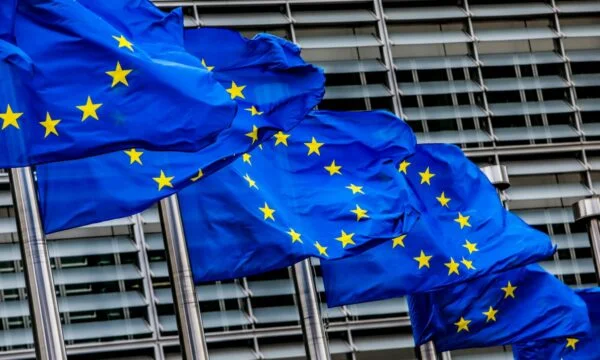
Since Croatia's membership in 2013, the European Union's enlargement strategy has moved very little in terms of accepting new members from the nine candidate countries (currently). Rather, with the release of Great Britain in 2020, the community has been significantly reduced. Meanwhile, Derdard It reports that the EU could rise to 30 countries by 2028, joining Albania, Iceland and Montenegro.
Although negotiations are under way with some countries slowly and the EU has increased by several billion euros and pre-membership assistance to the Western Balkans, the candidate countries are generally kept in expectation. Heavy loads from the crises and wars since the coronary pandemic, as well as the lack of EU internal preparation for simpler decision-making structures, have made the process of rappelment difficult.
Blocked negotiations
Under the will of the European Parliament, this should change as of this year. This week the Commission for Foreign Policy presented the plenary session with an updated strategic report. The main message: membership processes must be simplified and accelerated. Individual negotiating steps and specific issues should no longer be adopted only unanimously as it has been until now, but by a majority named in the council of EU ministers.
While the principle that any state can join the EU should continue to be valid only if it meets the defined conditions, political blockades must be eliminated. The goal is to accept the most prepared candidate countries before the upcoming European elections in May 2029.
New push from Iceland
“Europe needs a success story”, Reinhold Lopatka Eurodeputt said this week in Strasbourg. His colleague Andreas Schieder estimates it's good “for enlargement to get a new” push. And Thomas Whisz of the Green, who followed the report as a shadow rapporteur, realistically sees the possibility of speeding up the process.
The push for this new optimism came, not from six Western Balkan candidate countries, but unexpectedly from Iceland. This country has been holding concrete negotiations with the EU for more than a decade, but they were interrupted due to substantial disputes in fishing policy.
NATO, EU growth
The Icelandic government has now decided to hold a referendum in late August to ask citizens whether they should resume talks with the EU. There is currently a vast majority in the population supporting this. The NATO crisis, the tensions for Greenland facing US pressure, and the major change in the security situation in Europe have caused a change of stay on the island. As a very developed and wealthy country, NATO member Iceland could realise EU membership in a short time if a fishing deal is reached. This recalls the quick membership of Sweden and Finland in NATO in 2024.
This could create in 2027 a <x0 potential” for EU enlargement, which in 2028 may allow a smaller group of candidate countries to enter the union. Albania and Montenegro are considered almost ready to do so, with what Austrian MPs agree.
EU still unprepared inside
If the EU manages to complete domestic preparations for the admission of new members, ratification of the new countries' membership can be realised even before the 2029 European elections. Governments in Albania and Montenegro are also pushing the process. However, there is still a lot of uncertainty on the part of the EU. In France, within a year a new president will be elected, and Paris usually shows more reserved for EU enlargement.
It is not clear whether the EU Council of Ministers will follow the Parliament proposal. In addition to the three countries mentioned, Bosnia and Herzegovina, Georgia, Moldova, Northern Macedonia, Serbia, Turkey and Ukraine are formally candidate countries for membership. Kosovo, which is not yet recognised as a state by all EU countries, is considered a potential candidate country. EU Commissioner-in-chief Marta Kos said in Strasbourg that there will be no shortcuts for EU membership -- all criteria must be met.