a few seconds ago
What model of the integration of Serbian education and health in Kosovo could be at stake?
Periskopi(5 months ago)
(5 months ago)Giving executive competencies through the Association of Serb majority municipalities as the model for the integration of education and health into the Kosovo system is, according to Kosovo politician Rada Trajkoviq, the only option for the stable survival of the Serb community. She says there can be no difference from the education system of the Republic of Serbia, [...]
She says there can be no difference from the education system of the Republic of Serbia, because, on the contrary, “would be jeopardised” the position and survival of Serbs in Kosovo.
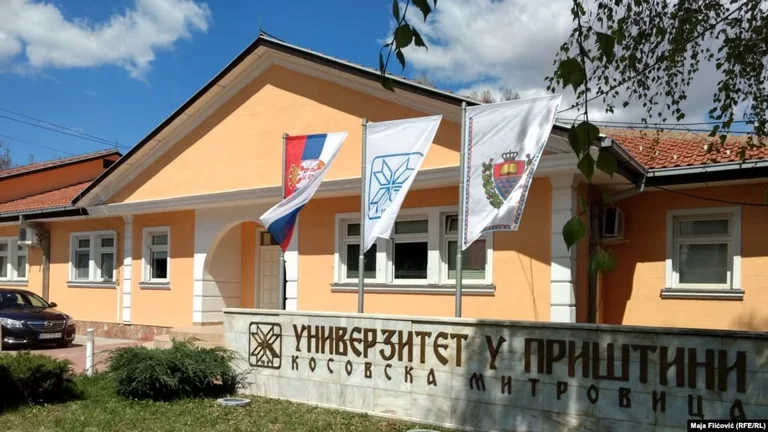
Trajkoviqi has been director of the House of Health in Gracanica, legalised at the University of Medicine in Northern Mitrovica, which continues to operate under Serbia's system, and has also been deputy at the Kosovo Assembly.
On the other hand, sociologist from Pristina Artan Mujarıri, at the same time connoisseur of political circumstances, estimates that the most logical approach for the integration of educational and health institutions which in the majority Serb areas in Kosovo continue to operate under Serbia's system, would be the pragmatic “ekticism”, respectively, “the identification of the existing international models of a similar” and the “selection of solutions that would be appropriate for Kosovo<5>
The “would not need to be started by zero, because such practices of minority integration, even within complex frames, have been applied for decades and in many different situations”, he says.
Kosovo government saw clear stance on integration models
The issue of the integration of Serbian health care and education in Kosovo was raised in September last year, when Prime Minister Albin Kurti said the dual system is not sustainable and that it should be made “incorporation and its union”.
At the time, he said that this integration would be worked together with political representatives of the Serb community, but also with the international community.
This message was sent back to ambassadors of QUINT countries, France, Great Britain, Germany and Italy, in mid-January of this year.
But, until now, it was not clearly specified which integration models are being considered.
On this issue, the Government of Kosovo did not answer questions.
On 10 February, former Kosovo Deputy Prime Minister Besnik Bislimi said the next five weeks are very important for the integration of Serbian healthcare and education institutions and added that all should be constructive on the issue.
At the end of last week, the European Union said that the status of health and educational facilities and services supported by Serbia in Kosovo will be resolved within the framework of dialogue between Pristina and Belgrade, in line with the agreements reached and the laws in power of Kosovo.
Official Belgrade insists on the integration of health and education in line with the Brussels Agreement, as does the Serbian List of Serbs in Kosovo, which has the support of current authorities in Serbia.
What does the Association for Serbian Health and Education foresee?
The Association of Serb majority municipalities agreed in 2013 with the first Brussels Agreement between Kosovo and Serbia, while the principles for it harmonised in 2015.
This association is also mentioned in the Agreement on the road to normalisation of relations, which Kosovo and Serbia accepted in 2023 in Brussels, after which the European Union also drafted a draft state.
Kosovo, however, has not yet sent this draft state to the Constitutional Court for Review, which should be the first step towards establishing association.
The draft-state was never made public, but the medium had access to it and it must resolve numerous open issues, including the functioning of Serbian health and education institutions.
These institutions are designed to become private under the umbrella of the Serb majority municipalities, while Serbia offers “contribut financial framework”.
The draft is specified that they have “status of private foreign institutions” and take permission, or license, to comply with Kosovo's current laws.
Even when it comes to the curriculum, the draft state says it must be regulated in accordance with Kosovo's current laws.
Currently, it is not clear what it would look like, given that Kosovo and Serbia have completely different views when it comes to history or geography, because Serbia does not recognise Kosovo's independence.
However, the draft state states that the Association will have competencies in terms of education, meaning co-operation among municipalities, presentation of educational policies before central authorities, offering counsel to the central authorities for Serbian curriculum, offering advice on changes to the education law, and so on.
According to the draft state, there would also be the standard of “double diplomas approach”, Kosovar and Serbian, which would be recognised both by Kosovo and Serbia.
In the same draft, educational and health institutions can use Serbia's financing-built environments, but this should not prevent the functioning of Kosovo's existing education and health system.
Similarly, the Association of Serb majority municipalities should have competencies in the field of health, facilitating co-operation among municipalities to improve primary and secondary health, representation of health and social policies before central authorities, financing infrastructure projects, medical equipment and materials, collecting or financing social assistance, etc.
What about health and education in Kosovo laws?
The constitution and the laws of Kosovo, which were drafted on the basis of the Martti Ahtisaari Plan, on the basis of which Kosovo declared independence in 2008, also envisions rights for the Serb community, from culture, language, religion and tradition, on the issues of education, health, economic and property, to the formation of Serb majority municipalities through the decentralisation process.
Today, there are a total of ten Serb-run municipalities in Kosovo. Six are located south of the Iber river Iber Gracanica, Novoberda, Shtrpca, Ranillug, Kllokoti and Partesh, while the other four are territorially linked in northern Mitrovica, Leposaviqi, Zvecani and Zubin Potoku.
According to the Kosovo Constitution, minority communities have the right to be educated in one of the official languages at all levels, which means even in Serbian, because this language, along with Albanian, is in official use throughout the territory of Kosovo.
However, Serbian-language educational institutions within the Kosovo system currently do not.
Also, the Kosovo Constitution and the Ahtisaari Plan determine that minority communities have the right to create and manage their private educational institutions, which can be provided financial assistance in line with international law and standards.
Article 20 of Kosovo's Law on Local Self-Government gives the municipalities of Gracanica, Shrpca and North Mitrovica expanded competencies in terms of secondary health care, while with Article 21, the North Mitrovica municipality has expanded competencies in higher education.
The municipalities of northern Mitrovica, Gracanica and Shrpca, with these expanded competencies, have the right to provide secondary health care, including registration and licensing health institutions, employment of health workers, pay wages, and training of health workers and those employed in administration.
When it comes to higher education, the North Mitrovica municipality, with its expanded competencies, has the right to provide higher education, including the registration and licensing of educational institutions, employment of teaching staff, pay salaries, and training of educational and administrative staff. / REL