4 minutes ago
Macedonians in Kosovo and Serbia for cheaper drugs
Periskopi(5 months ago)
(5 months ago)Until Han of Elez for medicines...”, it is the sentence heard by border guards at the border point of Blace between Northern Macedonia and Kosovo, especially on weekends, when Macedonian citizens ask where they are going to the neighbouring state. Elez's Hani is the first city on the side of Kosovo, just five or six kilometers from the border [...]
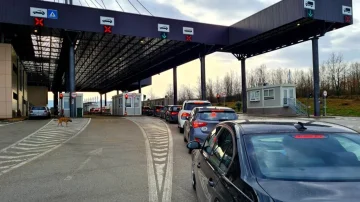
“All the way to Han of Elez for the medication..” is the sentence the border guards hear at the Blace border point between northern Macedonia and Kosovo, especially on weekends, when Macedonian citizens ask where they are going to the neighbouring state.
Elez Hani is the first city on the side of Kosovo, just five or six miles away from the Macedonian border, and is a frequent destination for Macedonian citizens for cheaper medicines, according to evidence that some citizens have shared with Radio Free Europe (REL).
Others travel 35-40km to Ferizaj, shopping and buying drugs simultaneously.
On the other hand, through the Tabanoc border point on the border with Serbia, the destination for drugs is the town of Vranje.
The state has no official figures on how many Macedonians buy medicines in other states, what their monthly therapies are, and how much before “they get from the state on this basis.
But citizens testify that the practice is frequent and that the main destinations are Kosovo and Serbia.
It's heart medicine, trumpet, asthma, such as in northern Macedonia or not on the positive list, and the Health Insurance Fund (FSSH) does not subsidize, or are expensive or simply not found at the pharmacy. So even though a doctor describes the grass, the patient should buy it privately.
“I go for drugs more often than I wish. And when they tell me how much it costs a month, I feel like crying. In Serbia it is more freede”, says Milan S., 48 years old from Skopje, which is in therapy because of cardiovascular disease.
Patients, pharmacists at Macedonian pharmacies and doctors confirm that subx0 pharmaceutical tourism” is becoming an update for many Macedonian citizens.
The same bar
“Ksarelto” of 15 milligrams is the drug that 60-year-old from Skopje, Dragan M., should drink every day after the operation on foot because of the venosis. It's used for treatment and prevention of blood clotting.
But, says Dragan, although the bar has been described by the doctor, it can only be purchased privately because it is not on the positive list of drugs. The price at the pharmacy is 2,907 dinars for a box (about 47 euros).
With the same money, in Kosovo it would buy 2.5 boxes of the same medicine. There he bought them for 20 euros, from 1,200 dinars each, respectively.

The price of “Xarreto” in Kosovo (left) and North Macedonia (right)
But, the investigation of REL at the pharmacy in Kosovo showed that the same drug could be found for 13.58 euros per box.
The last “I took four boxes, received from Pristina and cost me about 5,000 dinars [about 81 euros]. At our pharmacys, with the same money I could only get two box”, Dragan tells the REL.
In Serbia, “xalto” of 15 mg costs between 2,227 and 2,382 dinars, depending on the pharmacy. So even in both neighbouring states it is cheaper than in northern Macedonia.
Marine V. From Skopje, meanwhile, the doctor has described “salofalk 500<18x1>, coli medicines, inflammatory bowel disease. He has to drink his whole life because therapy keeps inflammation under control. The medicine is covered by F SSH, but in the last three years, supply is a regular problem.
“There are often shortages and regularly [at times a year] I ask someone from Serbia to bring me quantities. I take it without a prescription. Surprisingly, we are cheaper than in Serbia, but there are shortages. Cot is on the positive list when it is not found”, Marina tells the REL.
At the Serbian pharmacy, “salofak 500” costs between 1.080 and about 1,340 dinars.
Pensioner Dragica B. Use spray for inhalation “spirespima” maintenance therapy for patients with COPD. He buys it privately at the pharmacy in Ferizaj for about 1,500 denarii. There are about 2,600 dinars in northern Macedonia.
The count of the Statistics Ent, made for Radio Free Europe (REL), shows that the participation of spending on drugs on the total annual living expenses has been slightly dependent in the past four years.
Thus, the cost of medicine for a family in 2025 has increased by 2.65 percent compared to the year 2024, which is less compared to the increases of the first three years.
Small market, import costs, various tax rates
But what the figures do not show is witnessed by doctors and employees at the pharmacy, who are the first contact with patients who buy drugs.
A doctor from an internistic administration in Tetovo told us that even his patients often hear that the medicine they describe is purchased in Kosovo.
We are aware that the drugs we give are expensive, such as CHAxalreto. Others are not always found, yet we describe them, for example, for heart failure. We give the patient what is best for him, and where he will find it is his decision. But yes, we hear from patients that if a bar here costs 50 euros, in Kosovo it could cost 20 euros”, said the doctor who requested to remain anonymous.
Vesna Stavrova, chairwoman of Macedonia's Pharmaceutical Oda, says the problem with high prices is a serious burden for citizens who come to the pharmacy every day and react to the higher prices of specific preparations.
“When the drug is not on the positive list, citizens pay at the price of the market, which is often higher than in neighboring countries. The reason is that we are a small market that reduces the state's negotiating power with large pharmaceutical giants and for all the drugs imported, import costs such as transport, customs and margins increase the price”He says Stavrova to the REL.
She says that often the same grass is cheaper in neighboring countries even because of different tax rates.
The lack of certain drugs on the pharmaceutical market, according to Stavrova, is probably due to the lack of an active product substance -- from increasing customs costs for imported medicines, or from administrative and tender barriers.
Sometimes, the manufacturer has no commercial interest in registering specific drugs in northern Macedonia or keeping them for sale constantly.
How are the prices of drugs defined?
The Ministry of Health defines the drug price policy on the basis of methodology for the formation of drug prices. The Agency for Barna and Medical Equipment (MALMED) is competent for the availability of drugs.
The ministry defines the maximum price of any medicine in the majority trade through comparison analysis of the price of medicines in five reference countries from the region, Slovenia, Croatia, Serbia, Bulgaria and Greece.
The average of the two countries that in analysis show that they have the lowest average price for that bar from all the producers present in that country's market is defined as the maximum price in northern Macedonia.
Meanwhile, a fixed margin is designated for the pharmacy. It is 20 percent, 25 percent, or 28 percent, at the maximum of 1,200 dinars, depending on the high price of each lock.
Pharmacs don't determine drugs.
Bars covered by the state have the same prices in all pharmacys.
From the ministry they say no prices have been raised, not for drugs covered by F SSH, not for what citizens buy privately.
But, they add that “Macedonia is a small market country, and it happens that companies supply the same bar at different prices in different countries, depending on the necessary annual amounts, the number of patients, the conditions that dictate the market, but also the way they pay”.
Pharmacists in Belgrade to whom he talked REL officially does not want to talk about the practice of Macedonians buying drugs in Serbia. But there are already journalistic texts that, for the same reason, citizens of Bosnia and Herzegovina come to Serbia.
The main reason may be that Serbia is larger markets, margins and taxes on added value (TVSH) are lower because of which medicines are often 30 to 50 percent cheaper than in the surrounding countries.
As a bigger market, Serbia also has large distributors that can afford lower prices, while the state in certain cases subsidizes the prices of several basic drugs.
New Enlargement of the Positive List Expected
The positive list of drugs for the last time expanded in September 2024, and after ten years of the latest update on the list in 2014, when it was enriched only by a new bar.
SaskoKlekovski, director of the FSSH, warned that in 2026 three times the positive list of drugs with a focus on cardiovascular disease drugs, which causes about 60 percent of deaths in the country.
One of them is exactly “ksalto”, which Macedonians buy in Kosovo twice as cheap as we do. From the Health Ministry say this bar is one of the priorities to be placed on the positive list of drugs in 2026. But the final decision must be made by the FSF Steering Board.
The decision, however, depends on available tools for new drugs on the positive pharmaceutical list, so that those who make sure the grass is available with compensation set by the state, while the patient has the right to choose bar”, the Health Ministry says.
Even from the FSSH, they say this bar is subject to procedure under the envisioned rules and is expected to be considered for inclusion, if conditions and procedures are met.
“Funds, as health service funder, strongly support measures and reforms for greater availability of straight prices and lower costs for patients”, reportedly in response to the Fund for REL.
A Great Burden for Families
The World Health Organization (OBSH) in a report published in 2022 entitled “Health Systems in Action: Northern Macedonia” has stressed that high costs for health care continue in northern Macedonia, mainly due to private payment for medicines.
“There is a huge dependence on pocket payments, which made up 40.4% of total health spending in 2019, one of the highest rates in Southeast Europe. As a result, catastrophic health costs remain a problem, especially for poorer families, and it is largely driven by pocket payments for ambulance drugs”, said in report.
The European Commission's latest report on North Macedonia's progress, it says, is 41.7 percent of total health - related expenses, which pose an obstacle to equal access to health care. It is also stressed that more budgetary vehicles and new drugs are planned to treat rare diseases, but they remain sufficient for only about a third of the registered patients”. / REL