12 minutes ago
How will Iran respond, Israel these are the five possible scenarios
Periskopi(a year ago)
(a year ago)Israel attacked Iran at night. According to Israeli military sources, facilities linked to the Iranian nuclear programme and military locations, including the key bridge enrichment complex in Natanz, have been hit. Blasts have also been heard in Tehran. Israeli Defence Minister Israel Katz has declared a state of emergency throughout Israel's territory. Meanwhile, Iran [...]
Israeli Defence Minister Israel Katz has declared a state of emergency throughout Israel's territory.
Meanwhile, Iran has sent hundreds of fears towards Israel, but the Israeli Army has announced that everyone has successfully crashed, Telegrafi reports, broadcast. Periscope.
The United States of America has warned that a conflict with Iran would be chaotic and could sink the entire region into war, but Israel has decided nevertheless to launch the attack.
Although Iran has been significantly weakened by international sanctions and isolation, it still maintains the capacity to destabilise the region and the global economy.
The British newspaper The Times has listed five possible scenarios of Iranian response:
1. Stage one: Iran reacts to missile attacks on US and Israeli bases
Iran owns thousands of medium-range missiles capable of hitting US bases in the region including those in Iraq and al-Udeid air base in Qatar. In 2020, after the murder of Iranian General Qasem Solemann of an American fears, Iran struck American bases in Iraq. Although there were no casualties then, a new attack may be much broader, with numerous objectives and the involvement of Iranian allies in Iraq and Yemen, which would significantly make defence difficult.
2. Stage two: Iran attacks oil fields in region
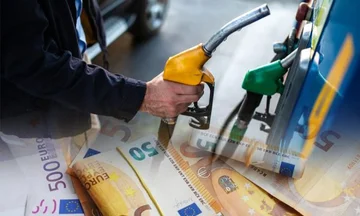
The Middle East produces about 30 percent of world oil, mainly in Saudi Arabia, the United Arab Emirates, and Kuwait. In 2019, a missile attack and fear over an oil object in Saudi Arabia blamed by Iran . halved Saudi oil production and temporarily removed 5% of the global supply.
Although Iran has recently approached some Arab states, it has made clear that if its nuclear facilities are attacked, the oil of the region is in sight. Israel and the US will try to neutralise as many Iranian missiles as possible in the first wave of attack.
3. Stage three: Iran blocks sea flow in Persian Gulf
This region is key to transporting oil from the world to 30 percent of the supply passes through the Strait of Hormuz. A escalation of the conflict could paralyse the sea movement and increase global oil prices. British naval agency U KMTO has already issued a warning for ships operating in the region. Iran has a history of minim and ship attacks on these waters as a form of pressure on Gulf and US states.
4. Stage four: Iran directly attacks Israel
Iran has earlier threatened to attack directly if Israel hits its nuclear facilities.
In October, following Israeli bombings on Iranian missile and air defence facilities, Iran issued a hail of rockets against Israel.
Most were toppled by Israeli air defence, with the help of the US, Britain and France, but several missiles hit significant targets, including an air base where F-35 planes are located and near Mosad headquarters.
5. Stage five: Iran Allies Join Conflict
Hezbollah has been Iran's leading ally for decades has played a key role in Israel's curb, but is currently weakened, as has Hamas in Gaza. However, Iran still enjoys strong support from Huthi in Yemen, which has fired missiles towards Israel, as well as from the Iraqi-related armed groups that have attacked Israeli and American targets in Iraq and Syria.