14 minutes ago
Weber: New German government must make a strategic turn in Kosovo- Serbia
Periskopi(a year ago)
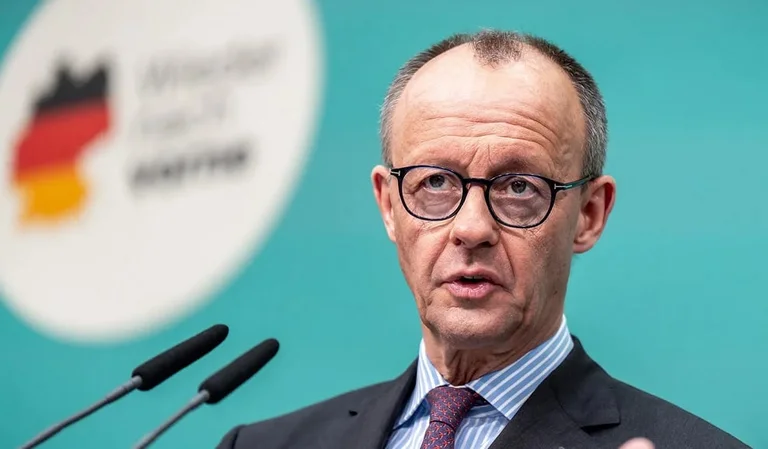
(a year ago)Germany's new government, led by Friedrich Merz, must take a leading role in European Union policy (BE) towards the Western Balkans, and contribute to developing a strategic approach to the region, estimates Bodo Weber, senior co-worker of the Council for Democratic Policy in Berlin, in an interview for Radio [...]
Germany's new government, led by Friedrich Merz, should take a leading role in the European Union's policy (BE) towards the Western Balkans, and contribute to developing a strategic approach to the region, estimates Bodo Weber, senior associate of the Council for Democratic Policy in Berlin, in an interview for Radio Free Europe.
German demorist leader Merz took the oath in Bundestag on May 6th and became the 10th Chancellor in Germany's history after securing the necessary majority only at the second round of voting.
As for Germany's approach to dialogue between Kosovo and Serbia for normalisation of relations, Weber estimates that Berlin, instead of essentially restarting this process, came up with the Franco-German proposal, which led to the full destruction of the <x0) political dialogue” and in two agreements that, according to him, do not exist in reality.
According to Weber, Germany's new government must undertake a <x0 strategic” towards Serbia and the policy of the regime of President Aleksandar Vuciq, so that political dialogue does not sink.
The agreement on the road towards normalisation of relations, which Kosovo and Serbia accepted in 2023, was originally known as the Franco-German plan, and was supported by the EU and Western countries. Later, an annex was agreed on to implement the agreement, but in practice almost nothing has been accomplished.
Weber says it remains to be seen whether Germany has or is building an appropriate foreign policy strategy, but that it will surely express concerns for the third non-effective “acres in the Balkans”.
Mr. Weber, how would you describe the government's foreign policy strategy of Chancellor Merz? How does it differ from the policies of his ancestors, Olaf Scholz and Angela Merkel?
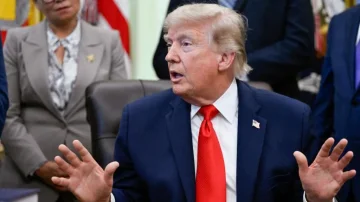
Bodo Weber: It's still early to judge. With visits to Paris and Warsaw, as early as the first day of the mandate, as well as the joint visit to Kiev, with counterparts from France, Britain and Poland, Chancellor Merz sent a strong signal that Germany will assume a leading role within the EU at a global level. The policy of the new government has been defined since coalition negotiations, in light of American President Donald Trump's behaviour, and his administration towards Ukraine and the EU, with particular emphasis on strengthening the common EU security policy, given the conviction that the US has withdrawn from Europe as asset partners.
However, first steps, such as visits to Ukraine and joint initiative B E-US for ceasefire, coupled with claims that the US remains the main partner, resulted in fruitless results, as seen when Trump abandoned the initiative and surrendered to Vladimir Putin. We'll see how it develops further.
However, the new government and the new Chancellor are stressing the need for a more decisive policy on the European and international plan. The question remains whether they will have the necessary strategy.
What role do you think Germany should play in EU policy towards the Western Balkans?
Bodo Weber: Germany must again assume the leading role in EU policy towards the Western Balkans, and help create a strategic policy for the region something the EU has been missing for more than two decades, including the urgent need for a turn towards Serbia and a more political approach to the crisis in Bosnia.
How do you see the commitment of this government under the Berlin Process?
Bodo Weber: Unlike the arrival of the previous Scholz government, when it was not clear whether the Chancellor intended to continue with the Berlin Process, this time the coalition agreement clearly announces its continuation. So Berlin remains committed to this process.
How can Germany approach the EU enlargement process, given the political context in the EU and developments in the region?
Bodo Weber: Currently, this is unclear as the whole policy towards the Western Balkans. The CDU/CSU [Democratic Union/Social Union], during the time in opposition, has supported the concept of escalating membership, which, I think, is a failed concept and, in fact, a way to reject full membership, by offering a second-hand status. In the coalition negotiations, Social Democrats managed to neutralise this concept. However, the agreement cites the need for internal reform of the EU, to accept new members a demand that existed even earlier, but without success. The main problem of German politics is that, for three decades, it has not made a serious contribution to the strategic debate on the future of the EU and, therefore, to the future of enlargement.
What role can Germany play in the Kosovo-Serbia dialogue, especially under the leadership of Chancellor Merz?
Bodo Weber: The new conservative government faces the legacy of political dialogue launched by Chancellor Merkel, with the support of conservative deputies. Under Scholzin, instead of a deep restoration of dialogue, following the dangerous episode of exchange of territories, the German government took the Franco-German initiative with an insufficient political will, and continuing the failed policy of reconciliation to the Vuciki regime. The result was the collapse of dialogue, and two agreements that, in fact, do not exist.
The question is whether the new German government will insist on these unfulfilled agreements, or will have the courage to promote a deep resumption of dialogue for a comprehensive and final agreement. This would require a strategic turn of EU policy towards Serbia, not treating the Vuciqi regime as a partner of values. But that would also mean cutting off CDU relationship with “parin sister” The SNS [Serbian Progressive Party]. It remains to be seen whether the CDU and Merz have the strength to do so. By contrast, dialogue will deepen even more in crisis, and the EU will lose more credibility as democratic actor, Kosovo and Serbia.
Last year, Germany and France conditioned support for Kosovo's membership in the Council of Europe with the establishment of the Association of Serb majority municipalities. Will Germany take that stand?
Bodo Weber: Unlike Paris, Germany has been milder in conditioning for Kosovo's application to the Council of Europe. If Berlin is to continue with this policy of Association ) in the absence of a strategic framework remains to be seen, and it will depend on whether there is a strategic twist in dialogue policy.
How can Germany's bilateral support to Kosovo be developed with this government especially in terms of political conditions or development assistance?
Bodo Weber: I expect bilateral relations to remain stable. With the success of the Social Democrats, who opposed joining the Ministry of Development with that of Foreign Affairs during the coalition negotiations, access was automatically limited to lowering funds for development assistance in general including for Western Balkan countries. This is an important signal, especially when we were AID [United States Agency for International Development] has withdrawn, and some EU countries have significantly reduced assistance.
What approach can Germany have to the growing presence of foreign actors, such as Russia, China or Turkey, in the Western Balkans?
Bodo Weber: Germany, as so far, will remain concerned by the actions of harmful actors in the Balkans. But, it remains to be seen whether the US, under the Trump administration, will join these actors that undermine EU security interests and values in the region. Only through a decisive and strategic EU policy can these actors be successfully confronted and serious leadership is needed from Germany. /Periscope/