16 minutes ago
Shala i PDK expands KEK deadlocks
Periskopi(a year ago)
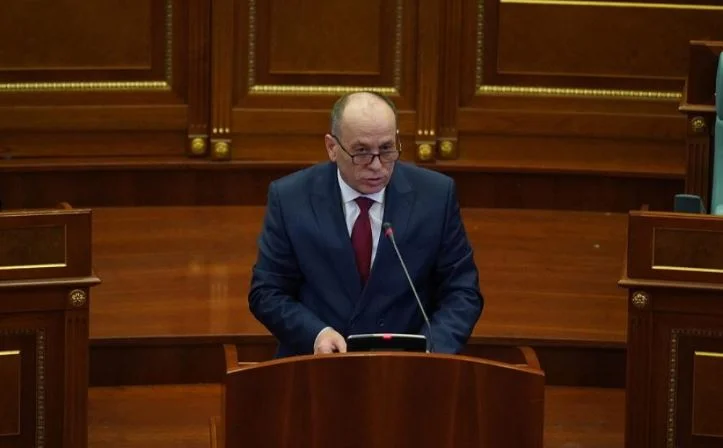
(a year ago)MP from PDK ranks Ferat Shala has commented on the current situation in the Kosovo Energy Corporation. He says the latest analysis has found significant weaknesses and challenges in this Corporation. Presenting data, Shala says there are differences in energy production performance, between planned and real figures. “These deviations [...]
He says the latest analysis has found significant weaknesses and challenges in this Corporation.
Presenting data, Shala says there are differences in energy production performance, between planned and real figures.
These deviations signal a deadlock in production sustainability and poor operational planning” has said, among other things Shala. /Periscope/
His full post:
How's KEK today?
Given the compared analysis of the Business Plan and the Annual Kosovo Energy Corporation Report (KEK), considerable weaknesses and challenges that require increased institutional attention and supervision have been identified.
1. Incompatibility to energy production performance. The energy planned for 2024 was 5.89 million MWh, while real production was 5.49 million MWh.
) TCB: Planned 3.73 million MWh CHA realised 3.55 million MWh (95.3%)
) T CA: Planned 2.16 million MWh Wh made 1.94 million MWh (89.7%)
· These deviations signal a deadlock in production sustainability and poor operational planning.
2. Making coal and sweat below target
·Coal Production: Planned 9 million tonnes carried out 8.1 million tonnes
R/Environment: Planned 13.2 million m3 m BAR made 10.5 million m3
3. Delayed projects impact revitalization and modernisation
R/Vanes in donor-funded projects, especially those of the EU, have contributed to delaying the modernisation of the TCB turbines and restoring old capacities.
A3 unit rehabilitation: Why didn't it start in 2024?
· Failure to implement projects negatively affects improving energy production capacities.
4. Strategic projects with uncertainty and delays
· Project Solar Park 100MW:
) According to the Business Plan, however, it is still in the phase of preparation for the tender documentation.
) Good news about:
Consultative Company and its Choice
▪ Agreement with EIB and grants via KfW
▪ Intervening in the Obilic Community area map
Project estimates are contradictory:
▪ Low value: 47.9 million
▪ Average: 59.5 million
▪ High value: $70.2 million
without clear reasoning about the differences between them.
PROBLEMET WRITER IN FINANCIAR MENAJING AND PORTURE
1. Incompatibility between audience opinion
KEK's annual report refers to unqualified opinion by the private audience for 2023, with similar expectations for 2024.
Uh, meanwhile, the National Auditing Office (ZKA) has given qualified opinion for the same year, due to:
The unscheduled re-evaluation of assets (71.4% of assets are completely depreciated);
) Not including certain properties in the register of assets and incompatible with the actual situation;
KEK property that still figures in the register, although at government's decision they have passed under the ownership of Infrakos s.
(See ZKA's 2023 report).
2. Overuse of the negotiation procedure not justified.
Uh during 2023 they signed:
40 contracts through the negotiation procedure without publishing contract reporting, worth a total of $70 million;
9 contracts worth $1.9 million, linked due to emergency situations, but with insufficient rationale KCPP, this has been the result of poor planning.
3. Foreign auditing contract, despite ZKA auditing
· KEK has entered financial audit contracts for 2022 and 2023 worth of $4,700, bypassing the legal obligation for ZKA auditing.
· According to ZKA, this conflicts with:
Article 137 of the Constitution of the Republic of Kosovo
) Public Enterprise Law
The Law on the General Auditor and the National Auditing Office
4. The frequent use of minimal procurements in 2023
·163 such contracts were signed in 2023 (33% of the total).
· This indicates a lack of planning by research units and weaknesses in internal management.
C SUCCESS OF KEK AND INSTITU COONET PRAYING
· What is the current status of the solar project, and is it accessible for it to begin by 2025?
· Why are private audiences engaged, and what are the reasons for their differences of opinion with that of the ZKA?
· Have measures been taken for the update of the asset registry and for periodic reassession?
· Are the legal and financial consequences of signing contracts contrary to the Public Procurement Law analyzed by management?
In conclusion, differences between the Business Plan and the KEK Annual Report highlight weaknesses in planning, management, financial reporting and realisation of strategic projects.
The KEK management requires clear responsibility and the company of measures to increase transparency, efficiency and implementation of legal and sound standards.