17 minutes ago
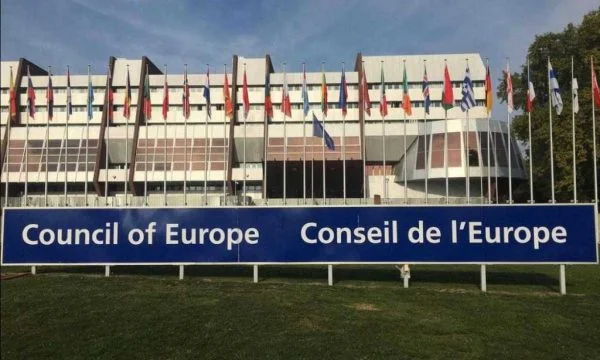
76 years from founding of the Council of Europe
Periskopi(a year ago)
(a year ago)The Council of Europe, an international human rights organisation, democracy and rule of law in Europe, headquartered in Strasbourg, France, was established on May 5, 1949, to achieve a greater union among member states on the basis of their common traditions of political freedom. Idealologists [...]
The Council of Europe's greatest idealologists were Winston Churchill, Robert Schuman, and Conrad Adenauer.
The Council advocates freedom of expression and media, equality and minorities in member states.
This organisation has also carried out child protection campaigns, against hate speech and Roma rights, which make up the largest community in Europe.
The Council of Europe helps member states fight corruption and terrorism, as well as carry out needed judicial reforms.
Its body of experts on the Constitution, known as the Venice Commission, offers legal advice to various states in the world.
Being an international organisation, the Council of Europe cannot make laws, but has the capacity to promote the implementation of international agreements, reached by member states on different topics.
The two key Council troops are: The Committee of Ministers and the Parliamentary Assembly.
The organisation has 47 member states, covers approximately 820m people and operates on an annual budget of about 500m euros. The Council of Europe is an official observer of the United Nations.
Unlike the EU, the Council of Europe cannot make binding laws, but has the power to implement selected international agreements reached by European states on different topics. /Periscope/