4 minutes ago
How the Pope's Body Is Preserved - Ancient Practice That Protects It From Decomposition
Periskopi(a year ago)
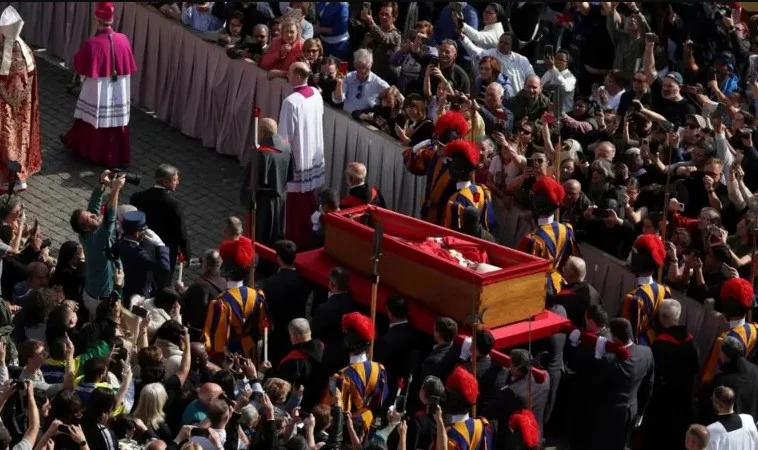
(a year ago)To ensure that believers can see and perform their prayers, Pope Francisescu has submitted to the body conservation technique called the Thanatoprasi. His body is kept in a simple black coffin inside another wooden coffin that will remain open during the exposure process. [...]
To ensure that believers can see and perform their prayers, Pope Francisescu has submitted to the body conservation technique called the Thanatoprasi.
His body is kept in a simple black coffin inside another wooden coffin that will remain open during the exposure process.
Before his life was changed, the holy father insisted that his body not be placed in a cataphala, as the traditional coffin made of celestial wood, oak, and lead is known.
Thanatopraxia is not mumification but a body conservation technique used for public exposure of lifeless bodies.
The practice, allowed in Italy under a law adopted in 2022, is considered a modern and evolutionary embalming method and is distinguished by the use of less aggressive substances that respect the human body.
It consists of a hygienic treatment that slows down the decomposing process, allowing the deceased's natural appearance to be preserved for several days.
The procedure includes injecting protective fluids into the arterial system, full body disinfectation, a “mack up” moderately, as well as the positioning of the hands and facial adjustment to ensure a peaceful presentation.
In the past, popes were subjected to embalming, a more aggressive technique that envisions the removal of internal organs and the injection of solid substances such as formal and alcohol./Periscopi/