a minute ago
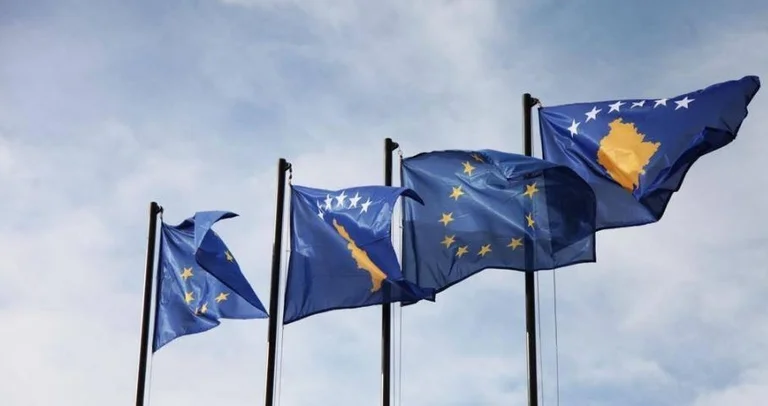
European Union: Fast government formation is essential for Kosovo
Periskopi(a year ago)
(a year ago)The European Union has said it is essential for Kosovo to form the new government as soon as possible, as the country has stalled in efforts to form new institutions more than two months after parliamentary elections. “The government's rapid strengthening is essential for Kosovo to advance important reforms in it [...]
“The government's rapid strengthening is essential for Kosovo to advance important reforms in all sectors, which will improve the quality and conditions of life for the people of Kosovo”, the EU Office in Pristina said in a written answer to Radio Free Europe Friday, broadcast Periscope.
She said the EU is ready to work closely with the future government, once it is formed, and to continue Kosovo's support on its path towards European integration.
Kosovo failed to establish the new Parliament twice within this week due to procedural disputes among political parties that secured seats in the February 9th parliamentary elections.
The Democratic Party of Kosovo (PDK), the Democratic League of Kosovo (LDK) and the Alliance for the Future of Kosovo (AAK) insist that members of the government, who have been elected MPs, will otherwise not vote for the report to verify MPs' mandates, step that must be passed for the continuation of the constitution's contract and formation of the new government.
But, LVV leader and incumbent Prime Minister Albin Kurti emphasises that such a formal act is unnecessary, because the executive is in office, or resigns since March 23rd.
On Thursday, ambassadors of Great Britain and Germany in Pristina called on political parties to co-operate in overcoming obstacles to the formation of Kosovo's new institutions.
It is not clear whether disputes between parliamentary parties will be resolved before holding the continuing session scheduled for Saturday 19 April.
The PDK, LDK and AAK blamed LVV on trying to buy time for political shopping “, according to them, that Albin Kurti's party has no votes to choose top parliament and neither Government.
Vetevendosje won the February 9th election, with about 42 per cent of the vote, or 48 seats from 120 as far as the Kosovo Assembly is concerned.
But she needed at least 61 seats to form the new government.
After LVV most votes won PDK, with 24 seats, and then LDK with 20 sosh.
The AAK and the Initiative won eight seats, out of which three belong to the latter.
The head of the Initiative, Fatmir Limaj, has been the only one who has left open the possibility of co-operation with Kurti from other Albanian parties.
Kurti had also met the leaders of 10 non-Serb minority parties last week in an effort to secure the votes needed for forming the new government, but it is not clear yet if she has the support of all of them.