10 minutes ago
Osmani says Kosovo joins US stance against Dodik's Bosnia actions
Periskopi(a year ago)
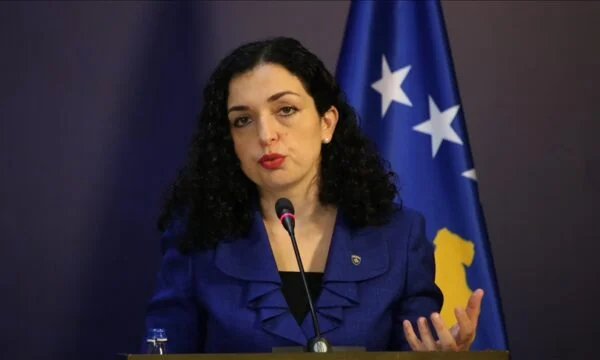
(a year ago)President Vjosa Osmani said Kosovo joins US Secretary of State Marco Rubio's statement, and re-exemplifies full support for Bosnia and Herzegovina's territorial integrity and sovereignty. “We also strongly condemn any action that undermines the foundations of Bosnia and Herzegovina, because it threatens the peace and stability that our region has worked inseparably for [...]
“We also strongly condemn any action that undermines the foundations of Bosnia and Herzegovina, because it threatens the peace and stability that our region has worked hard to achieve through multi-year sacrifices and with the steadfast American support”, Osmani wrote on the X Sunday.
US State Secretary Rubio said on Saturday that Republika Srpska President Milorad Dodik's actions pose a threat to Bosnia and Herzegovina's security and stability, as well as undermine its state institutions.
Dodik decreed on March 5th laws adopted by the Parliament of the Republika Srpska ? Bosnian Serb entity, which ban the work of the Court, Prosecutorial, State Investigation Agency (SIPA), as well as the Bosnian High Judicial and Prosecutorial Council on the territory of this entity.
But on March 7th, Bosnia and Herzegovina's Constitutional Court declared these laws unconstitutional, temporarily suspending them while it was expected to stop them eventually after a thorough review.
Leaders in Sarajevo and Bosnian Western supporters have accused RS ethnic leaders of reaching out for the eventual division from Bosnia, though the latter have denied the charges.
Several other actions related to this entity have escalated tensions in recent months.
The Bosnian court sentenced Milorad Dodik, president of the Republika Srpska, to one year in prison and banned the exercise of the president's office for six years.
Dodik, who has close ties with Russia and has denied the accusations, is under sanctions from the US and the United Kingdom for actions that, according to Western governments, target the division of Republika Srpska from Bosnia.
The system of governance in Bosnia and Herzegovina has a country of about 3.1 million people. It is among the most complex in the world.
Since the Dayton Peace Accord, which was signed in 1995 and ended the war in Bosnia, the country consists of the Bosniak-Croat Federation and the Serb-dominated Republika Srpska under a weak central government.
Until Republika Srpska can pass laws on domestic issues, state-level laws and institutions remain above all, according to the constitution.
Bosnia and Herzegovina and Kosovo do not recognise each other, due to opposition from Republika Srpska.