4 minutes ago
International law expert: Special decisions to color Kosovo's war, independence event
Periskopi(a year ago)
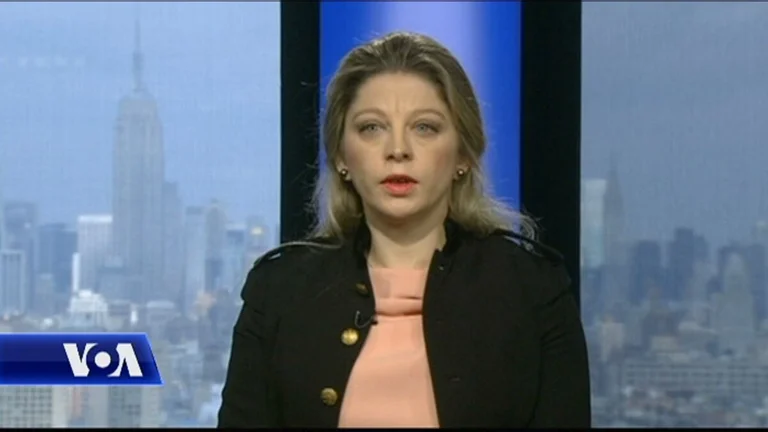
(a year ago)International criminal rights and human rights expert Rudina Yasini says the decisions to be made at the Special Court in The Hague “without discussion” will be “Egypt the activity of Kosovo's liberation war, but also independence”. The Senate Lawmaker of Oxford University is part of the defence group in the case of former leaders [...]
International criminal rights and human rights expert Rudina Yasini says the decisions to be made at the Special Court in The Hague “without discussion” will be “Egypt the activity of Kosovo's liberation war, but also independence”.
The Senate Lawmaker of Oxford University is part of the defence group in the case of former Kosovo Liberation Army leaders. She said in the “Public Square” of Ditmir Busat that in 2017, when holding a speech in Kosovo, it was shocked how little “was known what was coming.
I have held a speech in Kosovo in 2017 and have been shocked how little it was known by Kosovo lawyers, judges, prosecutors there of Albania, but it is about what was coming. So it wasn't enough that a change of constitution and law-making an institution ésuiu gneris would paint, and that's what I can say with conviction, that decisions that will be made, without question coloring the KLA's activity, because this issue involves all operational areas of the KLA, from the beginning of January 1998 to December 2000. So, coloring, as a result of the Kosovo liberation war, but also Kosovo's independence. So, we can't be... it requires more vision and foresight, that's what I mean, and that I see missing on both sides, both in Kosovo and Albania”, she said.
Yasin said that the Special Court now has no way to undo, when asked about comments concerning a possible withdrawal of the United States of America from supporting this court.
It would be a huge damage if a judicial institution, whether we agree on its existence or not, would be closed and how to end with truth, because it is not only the institution, but the process, individuals, is a huge investment founded on the very important principles of justice. So the damage goes beyond the fact, because it could be the nationalist, internal interests of Kosovo, all of it, but this is an international commitment that Kosovo has once taken. The state of Kosovo has created this. It was created by law by the Kosovo Parliament. De jure this is the Kosovo institution and only the institution or state of Kosovo has the right to take any steps they see reasonable to limit the activity of this court. It's never a foreign state. I'm speaking in principle, I would find it absurd to tolerate such a drastic act and I would say inconsistent, to be honest. The damage would be colossal”, she said.
The professor also commented on Albania's position on the issue, which had initially supported the winning of this court, while then undertook an initiative at the Council of Europe to review international support for it. That initiative, according to Yasin, was the highly delayed “”.
The “associated with the initiative you mentioned was a very delayed initiative in the process. I think Albania could have been much more active, not in direct interventions of what Kosovo was doing, but with consultancy groups, including very good domestic and international jurists. Let's not forget one more thing, that some of the alleged criminal acts include part of Albania's northern territory. So Albania cannot be completely disfellowshipped or indifferent from what happened. But he could be helpful. It could be helpful in a way more... from a legal point of view, to say, to consultations, to raise a voice more”, she said.
After mentioning the international courts in advance, when he mentioned Special, he said that “rall times we have a court of this type”.
“International Courts ad hoc or hybrids were created primarily with either a UN Security Council resolution as has been the case of the former Yugoslavia, or the Tribunal for Rwanda, or an agreement between the United Nations and the relevant state where these crimes occurred, such as Cambodia, where a 35-year-old court behind the crimes of “kmer <x1kmer <62> of red can be known for the public or, for example, the special court for Lebanon. Courts rarely, so whether the hybrid court or internationalised courts, we rarely have a court of a kind like this established or established in Kosovo. And here, of course, not only I, but many scholars and practitioners in this field have initially expressed a huge scepticism about the way this court was being created. Also for law enforcement, amid customary criminal law, criminal procedures and Kosovo law”, she said.
Yasini said that the huge “space” given to the judges of this court will bring consequences to “not only Kosovo”.
So this very great nonsense that is being given to these judges are acting entirely according to the law that has been put before them I think there will be consequences not only for Kosovo, but there will be consequences and it will be a not-very good precedent for international criminal law, but look at the entire spectrum of international criminal law. This institution has been developing its activity in a process for several years. I cannot speak in detail on issues, but I can say that I find it difficult how sovereign states in the future can create institutions or put their citizens in a structure or in a jurisdiction of this kind. The jurisdiction remains to be seen that this court will start”, she said.