10 minutes ago
Government Criticised for Unappropriation of Expensitation
Periskopi(a year ago)
(a year ago)The government has recommended to the Energy Regulatory Office to increase the blockade for consumers who spend over 800 kilowatts per month and not be affected by the announced expensive flow, those who spend less. But the executive is not positioned against expensiveness. And at the initiative “No Cent, More”, they criticised [...]
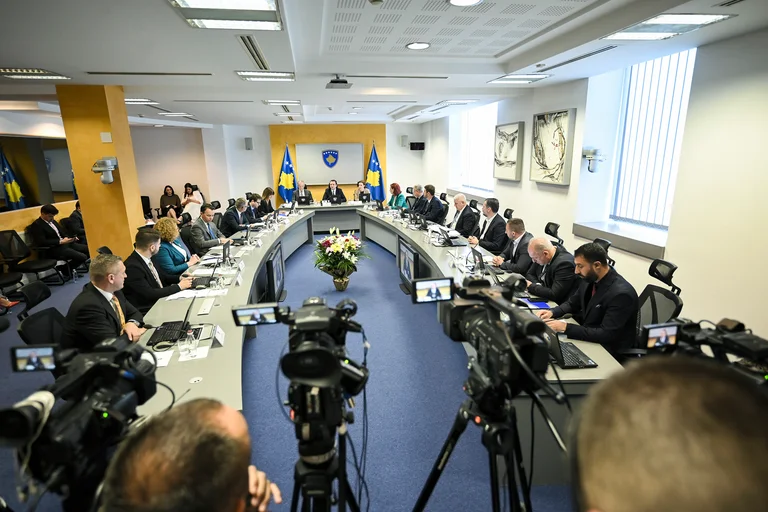
The increase in blockades for consumers who spend over 800 kilowatts per month has been proposed by the government in comments conveyed to the Energy Regulatory Office (ZRRE) about the tariff review.
For the ZERE proposal that the electricity price be expensive by April 1st, the Ministry of Economy estimated that the increase should not affect households, writes Time.And transmits Periscope.
In this regard, we consider it fair that growth will not affect households that consume less than 800 kWh and increase the number of consumer generation (rouges) for consumption over 800 kWh”, the ministry has announced.
According to the ministry, actions will be undertaken and taken “to limit the impact on consumer tariffs”. Here he listed the failure of energy sold by KEK, as well as the fact that in the period 2022-2024, there has been a decrease in import, and that even household consumption has stabilised “due to the establishment of blockade in the last three years”.
The disgruntled data shows that a considerable portion of consumption during winter comes from a small percentage of consumers. For example, in November 2024, 12% of households (over 1000kWh) have consumed 39% of total electricity; or, in January 2025, 9% of consumers (over 2000 kWh) have consumed 29% of total electricity, and more than all consumers who spent under 800 kWh together (according to data from the supplier)”, it is said in one of the trains mentioned by the ministry.
According to the ministry, energy spending from businesses has evidently increased.
But the ministry's proposal, Ali Sefay from the civic initiative “no Cent more”, qualified wordplay, since, as he said, even if the blockade is implemented, citizens will be indirectly affected by expensiveness.
And if you want me to play a game from the left concept, which we're going to intervene to preserve the categories that are more sensitive, by carrying this bill to the categories they spend most, separately to businesses, it's like telling someone you're willing to pay the electricity, it's not going to raise your electricity bill, but the cost that's happened to increase rates you're going to pay when you buy oil, sugar, or whatever service you're going to do, Sefaj said.
A day earlier, the deadline for handing over comments to the ERCE for the process of testing tariffs has been closed. Anti-expensation comments also conveyed the Presidency, proposing the removal of VAT and possible subsidisation by the Government for affected categories.
And the nongovernmental organization I The NDEP expressed concern over the failure to publish concrete proposal from the ZERE on the tariff structure.
The lack of such a proposal makes informed participation of citizens, consumers and civil society almost impossible in this consultative process, which conflicts with the legal obligations the ZRRE has for transparency and active public participation”, is the reaction it has made to INDEP.
At the ZERE address, comments also sent about 600 consumers.
The new tariff decision is expected to be made before April 15th, but that their effect will be retroactive and will be calculated on April 1st.
And, the Economy Ministry has indicated that investments expected to take place at KEK will result in the months-long halt of the Kosovo B blocs during 2025-2027.
“Invesions on TC Kosova B are necessary to prevent serious disruptions in supply. Your contribution today ensures extensions of thermal life expectancy for 20 years, regular production and significant reduction of air pollution and dependence on expensive imports. Investments increase the power plant's capacity for 80MW and annual production for 600 GW, lowering import for at least 23m euros per year and increasing exports to at least 20m euros annually”, the ministry's comments said.
According to the Ministry, limiting the need for electricity imports through increased efficiency and consumer reduction is essential for the country to overcome this period as little as possible.
The government has pledged that in the coming years it will invest in the construction of new generation capacities from the wind and sun, power storage batteries, network expansion and increased central heating capacity in Pristina, and in the medium term construction of new central heating systems in other cities. /Periscope/