2 minutes ago
The Special Court decides on former KLA leaders' defence claims that judges are holding the hands of the Prosecution
Periskopi(a year ago)
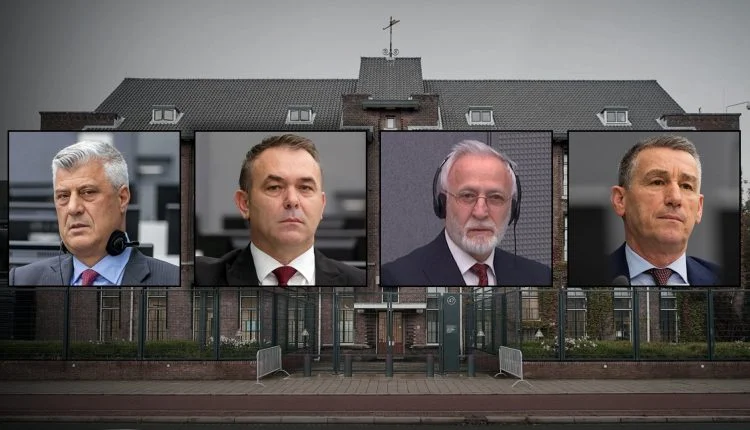
(a year ago)In Kosovo Specialised Chambers ( The DPSK) in The Hague has taken a decision to refuse the joint request of defence teams representing Hashim Thaci, Kadri Veselin, Rexhep Selimi and Jakup Krasniqi to the court for maintaining impartiality. The decision was made on February 26, 2025 by Judge Charles Smith. [...]
The decision was made on February 26, 2025 by Judge Charles Smith III..
On 13 November, the protection of four indictees had demanded that the panel take the necessary steps to ensure their impartiality in the process and to limit prejudice against defence during judicial questions.
So the protections of the four defendants had demanded that the panel act impartially during the questions, but also ask questions that test the SPS case.
They had also demanded that the court be limited to the use of Sugitistic questions to witnesses and avoid using questions as a judicial tool to provide evidence against defendants who pass direct prosecution investigations, the Justice Vow reports.
Defences have argued that the way the panel has asked judicial questions throughout the trial has created views of prejudice and rights for a fair, independent and impartial judgment against the defendants have been violated.
The ZPS had indicated that this plea of protection should be rejected, adding that it aims to prevent the court's work on finding the truth and to unacceptablely limit the right of judges to question witnesses.
The SPS has added that defence charges related to the damage of defendants and prejudices are procedurally unfounded and inaccurate.
While the safeguards were again countered by saying their request is well-based, insisting that the judges' questions have been harmful to the defendants' rights to a fair trial.
Defences claim that the SPS does not object to the judges' questions so far because they have not tested the prosecution case, but rather the alleged innocence of the defendants.
In one case, Wessel's defense has even claimed that receiving notice just prior to the judicial question the panel intends to use is not enough notice but is unfair and harmful.
Consisting with those who have put forward Wessel's defence, Thaci's defence has said this practice is unfair to protection because of the lack of due notification. Similarly, Selimi's defence and Krasniqi had joined these arguments.
“The ZPS responded by saying it has quickly discovered Thaci's defence and Selim's defence articles that had not been distributed before. ZPS also argues that (i) the defence requirement to delay the judicial question regarding this material is premature, and (i) if necessary, defence may require additional time after the constitutional question”, the decision is said.
On the other hand, referring to Article 21 of the DPS Law, Chief Judge Smith III has claimed that the panel has the authority and the task of conducting questions that help test the SPS case unless they are incorrect or unfair.
The defense has also argued that the time the court is using for their questions and is affecting the development of procedures. They have said that any gap in the submitted evidence should be addressed by the parties through questions, while judicial questions should usually be used to clarify aspects of evidence and should not last longer than the question of the parties.
The defence has suggested that there is great difference in time demanded by the SPS and defence teams for additional questions following judicial questions. They claim judges' questions Z. The SP does not perceive them as a challenge to its case as defence sees them as damaging to the principle of the accused's innocence. As a result, they claim that even a reasonable observer cannot perceive judicial questions as impartial.
“The defence argues that this is contrary to: (i) the right of the accused for an independent and impartial judgment; and (ii) the ethical task of the panel to be not only subjectively impartial, but also to create a sense of impartiality when asking questions”, it goes on.
In this part, the SPS had responded that interpreting protection for the time used by judges for questioning is deceptive, meaningless and insufficient to file claims of judicial prejudice without taking into account the specific circumstances of each witness and questions asked by the panel.
The SPS has also indicated that the defence has not acknowledged that some of their additional questions have been repeated and outside the limits of judicial questions for which even the panel has taken corrective measures.
While, the defence replied again, saying Apel has made it clear that court questions should not lead to concerns of prejudice, damage or interference in the rights of the accused. The defence argues the panel has violated this. While they have rejected the SPS defence argument, it is trying to prevent judges' duty to reveal the truth.
Defence has rejected Z The SP, which said the difference between the time required by the parties for additional questions, is due to repeated questions and those outside borders.
Subsequently, Defence states that guiding questions were asked by the panel, although the panel has ordered defence to avoid such questions and has stressed that guiding questions are specifically prohibited”, the decision says.
While the panel of judges in this decision has noted that the rules do not impose any restrictions on the time they can use in question, adding that in many judicial systems, much of the questions come from judges.
The only restrictions that judges can apply to the verdict apply equally to the parties and participants are: the survey, the avoidance of repetitions, and the respect of the accused's right to a trial without delay.
The decision states that the timing of questions should be seen in the context of the general testimony of witnesses, while the protection according to the panel is based only in the total time used for judicial questions regardless of the substance of questions or witnesses.
For example, Defence states that about nine witnesses have been asked by the panel for more than two hours. The defence has identified no questions asked by the panel that was not important or assisted in searching for the truth. The panel also notes that all these witnesses were complex witnesses with considerable time for direct questions and/or controversial questions, and often more than one member of the panel had questions for the witness. As a result, the general timing of judicial questions was in proportion to the importance and appearance of these witnesses, as well as the panel's responsibilities in searching for truth”, the decision is said to be further.
As far as the big difference at the time used by the SPS and protection on additional questions behind those judges, the panel has said it is fair to the parties to decide when to ask the questions.
The fact that defence sometimes seeks to ask long questions after judicial questions is its right, as is the SPS's right not to do so. These are elections that fall completely within the criminal discretion, which the panel has approved”, says the verdict.
While the prosecution's case has been tested as to defence claims on the prosecution's questions, the panel has referred to an Apel decision regarding the 127 (3) rule, which according to them provides legal grounds for the power of judges to question witnesses and that this rule of displaces no restrictions.
“Paneli has a broad disrepute power to address witnesses with every question he considers necessary to clarify their testimony or to reveal the truth”, the decision says.
The panel has said that there is no adjustment to the way judges are asked and that the power to ask any necessary questions is based on the 127 (3) rule.
In addition, the panel has found that their questions have not violated the accused's rights and lead to prejudice.
As far as the use of materials according to rule 102 (3) and 103 during judicial questions, the defence has argued that the judges are based on materials that are not included in the order of presentation by any party and are concerned with issues not raised by either side. In addition, they say there were cases when cases outside the indictment were addressed and SPS preliminary documents about what the impression judges are following their own case.
Defence argument has been reiterated that the lack of notification of articles to be used by the panel or its delay is harmful to protection in the process of their preparation.
In addition, defence goes further, saying the bull for them deepens when judges rely on such documents as volume and which have not been distributed for all defence teams.
While the SPS has responded that the defence has received due notification of procedures that envision the above-mentioned rules by adding to cases when defence teams choose not to look for specific articles, then normally they suffer the consequences.
At this point, the panel has said that the rules do not require that the panel give notification of the materials declared according to rule 102 (3) and 103 that may be important to judicial questions.
“This relief was given and set by the panel as a result of requests expressed by Defence for this purpose and to ensure justice and the Palus' access to preparation. The defence is now challenging or asking this relief that was sought by the Defense and provided for its benefit. The panel also notes that its orders and decisions to establish this arrangement were not the object of any complaint (as a request for reconsideration) by defence after they were decided. The panel also notes that, just as the side carrying out the questions of opposition or question, the panel is only able to provide notification of documents that can be used after it has heard the questions from the Palat (and participants) and the testimony of witness”, the decision says.
According to the panel, defence has failed to explain how early announcements of these materials can be made. In addition, they feel that the defense has not asked for any of the witnesses more time to prepare for additional questions after those trials.
The court ruled that most of the items for which the announcement was made have been protected for months or years and that they are supposed to know them.
If Defense requested a statement of the 1023 rule materials for which the announcement had been announced and/or revised the material of Rule 102%3, it's an issue exclusively of defence. The panel cannot criticise the lawyers' decision not to do so. The panel also notes that it has always acted on the care side by giving announcements of all relevant judicial questions, even if access was limited, to ensure defence is able to prepare effectively for the questions of the panel, and, as may be the case, to ask further questions about what has been done by Judges”, the decision states.
Regarding the defence claim for volume materials under these rules that have not been distributed some of the defence teams, the panel has stressed that only two such documents have been used with witness W03873.
According to them, one of these documents was made known for protecting on January 30, 2023, and the other on August 31st, 2022. The trial panel again underlined that it is the responsibility of lawyers to prepare for trial.
“Paneli also notes that it is the responsibility of the defence attorneys to prepare for trial and, as noted earlier, the decision to request the declaration (and review) of the provisions of the 1023 Rule for which defence has received notice is the choice and exclusive responsibility of attorneys of each charged”, the decision said.
The panel has said that in the event such materials are related to judicial questions, they are distributed on the list of materials in the order mentioned above that can be used in judicial questions. As they added, they command the SPS to enable the announcement of all defence teams for the relevant material.
Again it was stressed that whether lawyers choose to examine these materials or not is their choice and responsibility.
In addition, the panel argued that at no moment during the defence questions São has asked more time to review documents for which the panel has announced they will ask questions and therefore they considered through a decision that was not caused to be harmed.
The ruling stressed that the Court does not and is not following any particular case as it claimed protection in their statements.
It breaks that the responsibility of the Court is to appreciate and if it is necessary to produce evidence in order to get to the truth about the evidence presented by both sides.
According to the ruling, the Court has said that evidence of actions not included in the indictment may be unacceptable for determining responsibility for alleged crimes, but may be acceptable for other legitimate purposes.
The ruling stipulates that the court is made up of professional and qualified judges to assess the credibility of their witnesses and evidence and that limiting the judges' questions would be intervention in their independent and neutral role.
As a result, Judge Charles Smith III's panel of judges has rejected the request of four defence teams.
Otherwise, the Specialised Prosecutor's Office, on September 30th, 2022, has handed over the confirmed amended indictment against Hashim Thaci, Kadri Veselini, Jakup Krasniqi and Rexhep Selimi, which consists of ten points of charges, where the latter are charged with war crimes and crimes against humanity.
On April 29th 2022, the Specialised Prosecutor's Office had handed over a amended indictment to Hashim Thaci, Kadri Wessel, Rexhepi and Jakup Krasniqi, where four indictees have committed war crimes even in Gjilan, Budakov and Semtish.
On November 9th 2020, in their first appearances, Hashim Thaci's Jakup Krasniqi has been declared innocent of the charges placed on them. Wessel has also been declared in his presentation on November 10th, as has Rexhep Selimi on November 11th.
The incident against Hashim Thaci, Kadri Veselin, Rexhep Selimi and Jakup Krasniqi is confirmed on October 26, 2020. /Betimy for Justice