18 hours ago
First flying car production will cost $31,000
Periskopi(6 months ago)
(6 months ago)If you ever dreamed of flying over traffic during your daily journey, your dreams could soon become reality as the world's first “flying machine enters production. Alef Model A Ultralight uses eight helics hidden in the trunk and cover for lifts at all times, transmits Telegrafi. And when [...]
If you ever dreamed of flying over traffic during your daily journey, your dreams could soon become reality as the world's first “flying machine enters production.
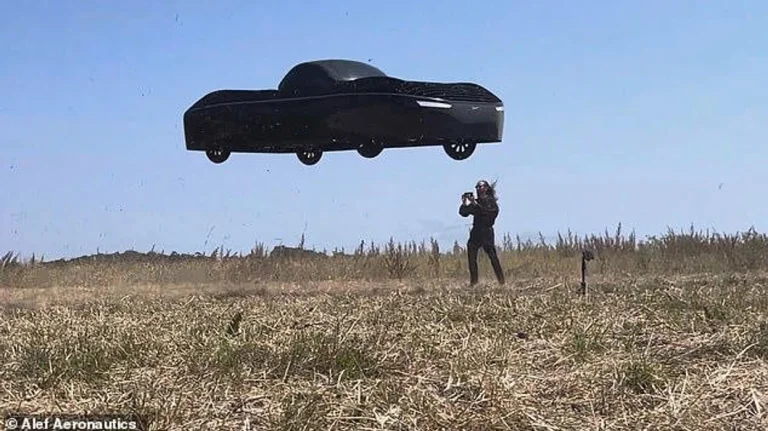
Alef Model A Ultralight uses eight helics hidden in the trunk and cover for lifts at all times, transmits Telegrafi.
And when you're done flying, the $31,000 introductory vehicle can sit and drive like any normal car.
After more than a decade of development, US-based Alef Aeronautics has finally announced that the first customers will soon receive their flying machines.
Intromobiles will be mounted by hand at the company's facility in Silicon Valley, California.
However, Alef Aeronautics says each car will receive “several months” processing before it is safe to send customers.
The first handmade cars will be delivered only to a few customers to test experimental vehicles in conditions of the real world.
The company says this slow distribution will allow it to solve any possible problems before the flying machine enters mass production.
Jim Dukhovny, CEO of Alef Aeronautics, says: “we are happy to report that the production of the first flying machine started according to plan. The team worked hard to meet the deadline, because we know people are waiting. We're finally able to start production”.
Unlike flying taxis based on airports or vertiports, Alef Aeronautics says that his vehicle is the first true flying machine to drive and fly.
Model A is both a legal vehicle for the road and an aircraft capable of rising without wings through eVTOL.
On earth, Model A drives the same as a normal electric vehicle, thanks to four small engines on each wheel.
But the driver's seat is also surrounded by powerful helica, which provide sufficient air push at a speed of 177 km/h.
The body of carbon fiber grids measures about five feet [5 m] by two meters] and allows air to pass through the car, keeping the rotating sheets safely covered.
The company says the car will have enough space for the pilot and a passenger, and will have an action ray of 321km on the ground and 177km in the air. /Telegraphy/ Periscope.