3 days ago
How do our “listen to” phones our private life

Periskopi(7 months ago)
(7 months ago)There's a phrase, almost like an urban legend, that we've all said at a certain moment: “What's going on? My phone heard me and showed me a commercial for what I was looking for right now? Yet, despite the lure of the idea, our phone does not need to listen to you. There is no [...]
There is no reason, no time or more, no permission to activate microphones just to show us an ad for diapers, teeth against caries, or cheap plane tickets. What you're really doing is something much simpler, but also much... smarter.
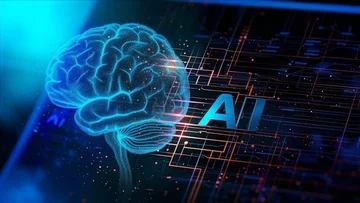
The bottom line is a model of Artificial Intelligence called “Graph Net Network”, or February GNN. He sees our data, not as a bunch of texts, clicks, SMSs and maps, but as a map of human relations. Only, instead of humans, the map has small points of information. And instead of friendships, it's connected.
What are you doing, GNN?
Imagine a room full of people talking to each other. GNN gets data pieces and allows them to talk. Not about how their day was, but about how they relate to each other. Any “due to” is an item. A word you wrote in the Messenger, a site you opened yesterday, your location of the house, the time you usually look for food.
<x) What words often appear together? What research always follows? In which areas are you in when you open certain applications? In other words: GNN does not save the “you said”. He keeps “s connected to the things you do”. And this seemingly simple idea makes it extremely good in predicting what you're likely to want to see later.
What data do you use?
When it comes to news recommendations, custom ads, or content inside apps, the IA uses four major data groups:
1. Text What We Write. This includes texts from research, app messages that allow data (not from coded apps like Whatsapp), YouTube descriptions, comments and posts. GNN does not read the message as “human conversation”, but as words connected together. For example, if you write “I'm thinking about buying curtains for my house”, model bearing signs: curtains, houses, markets and relationships. It doesn't form a picture of what you discussed with the person you were talking to.
2. The story of research and visits to web sites. This is the greatest source of information. It's not a secret: The browser's history reveals interests, time habits, and models. GNN here reads the sequences: You start with the news sites, then open up your sports, then look what time the game is, then look at your shoes. These sequences are made “inset” on the graph.
3. Location only if it's active. GPS gives geographical points related to other joints: Intelligence teaches when we're home, when we're at work, which neighborhood we shop in, what time we're on. Have you ever seen a commercial show for a café near your office? It's not because the phone “listens to” that you're upset and suggests something else. It's because he recorded that every morning you're there around 9:15 and you open Facebook.
4. General models of use. How often we open an app, how long we stay, what else do we do a little bit before or after? It's kind of a rhythm, personal and unique. Your phone is not enabled for advertising, for two reasons: First, because it would be legally catastrophic and technically complicated. Second, because the GNN already has enough information to predict what you might be interested in without “clever” nothing.
How do you do all this? By building this relationship graph and counting something called <x0 <x0”, which is a numeric summary of the type of user you seem to be. A stick is like a fingerprint. The username does not say “is interested in refrigerators”, but the “user with this account is connected to other users who were interested in refrigerators”. So GNN is making an assumption based on models, not surveillance.
How is all this used on your cell phone?
In all sorts of ways. From the news suggested on Google Discover, to Reels showing up in Instagram, YouTube reports, Play Store app suggestions and, of course, ads. Technical logic is always the same: Build a map of relationships that becomes more intense as the mobile phone learns our habits. GNNs are ideal for such jobs because they learn better as new knots, new connections, new models.
In practice, that means: If you watch evening news, the source fits the circumstances. If you seek weekend trips, advertising changes. If you request shipments to specific areas, suggestions appear. When you text with words related to health, life - style, or specific products, the system takes this as an indication of a new custom. And all of this is done without keeping copies of your conversations. He only keeps connections and models.
Is that good or bad?
Opinions differ. Of course, it is a form of personalization that helps us not to miss the chaotic timelines. But, like any tool, there is also its dark side: it creates “muluska” interests, limits the variety of information, and reinforces our obsessions. The important thing here is that GNN shows how artificial intelligence doesn't need to look like a spy to be effective. She just needs to watch and record the relationship networks. These relationships, most of the time, are created by us by our own fingers, customs, and daily movements. So, cell phone “x3> traces we give him.