9 minutes ago
Von der Leeyen on 19 September brings leaders of the Western Balkans to Brussels for discussions on the EU Growth Plan
Periskopi(2 years ago)
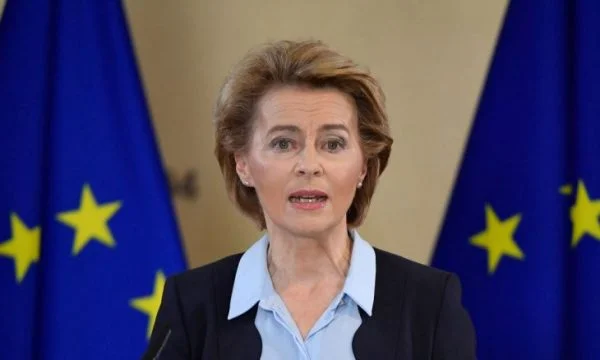
(2 years ago)European Commission President Ursula von der Leyeen has planned a working lunch with leaders of Western Balkan countries in Brussels on 19 September. This meeting comes as a sign of its commitment to supporting the region and the European Union's enlargement process (BE) during its second term at the start [...]
This meeting comes as a sign of its commitment to supporting the region and the European Union's enlargement process (BE) during its second term at the helm of the Commission.
The main discussions will focus on <x0 reform and growth agencies” of Western Balkan countries, which have surrendered to the European Commission as part of the preconditions for the benefits of the Western Balkans Growth Plan.
The plan, adopted by the EU in May, includes a 6 billion-euro financial package for the period 2024-2027, aimed at accelerating the region's economic growth and European integration.
Through this plan, Kosovo is expected to benefit over 880m euros, where more than 250m are grants, while the rest will be in favourable loans.
Reform agencies are based on EU troops' recommendations and have already been submitted by most countries in the region, except Bosnia and Herzegovina, which has not yet presented the plan due to domestic political challenges.
Von der Leyen, who has personally promoted the Development Plan, has seen this meeting as an opportunity to assess the countries' progress towards meeting the funding criteria.
While the European Commission was scheduled to approve the reform agendas before 19 September, this process was postponed for October, in part due to Bosnia and Herzegovina's delays.
Meanwhile, the EU has stressed that financial benefits from this plan depend on meeting conditions related to rule of law and financial control according to European standards.
For Kosovo and Serbia, progress in the process of normalising relations has also been highlighted as a specific condition.
The growth plan is not intended to create an alternative to EU enlargement, but to facilitate the membership process for the Western Balkan countries, while including boosting regional co-operation and developing a common market that will gradually be integrated into the EU market. /Telegraphy/