3 minutes ago
Volker: West strengthens Vuciqi as others in the Balkans undermine
Periskopi(2 years ago)
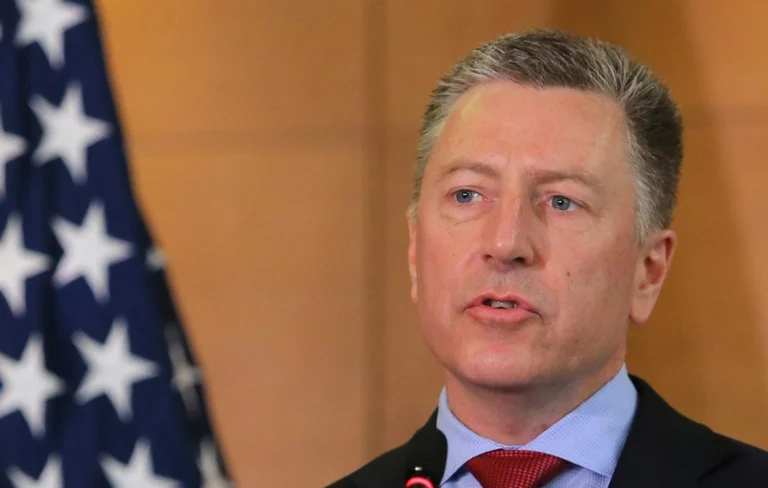
(2 years ago)“We, over and over, say we are trying to separate Serbia from Russia. [President of Serbia, Aleksandar] Vuciq claims that he too wants this, but that he needs more time and space, so he plays on both sides”, Kurt Volker, former US ambassador to NATO, tells Radio Free Europe. “This is what [...]
“We, over and over, say we are trying to separate Serbia from Russia. [President of Serbia, Aleksandar] Vuciq claims that he too wants this, but that he needs more time and space, so he plays on both sides”, Kurt Volker, former US ambassador to NATO, tells Radio Free Europe.
This is what the US and France say is their policy, we should separate Serbia from Russia. But to achieve this by strengthening the person guarding the relationship between Russia and Serbia, seems to have little meaning. Under Vucinqiqi, we have seen strengthening Serbian nationalism, trying to undermine Montenegro, to support [RS president] Milorad Dodik and to undermine Bosnia and Herzegovina...”, Volker says.
According to him, the West is becoming more engaged with Serbian President Aleksandar Vuciq, while slowly losing Bosnia and Herzegovina, Montenegro and Northern Macedonia.
There is an expression in the United States that we spend more time on enemies than on friends. Vuciq is not an enemy, but we spend more time dealing with it than promoting democratic values, institutions and reformers in the rest of the Western Balkans”, Volker says.
Radio Free Europe: Is Serbia's agreement with France for the purchase of French combat aircraft “Rafare” a strategic Belgrade twist, or a common trade deal?
Kurt Volker: Let's start on the French side. If France can sell planes, it will. Hence, it is not politically important for France. She sees it from a business standpoint. She likes the idea of people buying Rafal jets. So it's just business.
On the Serbian side, there are some things at stake. I think Vuciq, basically, is trying to turn Serbia into a Russian into the Balkans. So make it a dominant nation among others in the Western Balkans, playing with the Serbian minority card in other countries, relying heavily on Russia, its energy resources, the Russian Orthodox Church...
However, it still tries to preserve a certain degree of freedom and independence. So some contracts and relations with other countries help Vuciqi in relations with Russia. They also help to portray Serbia as more oriented towards reforms than it really is.
Radio Free Europe: You said the French side is just a business deal. But it is also France's strategic interest to distance Serbia from Russia through EU enlargement...
Kurt Volker: That's what everyone says. That's what the United States says is its policy. That's what France says is its policy we have to separate Serbia from Russia. But to achieve this by strengthening the person guarding the relationship between Russia and Serbia, seems to have little meaning.
Under Vucinqiqi, we have seen the strengthening of Serbian nationalism, efforts to undermine Montenegro, support Milorad Dodik, undermine Bosnia and Herzegovina and change government in northern Macedonia, which is less pro-European.
All of these are things in which Vuciq plays a major role in the background, which goes in favour of Serbian nationalism. Even with the West he plays by saying: well, you know, I have to co-operate with Russia, but I promise to impose sanctions on Russia. He plays this game.
Radio Free Europe: But there is much evidence that Russia's influence in Serbia, in fact, is shrinking. Geographically, there are many countries between Russia and Serbia that are NATO members. So now it is even impossible for Russian weapons to surrender to Serbia.
Second, Serbia is no longer dependent on Russian gas, because it cannot import it from Russia, taking into account the current situation.
And third, if you look at the figures, the economic exchange between Russia and Serbia is only a few percent, while with the EU it is almost 70 percent. That means Serbia is economically highly dependent on the European Union.
Kurt Volker: It is true that Serbia is largely dependent on the EU on the economy. But, it still has a much closer relationship with Russia than you said. Take Russian gas, for example. There is no doubt that Russian gas arrives in Serbia.
Radio Free Europe: Part of the gas. Not 100 percent the way it used to be.
Kurt Volker: Not 100 percent, but it is still serious. I suppose 60 to 70 percent of Russian gas still reaches Serbia, which is significant.
The influence of the Russian Orthodox Church on the Serbian Orthodox Church is too strong. And the way Russia can help Serbia play the role of a divisive factor in the Balkans is really strange. So I think Russia has great influence in Serbia and that Vuciq is using it as an atu in relations with the European Union and with the United States.
And, as I said, we constantly say we are trying to separate Serbia from Russia. He claims he wants it too, but he needs more time and space, so he plays both sides.
Radio Free Europe: You were also the US envoy to Ukraine. You have said Serbia sells grenades and other ammunition to Ukraine according to some estimates worth 800m euros. This is a third of the total amount of grenades Europe sends to Ukraine. How does all of this fit in this landscape?
Kurt Volker: I think that's more about Vuciki's interest. Those are old grenades. They were not produced late, and Serbia could sell. It is part of efforts to play on both sides to preserve the role of Vuciqi in the Balkans and Serbia as great power.
Let the United States and the EU be happy, but not completely happy. Serbia continues to have special relations with Russia, but sometimes it deviates from them.
West deals more with Vuciqi than with promoting democracy in the rest of the Balkans
Radio Free Europe: When it comes to EU membership, elections have been held in Serbia late. There has been much evidence for irregularities in them. The EU, originally, was very critical. But, later, because of this deal on Rafalone planes, and earlier on about the lithium, this case seems to have come under the carpet.
Many people currently protesting in Serbia are somewhat disappointed with this EU approach. Is It Wrong Politics?
Kurt Volker: Yeah, I think so. [President of France, Emmanuel] Macron wants to sell planes if he can do it. And that will affect reducing any power or political influence. If Macro makes the sale, he won't get too involved in other matters. I think we are seeing a very bad trend in the Balkans.
We seem to be getting more involved around Vucinqi, while we are gradually losing Bosnia and Herzegovina, Montenegro and Northern Macedonia. Bulgaria is in a terrible situation.
There's an expression in the United States that we spend more time on enemies than on friends. I think the EU is somehow guilty of this in the Balkans. Vuciq is not an enemy, but we spend more time dealing with it than promoting democratic values, institutions and reformers in the rest of the Western Balkans.
Radio Free Europe: So, Vuchy is like Tito, he plays with a lot of cards. Tito played the Eastern, West, Non-Aligned Movement. Vucinq is playing six or seven cards that are, if not hostile, then quite opposite... well, the United States and Europe on one side and China and Russia on the other. How long can Vuchy continue this game?
Kurt Volker: I don't think Vuciq has a final point in mind. For someone in his position, it's like riding a bike. He must go on like this forever. And that's a separate goal, just to be in power.
Radio Free Europe: But this comes with a lot of uncertainty and risk...
Kurt Volker: Yes, if you're not in power, then you're sure you're not in power.
Radio Free Europe: We move on to the global geopolitical situation. We have witnessed Ukraine's offensive in Russia's Kursk region in recent days, but also to advance Russian forces towards Pokrovsk.
Will this war end with a kind of temporary ceasefire, in a sort of frozen conflict, be turned into a third world war, or will Russia try to spread the war beyond Ukraine's borders?
Kurt Volker: Putin's desire to rebuild the Russian Empire has led to war. He has decided to invade Ukraine and take up territories. He believes that if he controls all Ukraine and eliminates Ukrainian national identity, Russia will become an empire. So Putin will continue to do so and will try to achieve that vision if not stopped.
If it succeeds in Ukraine, it will have many parts of the Russian empire to recover, including the Baltic states, the Kowalski Corridor, perhaps parts of Poland, Georgia, Moldova. He simply loves the entire empire.
But if physically forbidden, he will not be able to progress. If he remains without power, he will have to accept a deal. In that case you can imagine a kind of negotiation, a kind of Russian invasion of parts of Ukraine, but not other parts, a permanent ceasefire, Ukraine's entry into the EU and NATO... This would end the conflict.
Putin is not ready for such an agreement. Ukraine does not want to give up any part of its territory, but, in the end, it may have to, if it wins NATO membership and secures stability afterwards.
Now, we can't see the frames. The conditions for such an agreement have not yet been created.
To have conditions for this, Putin must understand that he cannot win and that the more he tries to do so, he will only weaken Russia even more. This is where negotiations can be held.
Radio Free Europe: You said if he stopped... could he stop in the military sense? And also, you said Ukraine should understand that some territories should be temporarily occupied if I understood...
Kurt Volker: Yes, temporarily occupied.
Radio Free Europe: But would Putin be willing to accept this? And, on the other hand, there is a risk as he did with Georgia in 2008, six years later he annexed the Crimea and eight years after that he invaded Ukraine full-scale so he can use the temporary truce to recover...
Kurt Volker: That's exactly what he'll do. I have no doubt about it. But, I think there will be pressure from the world, the West, also from Ukraine, to make a deal and see if it can become different from the previous ones.
What would really recognise that agreement would be Ukraine's membership in NATO and the EU.
This would change matters even if Putin were to rebuild his armed forces and again be ready to attack.
Radio Free Europe: Can Putin accept Ukraine's NATO membership?
Kurt Volker: One day, yeah. If his forces were defeated and he could do nothing, then he would have to accept some kind of solution.
And, the EU and NATO will move forward and say: We will not let that happen again. We will bring Ukraine to NATO and the EU.