16 minutes ago
EC report for Serbia: With no improvement, deregulating war criminals continues
Periskopi(2 years ago)
(2 years ago)Gazorification of war criminals, slanderous campaign and verbal assault on media that are the opposition of power, political interference in investigations and prosecutions of corruption and crime... are just some of the findings of the European Commission's latest report on Serbia's progress. In the latest report on Serbia's progress in the field of [...]
In Serbia's recent report on Serbia's progress in rule of law, prepared by the European Commission, it is estimated that the country needs additional commitment as well as political commitment to deepening reforms and eliminating shortcomings, particularly in key areas of the judiciary, prevention and fighting corruption and organised crime, media freedom, as well as prosecution of war crimes.
There is an annual report on Serbia's progress, on chapters 23 and 24 in membership negotiations, in which results are needed for the country to progress in the process of membership negotiations.
Since the beginning of this process, Serbia has two key preconditions for progress in negotiations that would eventually lead to full membership in the European Union: dialogue with Kosovo and progress in chapters 23 and 24.
Progress in these two chapters is essential for any country aimed at EU membership.
“Sic is ahead of revised methodology, no other chapter should be closed before Serbia achieves that goal”, the European Commission document, in which Free Europe Radio has access.
Since December 2021, Serbia has not opened a single chapter in the process of membership negotiations.
The frozen informal accession negotiations with Belgrade are due to the failure to impose sanctions against Russia because of the war in Ukraine, which began in February 2022, two months after the last intergovernmental conference with Serbia.
Corruption and Organised Crime
In the document, the European Commission believes Serbia should improve the results of investigations, charges and final judgments in cases of high-level corruption, including the seizure and seizure of property acquired through crime.
It is cited that over the past year, the number of decided decisions in high-level corruption cases has increased to 30 out of 21 a year ago.
“Proactive criminal claims are not yet common practice. There is the risk of politically motivated intervention in high-level investigations and prosecutions of corruption, although new safeguard clauses have been introduced,” notes progress report on chapters 23 and 24.
Serbia has fully implemented one of 24 recommendations for fighting corruption, GRECO says
Organised Crime
“Proactive criminal claims and systematic monitoring of money flows, especially in cases of inexplicable property, is not a common practice”, European Commission experts say.
Therefore, the document emphasises that the European Commission recommends that Serbia systematically monitor the flow of money to increase the efficiency of processing cases of serious and organised crime, including money laundering, seizures and seizures of crime products.
Also, Serbia is criticised that it is not sufficiently committed to the investigation and prosecution process for the attack in northern Kosovo.
Independence of the judiciary
In a document on the rule of law in Serbia, the European Commission calls on the country to ensure that the High Judicial and Prosecutorial Council, the Government and Parliament effectively and actively protect the independence of the judiciary and the autonomy of the prosecution in cases and inadequate external influence, including cases of inappropriate public comments by members of the Government or Parliament for ongoing investigations or judicial procedures that are said to be contrary to their code of conduct.
In principle, the document says, current business regulations set the stage for a more effective response and defence mechanisms for judges and prosecutors in cases of unfair influence.
“However, it is still not possible to note in practice a significant reduction of unjust influence on judges and prosecutors”, this report estimates.
It is stressed that neither the Parliament nor the Government have acted so far on cases of unfair influence, with remarks that it remains to demonstrate a more active and active role of Serbian institutions.
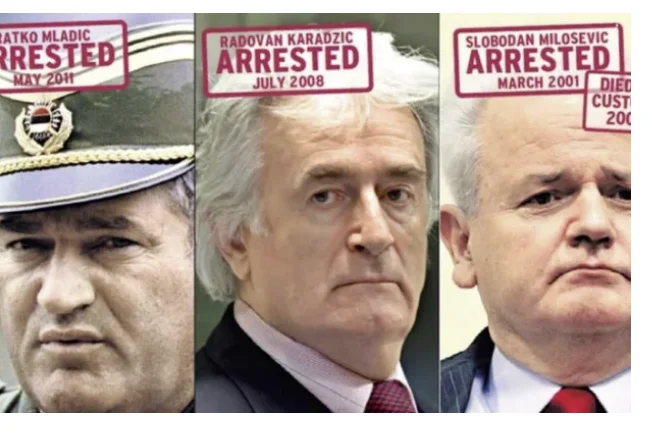
Gasorification of War Criminals
The European Commission gives Serbia a bad assessment as to war crimes processing.
The document estimates there has been no improvement in the results and that the criminal's public legalisation continues.
“There have been numerous cases of legalisation of war criminals, giving war criminals a media platform and denying war crimes and genocide,” reportedly in the report.
The European Commission confirms that Serbia has restored the visa regime for six countries, but that it is committed to further harmonisation of visa policy only a year or six months before EU membership.
“This did not meet EU expectations”, the document says.
Freedom of Speech
Serbia is urged to strengthen the safety and security of journalists, and in particular to ensure that senior officials refrain from labeling or verbal assault on journalists; that all threats and cases of physical and verbal violence are monitored quickly; and, if necessary, be punished, investigated or pursued publicly.
“In this direction, cases of verbal attacks, slanderous campaigns, threats and violence against journalists have continued both at national and local levels, including verbal and physical violence against female journalists. Repeated statements by senior officials for the daily and investigative work of journalists threaten media freedom”, estimated in the European Commission's report.
It also points out that after declaring innocence delayed in February 2024 at the second-instance court, Slavko Curuvija's murder remains unpunished after 25 years.
The protection of “reputation and honour” or pressure on the foundation by the name of the slain Quruvia.
The European Commission calls on Serbia to strengthen media pluralism, including implementation of measures in line with the media strategy regarding the functioning, mandate and independence of the Regulatory Body for Electronic Media (REM) and public broadcasters.
The report cites that the new Law on Electronic Media strengthened the mandate and regulatory competencies of the Regulatory Organisation for Electronic Media (REM), but it reiterates O's mission SBE/ The ODIHR (Office for Democratic Institutions and Human Rights) that REM “held a passive approach to”.
“The REM did not abide by shorter deadlines and did not in due time publish a comprehensive report on the election campaign. OSCE/ The ODIHR also found media bias during the campaign, especially in terms of public broadcasters,” is said in the document.
The European Commission recommends Serbia secure transparent and fair co-finance of media content that serves public interest, as well as full transparency in ownership and media advertising.
Other sources of public financing, the document says, including advertising, are still not presented in the media registry in a transparent, comprehensive and simple manner.
LGBTQ Community and Violence Against Women
The European Commission urges Serbia to implement and report at the right time on strategies for fighting discrimination involving persons' rights LGBTQ, gender equality, violence against women and deinstitution, as well as actively rejecting hate crimes and, in this context, placing results of investigations and punishment.
It is estimated that there is a <x0 serious option” in adopting the action plan and relevant financing for the fight strategy against violence against women and domestic violence and the deinstitutionisation strategy.
The European Commission urges Serbia to implement and report at the right time on strategies for fighting discrimination involving persons' rights LGBTQ, gender equality, violence against women and deinstitution, as well as actively rejecting hate crimes and, in this context, placing results of investigations and punishment.
It is estimated that there is a <x0 serious option” in adopting the action plan and relevant financing for the fight strategy against violence against women and domestic violence and the deinstitutionisation strategy. /rel