2 minutes ago
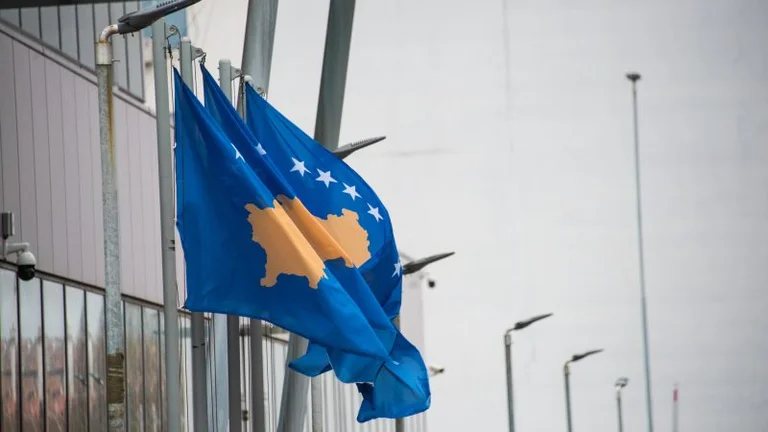
euractiv: Kosovo's membership in KiE Germany, France and Italy “mount brakes”
Periskopi(2 years ago)
(2 years ago)While the moment about Kosovo's bid to join the Council of Europe stalled, interested parties have refused to comment on reports suggesting the process is being hampered by France and Italy, two former supporters of their accession. In March, the Organisation for Human Rights's Committee for Political Affairs and Democracy [...]
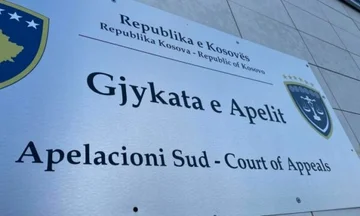
While the moment about Kosovo's bid to join the Council of Europe stalled, interested parties have refused to comment on reports suggesting the process is being hampered by France and Italy, two former supporters of their accession.
In March, the Strasbourg-based Human Rights Organisation's Committee for Political Affairs and Democracy recommended that Kosovo be invited to become a member of the Council of Europe, with the organisation's parliament later voting in favour of Kosovo's accession in a crushing vote in April.
However, Kosovo still needs to secure a two-thirds majority on the Committee of Ministers to achieve its membership. A vote scheduled for May was postponed due to last-minute German demands that the Association of Serb-run municipalities with the Serbian Majority wanted by the EU be established initially, reports “Eurasiaable”.
In Strasbourg and Pristina, there were hopes that the vote would take place by the end of the year, but a German source familiar with the situation told “Euraciv” that this is unlikely to happen.
There has been no vote for Kosovo membership in the Council of Europe by the Council of Ministers of Government so far. In fact, there is a clear two-thirds majority. But the moment risks losing”, the source for “Euactive” said.
The source added that while the Council of Europe Assembly will continue to pressure for a vote, since simply failing to vote was not an option, opposition was coming not only from Germany, but also from France and Italy.
The German <x0*Kancer was open without consistency [for Kosovo's membership], the foreign minister was committed to what they really held were (...) the Italians and the French”, said the German source, adding that there were “preferences” that the reasons may be sensitive and linked to Serbia.
Fighter planes get in the middle
As for what might motivate France, the German source said that “Macron wanted to conclude an agreement with Serbia on selling fighter aircraft”.
In late August, French President Emmanuel Macron met with Serbian counterpart Allexander Vuciq to discuss a 2.7 billion-euro deal to sell the Western Balkan country 12 new Rafale fighter aircraft.
In addition to the aircraft, France will provide Serbia with engines and spare parts, as well as a full logistical assistance package.
Speaking of aircraft, Vucinqi told the media that they would “contribute to a significant increase in the operational skills of our army”.
The acquisition also marked an important change in foreign policy and Serbia's security stance, away from Russia and towards the West. Belgrade's continuing relations with Moscow, including arms deals, have been a thorn in the eyes of the EU, much more since Russia invaded Ukraine in February 2022.
“Vukiqi has said very openly and confidently that he has his partners [in the governments of the Council of Europe] that will prevent [Kosovo's] accession, St.red.] at the bottom”, the source added.
While France's opposition may be explained, at least in part, by the sale of aircraft, Italy's opposition is a little harder to understand. Rome recognises Kosovo, has close ties with neighbouring Albania and has no recognised agreements with Belgrade.
Asked to comment on the situation, a former British government official told “Euactive” that it is true that “Macron and Scholz have left Kurti”.
“Italia wants to stay on the same page as Germany and France ʹ big players”, the former official added.
“Eutrative” contacted the French and Italian foreign ministry to ask why they opposed or hesitated for Kosovo's membership in the Council of Europe, but received no response despite numerous commemorations.
“Euactive” also contacted Kosovo Prime Minister Albin Kurti's office and Kosovo's Foreign Ministry to ask whether they knew about the matter and what steps are being taken to resolve it, but has not received answers.
Waiting Efforts
To accelerate the membership process, the Kosovo government had promised several measures earlier this year.
But with its efforts now mired, “Kosovo has put in expectation of the relief promised at the moment”, the source said. “They would lose a lot of political loans for this”.
Kosovo must also hold elections in 2025 and issues such as communities of the same gender, among the proposed reliefs, can be politically costly.
As for what would help unblock the situation, Germany still wants Kosovo to establish the Association of Serb Majorities, for which the special EU envoy to the region, Miroslav Lajcak, presented a plan in autumn 2023.
“Once this step has been taken, a vote on the Committee of Ministers [of the Council of Europe] could be put on the agenda with enough perspective for a majority of 2/3 among member states that have a vote of”, a German foreign ministry spokesman told “Euracative”.
Establishment of association is not a formal condition for joining the Strasbourg-based human rights organisation and Pristina remains uncertain, fearing it would violate the constitution or give Belgrade much power, which it says is trying to destabilise the country.