4 minutes ago
EU analyses reform agenda of Balkan countries before first payments, over 800m euros in question for Kosovo
Periskopi(2 years ago)
(2 years ago)European Commission President Ursula von der Leyen, who has been elected to head this institution even for a new five-year term, will gather leaders of Western Balkan countries at a working lunch in Brussels on September 19th. At this meeting, she wants to prove that even in the [...] mandate
With this meeting, it wants to testify that even in the new mandate, it will pay special attention to this region and in general to the EU enlargement process.
The main goal of this meeting, however, is to discuss <x0 reform and growth agencies”, which nearly all countries of the Western Balkan region have handed over to the European Commission as preconditions to accept the first payments from the Western Balkans Growth Plan approved by the EU in May of this year.
Von der Leyen has personally been committed to promoting this plan, while he has also supported the European Parliament and member states in the EU Council.
According to EU sources, the meeting of von der Leyenne with leaders of Western Balkan countries will be a good opportunity to see where these countries have achieved with their preparations to realise the goals of this plan.
Each country has had to prepare an agenda of reforms based on preliminary recommendations of EU troops.
It has already been done by five countries in the region, while Bosnia and Herzegovina is the only one who, for domestic political reasons, has not yet done so.
Kosovo, meanwhile, has been among the first countries to hand over its plan to the European Commission.
The expectations in the EU have been that, in mid-September, the European Commission approved these agendas of the countries of the region. This was expected to happen even before the September 19th meeting, but the process was postponed for October.
An unofficial reason is cited in that Bosnia and Herzegovina has not yet submitted its plan. And, given that local elections will soon be held in this country, it is not expected until October.
These delays may influence, then, not to achieve the goal of the Hungarian EU Presidency, that the first payments to the most advanced countries be made before the end of this year.
According to an unofficial estimate, Kosovo could benefit more than 880m euros from the Growth Plan. Over 250 million, Kosovo will be split as no return money, while the rest in the form of convenient loans.
The estimate of the financial amount that each country will meet is made on the basis of Bruto Local Production (GDP), the number of residents and several other criteria.
But during the presentation of this plan, countries in the region have been clearly told that if they fail to implement reforms after a year or two, then the amount will be distributed to other countries.
Through the Western Balkans Growth Plan, the European Union plans to allocate about 6 billion euros to countries in this region between 2024 and 2027.
Of that amount, two billion will be grants from the EU without return, while the rest in favourable credit form.
The goal is to help economic growth and thus accelerate the European integration process of this region.
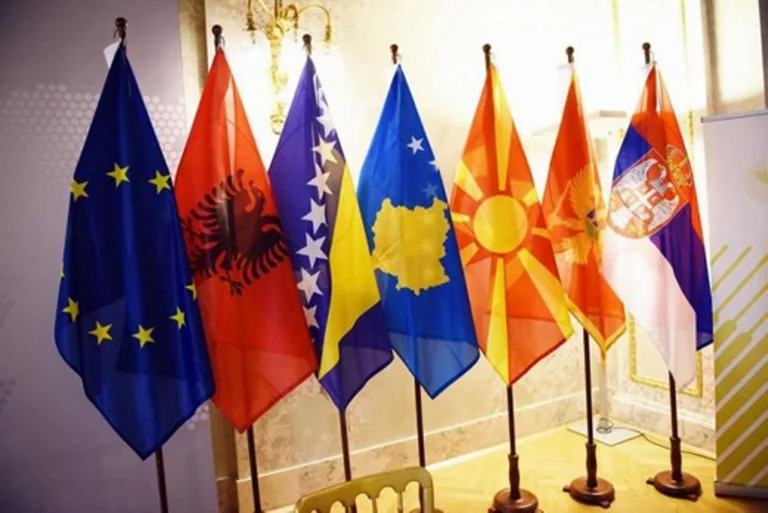
The benefits of these tools are all countries in the region: Kosovo, Albania, Northern Macedonia, Montenegro, Bosnia and Herzegovina and Serbia.
The plan also aims to promote regional co-operation and the development of the common market in the region, which would gradually be integrated into the common market of the European Union.
This plan, according to EU officials, is in no way intended to create an alternative to EU enlargement, but to make EU membership easier.
In the EU, they continue to recall that for the exploitation of financial means from the Development Plan, countries in the region must meet certain conditions, of which the main ones have to do with rule of law and ensure financial control procedures under European standards.
For Kosovo and Serbia, as a specific condition, progress is also cited on the road to normalisation of reports, which includes their constructive commitment to implementing all agreements reached in the dialogue mediated by the European Union.
If there is no progress in normalising the reports, according to EU diplomats, countries that will be identified as unconstructive will have consequences even through the blocking of payments from the Growth Plan.
Kosovo, currently, is under some EU punitive measures due to tensions in the northern, Serb-run majority ʹ, which include halting payments from pre-membership EU Instruments (IPA).
The growth plan is special and is not included in the IPA.
The Western Balkans' growth plan, as a 6 billion-euro package, is considered its most ambitious plan for the region.
The amount of nearly 900m euros for Kosovo will also be the largest amount it benefits from the EU in a separate package. / REL/