3 minutes ago
What should Western Balkan citizens know about new EU accession rules?
Periskopi(2 years ago)
(2 years ago)Hello. The passports, please! We need to get a trace of at least four fingers. And pictures. Thank you and wish you a nice stay. So it would have to be seen on November 10th of this year's entry into the European Union and Switzerland, Norway, Iceland and Liechtenstein (Liftenstein) member states of the free movement area [...]
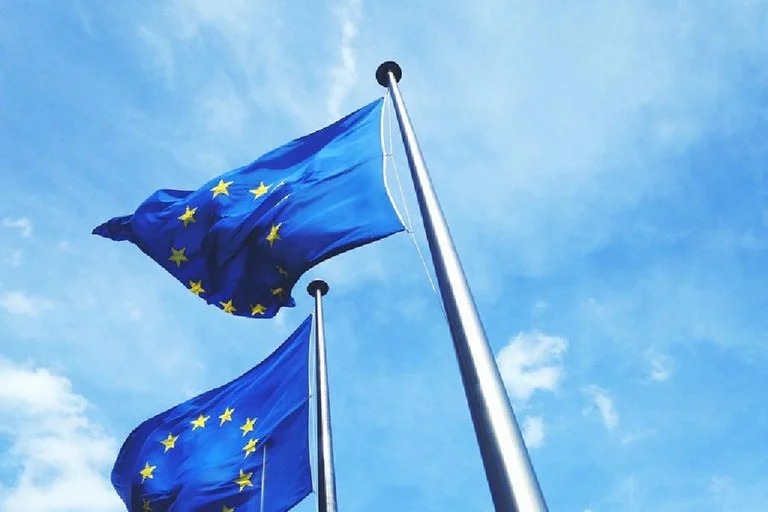
So it would have to be seen on November 10th of this year's entry into the European Union and Switzerland, Norway, Iceland and Liechtenstein (Liftenstein) member states of the Schengen movement area for citizens of about 60 countries, including those of the Western Balkans.
At that time the new exit system will start operating, but its implementation has been postponed several times.
For the next summer, implementation of the second European Information System and Travel Authorisation (ETIAS) has been warned, which requires travelers from countries with a visa-free regime with the EU to apply online for access permits, paying a fee of seven euros with bank cards.
The passports in all Western Balkan countries are biometric, their chips contain fingerprints and photos of what makes them fully consistent with the conditions the EU has requested so that Western Balkan countries have visa-free regimes.
General conditions that travel documents do not expire in less than three months from the date when the person plans to return to his country or that the passport is no older than ten years will continue to remain in force.
What are the new changes in mid - 2025?
ET The IAS will require citizens of about 60 countries to complete a special form via internet or mobile app before travelling.
With the first time, the passenger inserts personal data, email, and phone number, as well as details of the travel document.
The traveler will also need to introduce details about current education and employment, as well as details about planned travel and stay in the EU country.
Details of any criminal punishment, past travel to war zones or conflict zones will be requested, as well as information on whether the person has been expelled from a country.
Travelers will have to pay an additional seven-euro fee with bank cards. The fee will be made for any online purchase.
Tarifa will not be paid by persons under 18 and over 70 years old, the registered spouses/partys and children of EU citizens and the Schengen area countries, as well as children of husbands/partys coming from outside the EU.
Application “group” will not be possible so in case of family travel, each member will have to apply separately for ETHIAS.
System E TIAS will be available in the languages of member states, and the system will only accept Latin characters.
The traveler will be able to stop the implementation of the app, preserve the changes and continue to enter data within 48 hours.
How long does it take to process a request?
As stated on the official E-system page TIAS, processing must last “a few minutes”.
If it lasts longer, the passenger should receive the announcement in four days.
Passengers may be required additional information or documents such as confirmation of hotel booking and employment confirmation that should be delivered within ten days. In that case, the request should be considered within two weeks.
The traveler may be invited for an interview at the country's embassy, where he plans to travel, and in that case the request is considered within 30 days.
Travelers are therefore advised to complete the form at least a month before buying the ticket or booking the accommodation.
If the traveler is allowed access to the EU, he will receive the announcement by email.
ETIAS will be valid for three years, or until the travel document the traveler has applied to is replaced.
The formula is linked to the travel document, which means it is valid only with the passport the traveler applied to.
The new passport means new application.
If ETIAS is paid and approved for travel to one country, it is also valid for another country.
ETIAS does not mean that one can stay in the EU for more than 90 days in a six-month period, or work in the EU.
The traveler will be able to enter and exit the EU whenever he wishes and travel to any destination within the Schengen area during the period of validation and as long as he respects the specified timetable.
What if the person doesn't have Internet, the bank card, is illiterate and similar?
Parents meet the form for their minor children, who are exempt from paying a seven-euro fee.
Anyone can authorize a third party another person or a trade mediator to apply on his behalf or on behalf of his minor children.
With a mediator, for example, from a travel agency, the statement of representation should be signed for each individual, and the same is true if a friend, neighbor, daughter, or son applies to one person.
The person or company that is mediating will also have to access their data.
The mediator has the right to ask for a reasonable “tariff” and the EU has envisioned the possibility of anonymous reporting of those demanding high payments.
Those who decide to apply through a mediator are advised to check specifically whether the information on the app is correct before sending it, because in case of some error, the app can be rejected or canceled.
If the traveler notices any error, he can fill out a new app or seek to correct the error on the old app. The processing procedure in that case lasts up to 30 days.
How can you go to a funeral, visit a parent who is an EU citizen and similar?
Form E TIAS will not have to be met by those who have valid student visas, jobs or similar permits or residence in an EU country.
The formula is not met even by persons living along the border and possessing border crossings.
crew members on ships and planes for several EU countries will need the ETIAS form.
Exceptions are made in the case of endangering the lives of a applicant or relative, going to the funeral of a family member, forcing him to appear in court, or some “important execution”.
In that case, the traveler meets E app TIAS for the so - called limited permission to show reason.
Permission is issued by the state in which the person travels and is valid to travel only to that country for 90 days.
For example, if it comes to going to a funeral, an EU country can only allow entry for burial days.
If the person, meanwhile, applies and receives a second ETIAS for travel to all Schengen countries, limited permission automatically becomes invalid.
What if the EU refuses to give you permission?
People without authorization E TIAS will be denied access to the border.
Even receiving this certificate does not mean that the traveler will be automatically allowed access to the EU country.
All travelers will be searched and a border officer may refuse entry to a person who fails to meet the requirements.
Some of the conditions for entry are: valid travel documents for at least three months from the planned return date; passports are not older than ten years; the position is justified and the person has enough money until the planned return.
The usual amount is about 100 euros a day and depends on the EU member state.
Some of the reasons for refusing to enter are related to security or health threats.
Whether to ask for a search ETHIAS is refused, revoted, or canceled, the person will receive an e - mail that tells him the reasons for his refusal and the name of authority.
There is the possibility of appeal, and the mail will contain information about where the country or state may be appealed. The polls are handled in accordance with those countries' laws.
A person whose application is refused may again apply for ETIAS permission, reports Radio Free Europe.
If a person revotes his request, he cannot change his mind afterward, but he must fill out a new form.
The tariff is not restored if the app is refused.
Will there be more toll on borders?
With EES's introduction, the scan of travel documents remains, while sealing passports at the border point stops.
However, taking fingerprints and photography, which will be done at any border point, can extend waiting in line.
At the airports, the controls will be conducted after landing.
Member States have changed several laws to reduce possible tolls at land crossings.
Why is this system created?
The new EES system has been set up to make the bases of EU member states more connected, to facilitate the tracking of time and place of residence and to ensure that travellers do not last more than 90 days within a six-month period.
One of the goals of the new measures is to make it difficult for criminals or terrorists to enter the EU with false passports, as biometric control will be carried out whenever the border is crossed.
Passengers will not pay the fee for offering biometric data.
The data will be available for police services to the Schengen system member states and police agency, EUROOPOL, during criminal investigations, especially terrorism and organised crime.
Biometric data controls will increase in mid-2025, but the exact date has not been set.
Similar systems have already created the United States, Canada, and Australia.