17 minutes ago
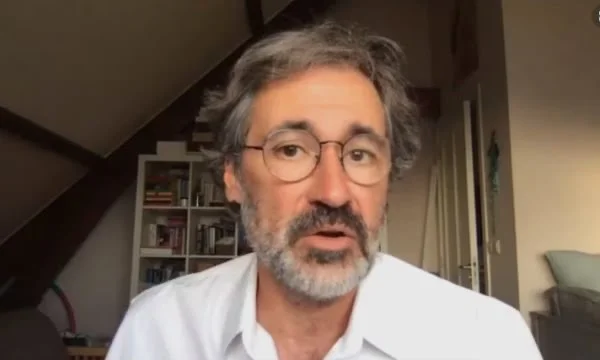
Prelec: The opening of the Ibër Bridge as a symbolic act, without Western support, can trigger tensions
Periskopi(2 years ago)
(2 years ago)The Balkan expert in the International Crisis Group, Marko Prelec, believes that opening the main bridge over Iber in Mitrovica without Western support could spur new tensions in northern Kosovo. In a conversation with the Voice of America, Mr. Prelec says this issue is worth discussing in dialogue, at least as one [...]
The Balkan expert in the International Crisis Group, Marko Prelec, believes that opening the main bridge over Iber in Mitrovica without Western support could spur new tensions in northern Kosovo. In a conversation with the Voice of America, Mr. Prelec says the issue is worth discussing in dialogue, at least as a friendly gesture to the European Union for support it has given to Kosovo.
The Balkan expert in the International Crisis Group, Marko Prelec, said opening the main bridge over Iber, as a symbolic act, without Western support could spur new tensions in northern Kosovo.
In an interview with Voice of America, Mr. Prelec said avoiding new tensions in Kosovo may have been one of the topics of discussions by American Central Intelligence Agency Director William Burns, during meetings with Kosovo leaders. He believes Mr. Burns, who remained in Kosovo after visits to Bosnia and Serbia, targeted “to advance several American interests about the sustainability of the region”.
The visit coincided with a time when the US government is opposing decisions for Prime Minister Albin Kurti's northern Kosovo government, including intentions for opening the bridge that divides the two municipalities in the Albanian town of south and the Serb majority north.
Mr. Prelec said that opening the bridge, more than anything else, is a symbolic act.
There are three bridges in the city, two of which are open to car traffic, while the main bridge, is and has been, as long as I remember open to pedestrians and is widely used. I've been through it many times myself. You can see people going from north to south for purchase, from south to north for meetings, so this is not like the collapse of the Berlin Wall, it's a symbolic act because it's in the centre and because immediately after NATO's 1999 intervention, this bridge was the hub where the Serb paramilitary presence in the north tried to stop armed Albanians from crossing the bridge, so there were the so-called guard of the” bridge, he said.
United States, NATO and the European Union seek to resolve this issue within the dialogue in Brussels.
Mr Prelec, says the issue is worth discussing in dialogue, at least as a friendly gesture to the European Union for support it has given to Kosovo.
I think there's been a time for dialogue to be in some kind of coma and this has to do with its basic goal, that the parties push towards normalisation in a comprehensive manner. Clearly, this is not happening, and there seems to be little prospect in resurrecting that political dialogue towards normalisation in the near future, at least not this year. But what dialogue can do is address lower-level issues as the question of what to do with the main bridge in Mitrovica”, says Mr. Prelec.
He believes opening the bridge without international co-ordination could spur new tensions.
But I don't necessarily expect any kind of violence, we can see demonstrations. My impression, stressing that several months have passed since I have visited Kosovo and things may have changed, but since the last time I've been in the north, my impression is that the population there is quite scared and that it doesn't feel like it's in a position to perform acts that show the strength that has been proved in the past with the establishment of barricades or individual assigned to perform actions, that some would name as paramilitary, and others as terrorism against the state. There seems to be no readiness for now in northern Kosovo to do something like that”, he said.
The United States has stressed that the Kosovo government's lack of co-ordination over actions in the north has already damaged partnership between the two governments. The European Union has warned of the possibility of increasing punitive measures for Kosovo. Mr. Prelec said the critics' claim that the government is putting the coalition “at risk, possibly a very strong stance, but, according to him, is very clear to a large group of observers that the Kosovo government has already damaged relations with its most important allies on a significant scale.
The United States may be more vocal than others, but the European Union and various member states, such as France, Germany, Italy, have been quite clear about the damage that has been caused to relations and the fact that they are less willing to intervene in the name of Kosovo. So that's already happened. I don't see many possibilities for further escalation because in northern Kosovo, I think the government has achieved its goals. It has met these goals in the sense of taking important steps to remove Serbian institutions and to establish its authority and entire land. He paid a price for it, and now it's over”, said Mr. Prelec.
In an interview with Voice of America earlier this week, Kosovo Prime Minister Albin Kurti, speaking about clashes with the West and criticism of the opposition's lack of co-ordination with the allies on many issues, said differences in attitudes have never been in place, values and principles, but only in strategies, tactics and operations. / VOA