a minute ago
Israel and Hezbollah near a conflict that they want to avoid at all costs
Periskopi(2 years ago)
(2 years ago)Israel and its Lebanese enemy, backed by Iran, Hezbollah, insist they are not seeking general war, although they are continuing to take steps towards a conflict they say they want to avoid at all costs. Hezbollah, who has been declared a terrorist organization by the United States, has needed almost one [...]
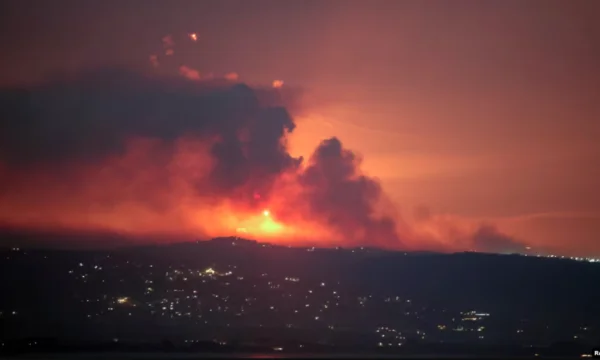
Israel and its Lebanese enemy, backed by Iran, Hezbollah, insist they are not seeking general war, although they are continuing to take steps towards a conflict they say they want to avoid at all costs.
Hezbollah, which has been declared a terrorist organisation by the United States, has taken nearly a month to fulfill its pledge of revenge against Israel for the murder of its highest commander, Fuad Schookr.
But, Israel predicted the attack, as on August 25th the leader -- as the Israeli Protection Forces described (IDF) -- preemptive attacks against Hezbollah rocket launchers, limiting the extent of Iran-backed group's attack.
Raz Zimmt, senior researcher at Tel Aviv's Institute for National Security Studies, said that until neither side wants general war, each one is “very determined to impose its will on each other”.
So, they are still jeopardising by attacking each other, but wrong mistakes and calculations can cause the conflict they want to avoid, Zimmt warned.
This so-called limited but ongoing conflict between Israel and Hezbollah is difficult to manage”, he stressed.
The IDF says about 100 fighter planes participated in the prevention attacks, while Hezballlah claims he has released over 300 fears and rockets against Israel.
If these figures are real, then this is the biggest shootout between Israel and Hezbollah from the 2006 war, which ended without any winners.
Had it not been Israel's preventative operation, the scale of Hezbollah's attack would have been devastating, Zimmt underlined. It would have prompted a response of “for” from Israel, he added.
Despite the major exchange of fire, the attacks did not seem to have influenced talks on reaching a Gaza ceasefire agreement and on the release of Israeli hostages from Hamas the Palestinian group declared a terrorist organisation by the US and the EU.
Zimmt stressed that, as long as he “is not optimistic” for achieving a ceasefire, reaching an agreement would help reinforce the situation, even though he added, this is only speculation.
Hezbollah was on his own?
The Middle East is now on edge for weeks, awaiting an attack on Israel not only from Hezbollah but also from Iran.
Iran has pledged to retaliate against Israel for an explosion in Tehran that killed Hamas' political leader, Ismail Haniyeh. Israel has neither accepted nor denied his murder.
Haniyehu was killed just hours after an Israeli attack on Beirut left Schcreen, the man viewed as Hezbollah's second most powerful figure.
Many people estimated that Iran would attack Israel in cooperation with Hezbollah.
But, the Lebanese group, which is more partner than Iran's representative, seems to have had enough waiting and decided to carry out the attack alone.
It is very important to note that Hezbollah did not receive Iranians”, Zimmt said, arguing that one of the reasons Hezbollah waited so long to retaliate was that he hoped it would attack Israel by Iran.
However, the Lebanese group likely concluded that Iran would not conduct a direct attack, at least not now.
This might have a little impact maybe not immediately on Hezbollah's ties to Iran”, Zimmt concluded. / REL