7 minutes ago
What inspires the anti-American comments of Albanians on social networking?
Periskopi(2 years ago)
(2 years ago)Stop with foolish statements”, “but support evil against good”, “you are laughing at us”, “Government should not ask when and how to establish order and law within its territory”, “you are used to corrupt politicians, manipulate them, [Kosovo Prime Minister Albin] Kurt can't be” These are just a few of the comments where [...]
Stop with foolish statements”, “but support evil against good”, “you are laughing at us”, “Government should not ask when and how to establish order and law within its territory”, “you are used to corrupt politicians, manipulate them, [Kosovo Prime Minister Albin] Kurt can't be”
These are just some of the comments, featuring insulting and denigratory vocabulary, on statements by the US Embassy in Kosovo concerning the actions of the Kosovo Government in the country's north.
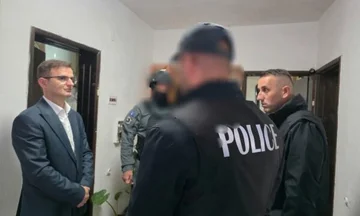
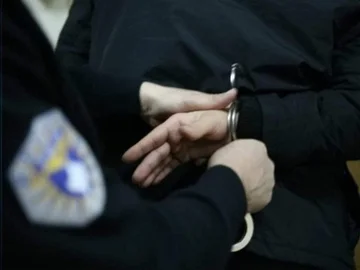
They come after police action in northern Kosovo on August 5th, when country authorities Close nine branches of Serbia's Post.
That same day, the US Embassy in Kosovo, through a statement published even in its Facebook account, has expressed “the deep disappointment of the US government” over actions the Government of Kosovo has undertaken, naming them unilateral and uncoherent” with international partners.
Comments, with similar controversial content, had conveyed the statement by US Ambassador to Kosovo Jeffrey Havenier, on August 2nd, who said the QUINT countries ( The US, France, Germany, Italy, Great Britain and NATO do not support the opening of the Ibër Bridge in Mitrovica at this time, which the Government of Kosovo intends to do.
Earlier that day, Kosovo's prime minister, at the meeting with representatives of the QUINT states, had insisted on opening the Ibër Bridge in Mitrovica, saying that “it is in service of all and it is against no one”.
“Americanism” or “direct democratic”?
Former Kosovo diplomat Lulzim Peci, currently director of the Kosovar Institute for Research and Development of Politics (KIPRED), says such controversial and insulting remarks are inspired by the ruling party's positions and disincentives, the Vetevendosje Movement.
In a statement to Radio Free Europe, he says the “fara of anti-Americanism” has entered Kosovo.
It continues to be cultivated further, not because of the controversy necessarily, but because of the denigrative vocabulary, which is used especially on social networks”, he says.
But, the government of Kosovo rejects claims that with its decisions and attitudes, it inspires comments with the denigrative content of specific citizens or ruling party supporters towards American officials.
The government of the Republic of Kosovo's “communifications are always discreet and controversial. Such, for example, has been communication with regard to the bridge issue on Iber”, says the Kosovo Government's response to Radio Free Europe.
On the other hand, the government says it is democratic rights of citizens “to have and to express their looks on issues that are already part of public discussions, in virtual spaces or other forums, of course not using offensive languages”.
On the other hand, the US Embassy in Kosovo has not commented on the controversial discurs, with insulting and deignive content, of a number of citizens in Kosovo towards US positions regarding developments in Kosovo.
In February and March of this year, commenting on current developments in Kosovo, American officials They claimed that there will always be “close friends of Kosovo” and that the US “is more dedicated than ever to the people of Kosovo” although this “does not mean that each government of Kosovo will gain support for elections making”.
Opposition MP from the Democratic Party of Kosovo, Xhavit Haliti, also deputy chairman of the parliamentary Commission for Foreign Affairs, does not believe anti-American spirit is cultivated in Kosovo.
According to him, citizens' comments on social networks are prompted by the approach the Government of Kosovo has regarding resolving problems in the country's north and disagreements with international partners, including the US.
I am convinced that everything has nothing to do with anti-American politics, but not anti-European politics. All this has to do with the government's powerful propaganda that it must definitely root out the roots of Serbia's lines in Kosovo”, Haliti points out.
He believes the government is trying, through propaganda, to reason on its actions in the north of the country.
Meanwhile, Belgzim Kamberi, from the Institute for Social Policy “Mousine Cocolari” in Pristina, calls these controversial reactions “paradox”.
According to a Gallup Institute survey in 2023, Kosovo has the highest approval of American leadership from all 143 countries involved in the survey.
I see it less as an anti-American spirit and more as a spirit of sovereign politics. It's a reflection of the absolute sovereign policy that the Vetevendosje Movement uses, as a way of legitimacy on the ground for its actions in the north”, Kamberi points out.
He believes citizens' reactions are also the reflection of frustration because of the lack of resolution of the conflict between Kosovo and Serbia after more than a decade of dialogue.
Dialogue between Kosovo and Serbia on normalising relations started in 2011.
Now, several months of dialogue process has marked impasses, and parties are constantly blaming each other for failing to implement existing agreements or for failing to dialogue, the EU has already stressed that there is a lack of political will for implementation of agreements.
However, an evental empowerment of the spirit that translates attitudes against American politics, in the long term, could have consequences for Kosovo itself, say connoisseurs of political developments.
Lulzim Peci says such a thing can transform the US's stance on Kosovo not only of the current US administration, but of others to come.
This can be transformed, not only into a distrust of a particular political class or government, but will begin to look at the population with distrust. This can take a different direction, so that you fall US support”, Peci points out.
He added that American support for Kosovo, in the context of resolving the dispute with Serbia, is vital.
But Belgzim Kamberi stresses that the partnership between Kosovo and the US, among other things, depends on the willingness that exists within mutual societies.
“in a situation where social (readiness) is not favourable for a partner country, then partnership, of course it can be violated”, Kamberi estimates.
The clashes between the Government of Kosovo and US officials began since Prime Minister Kurti's first governing mandate.
Objections between the Government and Richard Green, former US special envoy for Kosovo-Serbia dialogue during President Donald Trump's administration, were also conveyed with many insulting and deignive comments by individuals designated on social networks.
In March 2020, Kurti's government collapsed with a no-confidence motion in the Kosovo Assembly, but only a year later, he received the second government mandate following the victory of the Vetevendosje Movement with over 50 per cent of the vote.
At the time, Green said Albin Kurti is anti-American and has been against American policies suggested by former American presidents: Bill Clinton, Barack Obama and Donald Trump.
“Mik not offended”
Some citizens, with whom Free Europe Radio has spoken in Pristina, say comments with insulting and denigrate content to American officials are reckless acts of individuals.
Mirsad Krasniqi says Kosovo Albanians are pro-Americans and, according to him, “cannot possibly, within the day, from pro-American to anti-American”.
According to him, the reckless comments of individuals are not popular opinion.
This isn't what we need. If you can't agree with the American and QUINT attitude, you should be more rational, more cultured. Who are we to offend someone? Neither offend the enemy, leave your friend” again, Krasniqi says.
Ulmita Parasumt says citizens have the right to react with arguments if they disagree with any attitude of anyone. But, according to her, the offensive and deignive remarks more express the euphoria and frustration of individuals designated than the attitude of Kosovo citizens.
It's not good to say what you don't like, someone who has brought you your freedom today. In fact, they have been very helpful. If you object, then this should be done with more wisdom”, she says.
Meanwhile, another Kosovo citizen, Mejid Jashari, believes this approach of some in Kosovo harms the image of Kosovo society.
The people never forget the great ally. It just strengthens love for the ally, the United States. I don't take away my opinion that whenever, if our time comes to provide a service to our ally, the United States, we will give it with the greatest sacrifice for it”, Jashar said.