a few seconds ago
Hamza: Opening bridge over Iber River to co-ordinate with NATO, Kosovo strategic allies
Periskopi(2 years ago)
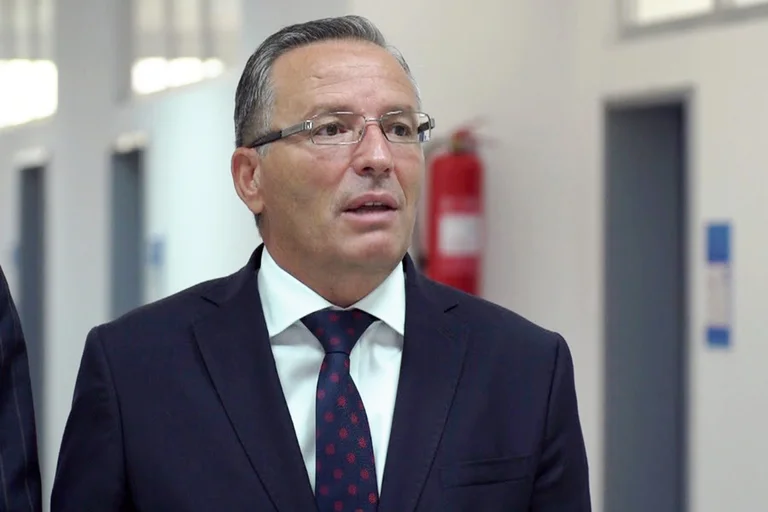
(2 years ago)South Mitrovica Mayor Bedri Hamza says opening the main bridge over the Iber River in Mitrovica should be carried out in co-ordination with NATO and Kosovo's strategic allies. In an interview with Voice of America, he said that actions that could lead to tension should be avoided. “Must [...]
In an interview with Voice of America, he said that actions that could lead to tension should be avoided. “Must have co-operation, co-ordination and co-ordination with NATO, which has its troops within KFOR, with embassies in Kosovo, with the diplomacy of friendly countries in order not to trigger a situation that, instead of having progress to move on the recession and face a situation that would then block the bridge for longer-term”, he said.
Mr. Hamza, he said the bridge case was a topic at meetings he had with American officials during his stay in Washington.
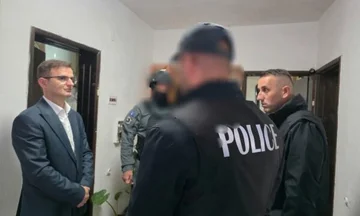
Authorities in Kosovo closed Serbia's post offices in the north on Monday and began testing the stability of the main bridge over Iber, marking the Mitrovica division line, as preparations for its opening for the movement of cars, amid objections by KFOR and Western diplomats.
The Kosovo government says opening the bridge would be a symbol of normalisation of interethnic relations between the Serb-run north and the Albanian majority south.
Voice of America: Your city has again become the focus of attention following Kosovo's government's plans to open the main bridge over the Iber River for cars. Should the bridge be opened for moving vehicles, what is your opinion?
Bedri Hamza: The pedestrian bridge is open, but it also needs to be opened for vehicles. However, there must be co-operation, co-ordination and co-ordination with other factors, in this case even with NATO, which has its troops within KFOR, with embassies in Kosovo, with the diplomacy of friendly countries in order not to trigger a situation that, instead of having progress to move into the recession and where we may have and face a situation that would then block the bridge for longer term.
So, the bridge, we know its role, is to facilitate circulation, move people, capital ideas, in the southern part of the city of Mitrovica is open, everyone is welcome to go by, are welcome to visit it, to do business in Mitrovica, to drink coffee in Mitrovica, regardless of ethnicity, and in this direction we have to contribute to having an extension of the situation, a creation of conditions for us to have a normality in this part of Kosovo, and we should still be narrowly co-ordinated and co-operate with our strategic partners in this direction.
Voice of America: The opening of the bridge was envisioned in an agreement reached at Kosovo-Serbia talks in Brussels, ten years ago. Why has this not been applied?
Bedri Hamza: I regret that northern Mitrovica of Kosovo continues to be the subject since the war. We have a considerable number of agreements that have been reached, some of them have produced effects, some of them have not been implemented, and it is known that the problem of not implementing much of the agreements is Serbia, are institutions in Serbia. Therefore and in this direction, there has been an impact on Serbia through structures in the northern part of Kosovo to have problems with freedom of movement and circulation of people, cars, ideas, capital and so on. So it's necessary that we have the opening of the bridge as well as the vehicles, because I emphasized it and I'm redefining it, for pedestrians it's circulated, but this is in partnership, in co-ordination, in co-ordination with our strategic partners.
Voice of America: A The bridge case was filed at your meetings here in Washington and what was the message of American officials?
Bedri Hamza: I've had high-level meetings, very useful, productive at the White House, the National Security Council, the U.S. Department of State, where we've talked to senior American administration personalities and one of the themes has certainly been the bridge issue. It is clear that the position of our strategic partners, that this issue should go into partnership and compliance with KFOR, with NATO, with our strategic partners, the United States of America and the European Union countries, not to be produced in a situation where we can actually have tensions and really have developments that damage the issue afterwards.
Voice of America: Prime Minister Albin Kurti's government says opening the bridge implies implementing the agreement reached in Brussels and actions like him for closing Serbia's Post Office branches in the north are part of the extension of sovereignty in that part. Was that not the goal of your government and other governments of Kosovo?
Bedri Hamza: But sovereignty, but the territorial integrity of the Republic of Kosovo, integrity, unitary character of the state, order and law, but on specific issues given that for security in Kosovo also guarantees NATO through KFOR troops, we should also agree with our strategic partners, meaning, there is no dilemma about sovereignty, territorial integrity and law enforcement, but on specific topics we should have partnership and co-ordination.
Voice of America: Following the failure of the initiative to have early elections through an agreement on all political forces, what is the situation today? Is there any initiative for early elections or regular time?
Bedri Hamza: Even the actions that are happening, which we talked about, are being done more for electoral effects. Otherwise, they take action, they take initiatives, they raise them, why aren't they? Let them. Regular elections. The country's president has invited political parties to consultations and as possible dates are on January 26th and February 16th. We expect the president to come up with an exact date for holding elections, in a regular term. There has been an initiative for Kosovo to go to early elections. Currently, the ruling party has declared it ready, but at the end when we as the Democratic Party have given support for the distribution of the Parliament has had a reluctance, a reluctance by the ruling party to go to early elections that were scheduled in June or early July. Therefore, we expect elections to be in regular legal, constitutional terms, and we are preparing to get the best out of the elections and we are optimistic that we will have good results.