19 minutes ago
“There is a unwillingness to unblock the Kosovo negotiation process”
Periskopi(2 years ago)
(2 years ago)Representatives of Kosovo and Serbia are expected by July 18th to submit their comments to European Union mediators about the way to implement the agreement on the normalisation of the relations the parties agreed on last year in Brussels and Ohrid. The last two meetings in Brussels between Kosovo leaders and [...]
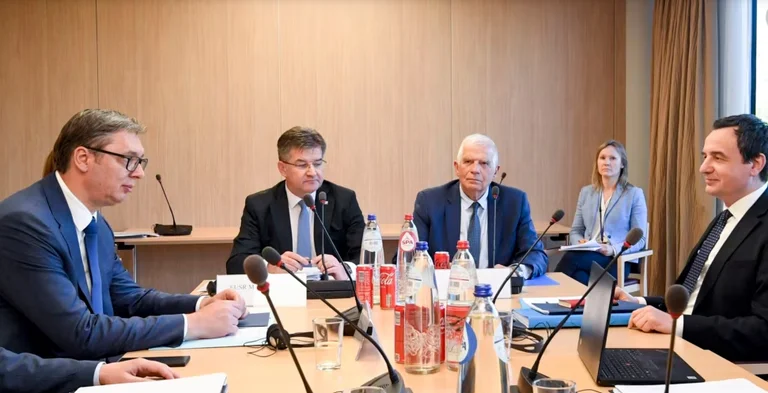
The last two meetings in Brussels between the leaders of Kosovo and Serbia and at the top level of negotiators on both sides aimed at unblocking the implementation of the agreement ended without any results.
The European Union expects the sides' comments to draft a new proposal on this process.
But Albanian and Serbian analysts, with whom the Voice of America spoke, have no expectations that in a short period, progress can be recorded in overcoming differences between the parties.
“We should not be very optimistic and expect major changes, since even last summer there were discussions precisely on the arrangement's sequence and implementation plan, but that it did not produce many results because parties have fundamental differences. Serbia requires that Kosovo initially implement its agreement on establishment of association, while Kosovo requires that it go step by step so that Kosovo takes a step towards association and Serbia a step towards recognition de facto”, says Besar Grogi of the Group for Jury and Political Studies.
“at this moment unfortunately neither side is willing to invest energy in a content way to achieve at least the minimum consensus required to unblock the dialogue process. At least take a few smaller steps and then step by step discuss other important steps. I think this is the consequence not only of outstanding bilateral issues but also of a desire on both sides to stay in dialogue but without any progress”, says Miodrag Milicevic of the non-governmental ACTIV organisation with headquarters in northern Mitrovica.
Mr. Grogi says changes in the leadership of the European Union can bring about a reformation of the negotiation process.
I don't have much hope for Josep Borrell and Miroslav Lajcak's mandate to continue. Dialogue as it is now should have a reshape with new names, and at this point we are very lucky that European elections have already ended and the new Commission is in shape. We already know that Mrs. Kaya Kallas the Estonian prime minister will become high representative and it is very good news because it comes from Estonia a connoisseur, even enthusiastic connoisseur of Kosovo”, he says.
European diplomacy chief Josep Borrell, in autumn, must leave his successor post, already at the end of the mandate is also the special envoy for the Kosovo talks, Miroslav Lajcak, who has been appointed the bloc's ambassador to Switzerland, but during his recent visit to the region, said he will remain in the current post until January.
Mr. Milicevic says it is important at this time at least to create a suitable working environment for the descendants of European officials.
The “should have a stable environment for the descendants of Mr. Borrell and Mr. Lajcak to continue tasks and at least have the opportunity to be more active instead of just waiting on both sides to play in some form with the patience of the international community, the European Union in particular. When we get the names of new European officials, there may be requirements for dialogue to have clear deadlines for implementation processes”, he says.
Mr. Borrell has recently stressed that despite changes within EU structures, Kosovo and Serbia's obligations will not depart, underlining that normalising relations between Kosovo and Serbia is at the centre of European engagement around the Western Balkans.
Although it has not been signed, the European Union considers the Ohrid Agreement legally binding, and in some cases has stressed that progress in its implementation is closely linked to the progress of both sides in integration processes. / VOA