a few seconds ago
They often take on the role of the judiciary, and now the KPK charges that they are interfering with the competencies of Government and Parliament.
Periskopi(2 years ago)
(2 years ago)The justice ministry has reacted to the Kosovo Prosecutorial Council (KPK), which on Monday said that the “government is aiming at defuncting the prosecutorial system”, according to them KPK has offered no arguments that the KPK law violates their independence. In fact, according to them, the KPK's reaction is in the continuation of the destructive approach, hindering actions and trends of [...]
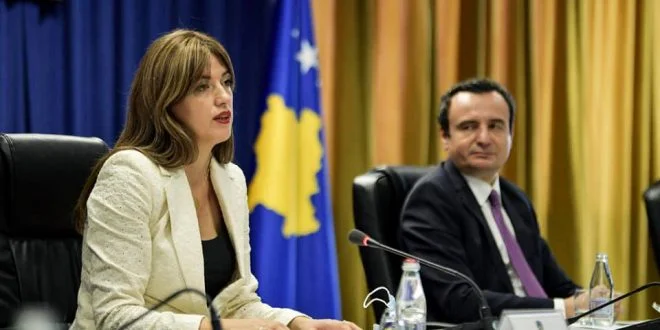
The justice ministry has reacted to the Kosovo Prosecutorial Council (KPK), which on Monday said that the “government is aiming at defuncting the prosecutorial system”, according to them KPK has offered no arguments that the KPK law violates their independence.
Even, according to them, the KPK's reaction is in the continuation of the destructive approach, hindering actions and continued blocking tendencies of the Prosecutorial Council.
The “is a flagrant intervention in the competencies of the Government and the Assembly of the Republic of Kosovo, and aims to preserve the status quo and the continuation of systemic problems, now known to the public, and for which they express all concern”.
“Like participating in working groups of the Ministry of Justice, but in recent discussions and amendments discussed in the Parliament's Parliamentary Legislation Commission, the KPK response contains not a single argument as to how this “rules the independence of the KKP”, “changes to constitutional mandate”, or “the KP” functionality, as expected in the response of the KP (4)K>
The dictatorship of justice appreciated that the reaction contains actual untruth and inaccuracies.
The “is based solely on findings and general statements that are not specified, nor did they argue legally and professionally which approach and action contradicts the KPK's role and mandate of constructive co-operation and professional contribution to the improvement of the justice system, in particular that prosecutorial”.
The ministry also mentioned the commitment made to this law.
“Legal for the Prosecutorial Council has preceded a long process of drafting, which has included formal consultation three times with the Venice Commission, discussions and concrete proposals by civil society organisations and international partners, proposals and discussions by the representatives of the prosecutorial system, as well as the deputies of the Republic of Kosovo's Parliament”.
Adding that the same were constantly invited to the meeting to discuss this law.
“apart from the spurious and unresistent findings of the Prosecutorial Council for unilateral access, refusal and ignoring their representatives' proposals and comments, the Justice Ministry repeatedly invited the representatives of the prosecutorial system to the meetings of the broad working group, but also at special meetings, thus addressing each of their proposals and accepting all those in its own interest of reform<x1.
The MD's asked the Kosovo Prosecutorial Council to abandon destructive approach and stumbling trends and to be a collaborative partner.
On 11 July, the European Union Office in Kosovo, through a communique for the media, estimated that the government “has not taken into account the Union's” comments on the Bill for Public Officials, the comments to the Independent Commission for Media and the Kosovo Prosecutorial Council.
However, in spite of EU requirements, the 61-vote Assembly to adopt the Bill for the Prosecutorial Council. No MPs voted against it.
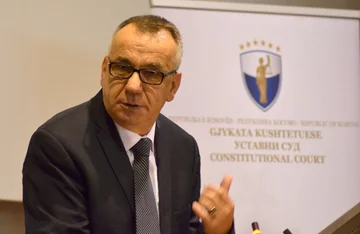
The Democratic Party of Kosovo has indicated that it will be submitted to the Constitutional Court for review of the Law for the Kosovo Prosecutorial Council and the Law for Independent Commission for Media.