7 minutes ago
Who was Ismail Kadare: Early Youth, Life, and Work He Left After
Periskopi(2 years ago)
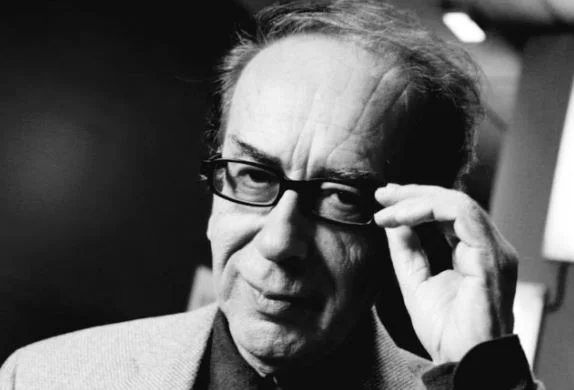
(2 years ago)This Monday, July 1, 2024, was separated from the life of renowned writer Ismail Kadare. Kadare was one of the greatest contemporary writers. As a writer, he is noted primarily for prose, but his contribution lies in dramatology, poetry, and translations as well. Kadare started writing while still young, originally poetry, with which [...]
Kadare was one of the greatest contemporary writers. As a writer, he is noted primarily for prose, but his contribution lies in dramatology, poetry, and translations as well.
In 1996 Kadare became a permanent member of the Academy of Moral and Political Sciences in France. It has been honoured with many international awards, among which the «Man Booker International» Award in 2005, the «Princess de Asturias» Award for Arts in 2009 and the «Jeruzalem» in 2015. In recent years he shares his time between France and Albania.
When the communist regime was established in Albania, he was only eight years old. He finished primary and high school in Gjirokastra. At the age of 12, he was arrested under charges of “money-falsification”, since during the game with his friend he had created five-leased coins with molten lead and told everyone with joy. Police arrested them during school class, two days before election day, and Ismaili spent two days in prison until Kadaren's lawyer intervened and was released because of his youth.
When he was 13 years old, he discovered Shakespeare's Macbeth, and he developed a love of literature. At this age, he wrote down the first stories he published in the magazine “Pionier” in Tirana. At 17 years of age, he wrote two poems about Stalin, which, according to Malcolm, helped publish his first book at the age of 18, a poetic collection entitled Young Spirits.
She conducted her university studies in Tirana, where she lived at her aunt's house and after inviting her, for nearly two years (1957-58) lived with Nasho Jorgaqi. In 1958 he finished his language and literature branch at the University of Tirana and graduated from the Teacher. He wrote his first novel Tirana Fogs, which he completed on the eve of continuing studies in the Soviet Union. In 1958-1960 he studied in Moscow at the Institute of World Literature “Maxim Gorki”, during the Chushovian softening period. There he was able to read contemporary Western literature, which had begun to translate into Russian. [30] At the Gorki institute, he decided to reject the canons of socialist realism and write the opposite of what the communist dogma called good “ ”. He was forced to abandon studies due to the breakdown of relations between Albania and the Soviet Union. He returned home where he started his work as a journalist and shared his literary career, but also as editor of the Foreign Literature Department in the literary magazine “Drita”.
The years í60
Over the years, "50 and early in the '60s, " she became known for her poetry, and from the 1960 ' s, she was also known for her prose. By that time most writers belonged to the war - torn generation. The conflict between them and their younger generation, Kadare, Agoli, and Arapi, culminated in a meeting of the writers of the two generations in 1961, attended by Enver himself. Kadare, who belonged to the younger generation, defended the new literature and, surprisingly, Hoxha here sided with the young. This Hodge maneuver was also a blow to the old ex-party generation, and it turned the new generation into a new cultural nomenclature.
Upon returning from Moscow, the city without advertising was advised to keep it hidden. A fragment that was published as a novel by the title Coffee Day in 1962 at “Youth Voice”. As soon as he left the press, he was banned, as a decadent act. In 1963 the late army general published the novel, discussing the subject of an Italian general and a priest who come to Albania to pick up the remains of the fallen Italian soldiers in World War II. The following novel, Monster, was published in “November”, but was banned.
At preparations for the Albanian Cultural Revolution, like other writers and intellectuals, he vowed to go with creative permission to the village. Kadare was sent to Berat, where he spent two years as a correspondent for the newspaper “Drita”, where he met the workers of the textile plant. He was commissioned to get acquainted with the workers of the textile plant; using a story that he had published in the early years é60s with the strange wedding and in recognition of the reality of life, took up the form of drum skin fund, which was published in the spring of 1967 in the magazine “The November”.
In 1967 he was appointed to a delegation of the Writers League sent to China, along with several other delegations. By then the Cultural Revolution in China was at its peak. His experiences in Communist China would later be discussed in his work. After China, Kadare's delegation stayed two weeks in Vietnam, where the war continued. On the last day they were crossing the McCong River with a huge raft, they were caught in a river bombing.
The years of ʹ70, international success
Stone Chronicles, 1971
Early in 1970, French publishing house Albin Michel published French the late army general. He had a remarkable echo in France, and within three years he was translated into nearly 20 languages. Then he returned to historical subjects. He wrote and published his novels Castle (1970) and Kronics in stone (1971), which were published in France one after another. During these years he also conducted the only foreign - language magazine of the Writers' League, “Letres Albanaises”. After his success in France, he was appointed deputy, and after two years he joined the Albanian Labour Party.
Following the publication of two historic novels, Kadare again faced criticism of avoiding “actual subjects”, so he thought to write a novel on the subject of Albania's breakup with other communist countries in the winter of 1960-1961, that he would then have free hands to return to Albanian history and legends for which he was criticized for neglecting New Albania. Roman gave the title of the winter of great loneliness. As early as 1973, because of criticism, it was processed and reprinted in 1977 under the changed great winter title and translated into French.
The years of 80
In the autumn of 1980, he visited Kosovo on the occasion of the first edition of the completion of his works in Pristina. There were institutional expectations, and there were numerous meetings with Kosovo readers and intellectuals, and came to know the Albanians' threats.
On December 17, 1981, Albanian Prime Minister Mehmet Shehu was found dead, later declared traitor and polyagen. The day before Shehu's burial, writers and artists were invited to an art exhibition attended by Enver Hoxha himself, but Kadare was not invited. He had handed over for publication the novel Concert on whose pages mentions the way Chinese dictator Mao Ce Duni had eliminated his deputy Lynn Biao by presenting him as an air accident. In January 1982, the windows of Kadare's house were broken with stones, and in front of the house the rally was organised screaming “Kadare, a bourgeois agent of Mehmet Shehu. ”
Together being accused as Shehu's accomplice and the contents of the novel Dream Palace were ready to be condemned but escaped arrest because of international recognition. In a letter to the French magazine Lire, Bernard Pivot wrote that France was concerned about the fact that Kadare was not responding to the invitation to go to Paris, writing “We expect Ismail Kadare and not his head on the plate...”. In 1983 he was allowed to respond to the French invitation and to visit France without a family while his wife and daughters were being held in Albania as a means of pressure.
The next Monday night novel, released in early 1985, was banned. The next day of the dictator's death on April 10th, members of the Writers League, the Political Bureau and the Communist Party Central Committee hastily organized a meeting to condemn his latest novel.
The Fall of Communism (1989-1991)
In 1989 the authorities appointed deputy chairman of the Democratic Front. Taking advantage of his fame in Albania and abroad made ever more vocal statements on the necessity of changes, especially in the area of human rights. In the foreword to the courageous GRUNTS novel (1989) by Nedat Tozaj denouncing Security violations, Kadare claimed that only by admitting and correcting previous mistakes could Albania move forward. In February 1990 Kadare called for a meeting with Ramiz Alia, where he asked him to respect human rights, implement democratic reforms, economic reforms and open to the outside world.
At the end of October 1990, he was allowed to leave for treatment in France according to one source, according to another, he left with a regular visa for his entire family. His flight was welcomed by those who wanted Albania's democratisation, while after the escape was declared a traitor and Ramiz Alia sought his prosecution. ATSH declared: “Kadare defected!” Some intellectuals, in spite of the impending danger, publicly supported Kadare, whom the authorities had declared a traitor. Because of his popularity, authorities did not find sufficient support against him, and his books were not banned. A few days after Kadare's escape, at a national conference of literary and young artists in Korca, attended by hundreds, the writer's name, whose escape had prevented his name from being mentioned.
After leaving Tirana and applying for political asylum in France, he was able to exercise his profession in total freedom. His exile in Paris was fruitful and enabled him further success in both Albanian and French.
After winning the Democratic Party in 1992, Kadare returned to Albania. From 1990 onward, his work becomes the most powerful expression of the language and artistic values of literary Albanian, both inside and outside the country. Ismail Kadare's literature after 1990 carries the same basic features of the previous one: the ethnographic spirit and the spread of Albanian identity, adding to the copyright's freedom to address topics that could previously not be treated freely.
In 1996 he was admitted to the Academy of Social and Political Sciences in France, where he replaced philosopher Carl Popper. From 1994 to 2004 the French publishing house Fayard published the complete work of Kadare in French and Albanian. During the 1990s, he helped publish many Albanian authors in France, either by suggesting to French publishers or by writing the forewords. In the 1990s Kadare lobeed on Kosovo and backed NATO bombings against Serbia.
Over the years, it has declared that it has renounced poetry writing (1997) and artistic literature (2011).
Work
During the years, "60s in the writings of official criticism is largely ignored or seldom mentioned in contrast with the great writers of the time he liked. In the '60s, he was truly valued for his talent by Toddi Lubonja and Fadil Padrami. After international recognition, he was considered a talented writer, but whose talent was inclined to decade and subjectivism.
According to some scholars of his work, Kadare tried to write normal literature in an abnormal country (communist Albania could only be compared to North Korea or the Soviet Union during the years HINA30), calling his work resistance literature, challenging socialist realism with subjective realism. He avoided socialist reality and state censorship through allegory, symbolic, historical, and mythologyic means. For Elsie, he used every opportunity to attack the regime in his works through political allegorys, which were understood by educated Albanian readers.
Recognising this deviation from the Socialist realism, his works were translated and well received by critics and readers around the world. He created a work of universal character but whose roots are deep in Albanian soil. Kadare is viewed by some as one of the most prominent European writers and academics of the 20th century, as well as a universal voice against totalitarianism. Its prose characterizes extensive history-filozofic generalizations, the densely packed subject and the deep thought often expressed through the parable, on the basis of association or historical analogy. The central theme of his works is totalitarianism, his mechanisms, and the complexity that makes him possible.
Poetry
His first poetic volume, entitled Boyboy Spirits, was published in 1954. Then there would be published My Dreams (1957), my Century (1961), Poema blindery (1962), and the most precious Why are these mountains (1964), sunny weather (1968) and Time (1976). Since 1966, he discussed the subject of Kosovo in poetry, [66] as well as Vietnam.
Romane
The idea of the novel General of the Dead Army (1963) is the lyrical spirit of the Albanian people. The subject of the unbeatable spirit of Albanians for centuries was also discussed in the novel Castle (1970). In Stone Chronic novel (1971) Kadare criticised provincial psychology and behind-the-back traditions. Important history problems have also been dealt with in collections of stories of the previous Novela Embemma (1977), the three - bow Bridge (1978) and the Mullbloods (1980). In 1981, he published a joint collection of broken April novels, who brought Dorothy along with the first two chapters of the novel The Palace of Novel - shaped Dreams. The work was about a totalitarian state that at first seemed like the Ottoman Empire, but soon the atmosphere of fear, arrests, and imprisonment was similar to Communist Albania. [108]
He wrote stories on the security theme in the magazine “on behalf of the people”.
In 1971 he published the Autobiography of the People in verse, where he dealt with folk poetry and legends. [85] In the Eskili test, this big loser represents what he himself calls the Albanian “tragedia”, which is the marginal behind history after the Roman and Byzantine period. The attitude that he continued to maintain even after the fall of communism led to severalfold controversy with academic Rexhep Qosja. [1109] At the end of the years, the '{0}'80s would preamble the trial the Migen's Arcade in Albanian Literature, published first in 1990 independently in Pristina.
Among the least coveted fields of Kadare's activity are translations, the hul, which he began in 1955, when he gave in Lisi poems, the Child, into the forest near the throne, Katjusha, Spring, etc. of Russian writer M. Isakovski. Other authors of it are: Eskili, Hemingway, Pushkin, Majakovski, Eminescu, Gongol, Esenin, Mihalkov, Shchipacov, Mickievic, Busk, Sendrar, Bodler, Andrade, Vidon, Ceferis, Kavafis, Elitis, Li Bo, Du Fu, Jan Czjun, etc.