16 minutes ago
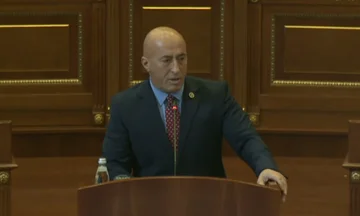
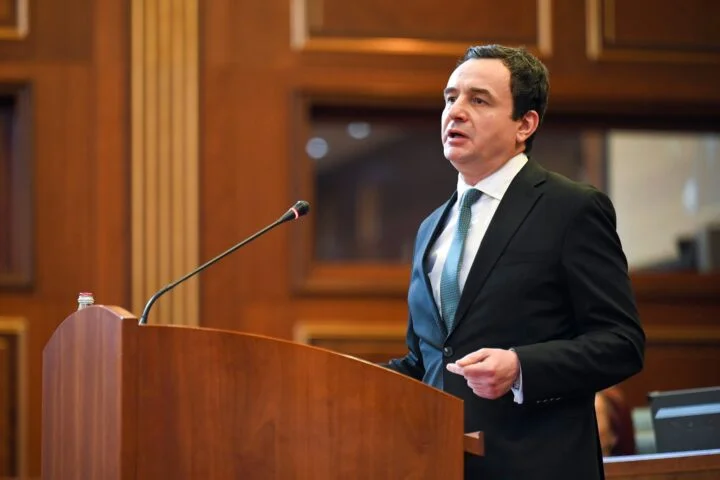
IKD: Kurt refused to answer parliamentary questions for the first time in history, his offensive and exclusive approach
Periskopi(2 years ago)
(2 years ago)Kosovo's Institute for Justice (IKD), from monitoring the legislative programme for the first six months of 2024, has found that the Government realised only 15% of the planned legislative agenda. Thus, the government adopted only 8 of the 52 planned bills. IKD finds that the government failed for the third consecutive year to approve the legislative programme [...]
Kosovo's Institute for Justice (IKD), from monitoring the legislative programme for the first six months of 2024, has found that the Government realised only 15% of the planned legislative agenda. Thus, the government adopted only 8 of the 52 planned bills.
The IKD finds that the government failed for the third consecutive year to approve the legislative programme in early January, but approved it by a month late.
Also disturbing. The IKD has singled out non-involvement in the legislative programme of the bills stemming from the Constitutional Court, National Development Plan and Government Programme 2021-2025.
The IKD stresses that several laws by the Constitutional Court have been overturned, while failing to adopt a number of bills within the planned deadline.
Furthermore, the IKD has found that on two occasions the Kosovo government has been delayed in implementing the Constitutional Court's judgments, violating the judgments and deadlines set in them.
As for public consultations, The IKD finds that in the seven adopted laws that are subject to the public consultations process, in just one case it failed to comply with this obligation and standard of transparency and good governance.
Full communication:
IKD: The government passed laws contrary to the Constitution, violated Constitutional Court judgments, made decisions without enough public consultations, and realised only 15% of the legislative agenda planned for the first six months of 2024
Kosovo Institute for Justice (IKD) annually monitors implementation of the legislative programme within the “Good Governance” programme. The assessment is based on indicators such as adequate planning, constitutionality, legitimacy, transparency and public participation in the decision-making process. This monitoring estimates whether the legislative process is in line with democratic standards and has included all relevants.
In the first six months of 2024, The IKD has identified substantial shortcomings in the Kosovo government's approach to legislative planning. For the third year in a row, the government failed to approve the legislative programme in early January, adopting the delay in a month. This delay has violated the planning process and has created uncertainty for the public, civil society organisations, citizens and relevant institutions. After late approval, the legislative programme has often been changed, showing the lack of a clear and sustainable strategy. The programme for this year underwent changes in February.
Another issue of concern is non-involvement in the legislative programme of the bills stemming from the judgments of the Constitutional Court, National Development Plan and Government Programme 2021-2025. These bills are essential to meeting constitutional obligations and sustainable development. Their neglect reflects a lack of commitment to structural reforms and government priorities. This repeated failure shows inability to implement public policies, questioning the effectiveness of governance and the ability to address the needs of citizens. Moreover, this negligence could violate democratic standards and undermine the citizens' trust in state institutions.
Under the legislative programme, the Government scheduled the adoption of 52 bills by June, but from 52, it approved only 8. or 15% of the planned bills. During this period, the Government also approved 10 international agreements that were not scheduled for approval on the legislative programme. On the other hand, the Government showed speed in adopting two bills -- one scheduled for September and adopted in June (The Water Reservation Funding Bill) and the other planned for December and adopted in April 2024 (The State Mathing Law). Based on top results, the Government's efficiency in implementing the legislative agenda for the first six months would reach only 32%.
The IKD finds that some ministries, even though scheduled to approve the bills, failed to approve them under the planned deadlines on the Legislative Programme. These ministries are: The Ministry of Defence, Ministry of Agriculture, Forestry and Rural Development, Ministry of Industry, Undertaking and Trade, Ministry of Health, Ministry of Economy, Ministry of Foreign Affairs and Diasporas.
As for the ministries that have passed bills according to planning, the Ministry of Finance, Labour and Transfers under three bills, the Ministry of Justice with Two Bills, the Ministry of Internal Affairs and the Public Administration with two bills, and the Ministry of Environment, Space Planning and Infrastructure with a bill.
In terms of electoral promises, pledges to the Government Programme 2021-2025 and planning on the National Development Plan and other strategic documents approved by the Government of Kosovo, The IKD finds that in key promises the Kurti government has failed to first forward with the adoption of the bills, and when it adopted them, they have been contrary to the Constitution, and some laws have only followed them after the Constitutional Court imposed.
In the justice field, respectively, the Law for the Prosecutorial Council and the Law for the Bureau has been overturned, on the other hand, constitutional amendments to vetoation have been confirmed in part by the Constitutional Court and, for the most part, held hostage in parliamentary procedure due to the boycott of the Parliament's work on the Serbian List. On the other hand, as we would mention further, the government failed to re-procedure the Civil Code of the Republic of Kosovo for approval. Moreover, the Ministry of Justice, even though it planned that the six bills issued by the Declaration of Representatives be adopted on 28 June 2024, it placed these bills on the Online Public Consultation Platform to receive comments by July 2nd, 2024.
In the social field, the Kurti 2 government has so far failed to adopt the majority of the bills planned since 2021. Among these bills are for the Economic-Social Council, the Bill for the Social Assistance Crime, the Bill on Pension Schemes, the Labour Bill, the Labour Inspectorate Bill, the Bill for Social and Family Services, the Bill on Education, the Status Recognition, the Benefitment and the Services for Bordered Persons, the Bill on Social Baning, the Bill on Safety and Health at Work, etc.
In the area of the economy, lack of efficiency in the adoption of bills is clearly evident. The government, as seen by monitoring, finds that it has not yet adopted the Bill on Economic Area, Investment Promotion and Protection Bill, the Bill of Innovation and Intervention, the Public Procurement Bill, the Public Partnership Bill, the Public Finance Bill, the Bill for the General Auditor of the Republic of Kosovo and, more so, the government has not proceeded this year with the revision of the annual budget as has been the practice of the previous year.
In the area of police security and prosperity, the government has yet to approve changes and complements in the Law for Police and the Kosovo Police Early Pension Law. These bills are not scheduled for approval this year, even though they are involved in the Strategy for Rule of Law Implementation Plan 2021-23. As for health reform, the Health Insurance Law -- one of the most important laws of the Kurti 2 government -- has yet to be adopted, despite the promise of Minister of Health Arben Vitita -- that it would be adopted in late June.
The IKD also notes that Kosovo Prime Minister's invitation to parliamentary political parties in terms of implementing the legislative programme has been insincere since Prime Minister Kurti for the past three years has had disfellowshipped and often offensive access to the opposition. Adding the fact here that such an invitation came almost at the end of the VIIIth legislature.
On the other hand, the prime minister himself, throughout 2023, and during the year 2024, has not responded to MPs in parliamentary questions and issues they have raised. For the first time in the history of parliamentarians in Kosovo, it has built the harmful practice of exclusion and avoidance from parliamentary control by failing to answer the questions of representatives of citizens.
The government, as the main pillar of executives, carries the heavy burden of implementing state laws and policies, becoming a guarantee of national order and stability. With this extraordinary responsibility, however, comes rigorous parliamentary control, which acts as a shield of democracy. Parliament, equipped with powerful monitoring mechanisms, stands ready to stop any deviation from the path of justice, reminding the government that freedom to act is not limitless. In this constant battle for power and transparency, parliamentary control is not only a formalisation, but a struggle to preserve the essence of democracy and protect the interests of citizens. Kosovo's prime minister has knowingly failed to implement this in practice.
As for public consultations, The IKD finds that in the seven adopted laws, which are subject to the public consultations process, in only one case it failed to comply with this obligation and standard of transparency and good governance. It did not apply these requirements precisely in the case of the Law's prosecution and adoption of change and fulfillment of the Law for Public Officials, following the in part collapse of several provisions and the GK's request to change them.
The IKD finds that contrary to promises of the Government of Kosovo and the Ministry of Justice for the adoption of the Civil Code Project in a short term in the Government and the Assembly of Kosovo, this draft law has not been adopted under the planning envisioned until June 28th 2024. So far, none of the institutions' representatives have responded to why this has not been prosecuted in the Kosovo Assembly. It marks a government failure to take the necessary steps towards adopting a fundamental civil justice law. Such a failure is cited in the 2023 Progress Report, which points out that with the adoption of this code, protection of women's basic and civil rights would be reinforced.
On one occasion, The IKD finds that the Government, contrary to good governance standards and contrary to the standards of democratic parliaments, re-projected the Treaty's ratification bill between the Republic of Kosovo and Denmark's Kingdom for the exploitation of the Correcting Institution in Gjilan in order to execute Danish sentences, four days after failing to vote in the Kosovo Assembly.
The IKD emphasises that reproceding an international agreement immediately after a failed vote in parliament is not accepted as common practice. That is because decisions concerning international agreements are seen as irreversible and completed after being granted approval or rejected by the responsible organs, including parliament in most cases. Take, for example, the Kosovo Assembly Rule where it says other laws with the first reading failure cannot be re-proceded on the three-month deadline from the day of disapproval. Moreover, to reprocedure such an agreement in the short term after a failed vote, there must be a clear excuse and strengthen broader sensitivity in society, and especially among citizens' representatives.
As for constitutionality, Constitutional Court ( GUK completely brought down Law No. 08/L-121 for the State Bureau for Verification and Confiscating Unjustified Riches and part of the Law on Change and Fulfillment of the Law for the Independent Council for the Kosovo Civil Service. The fallen articles were fundamental to the government's purpose and purpose. In another case, the Court completely overturned the Kosovo Parliament's decision to sack the OSHP Board member following the Kosovo Government's proposal.
In two other cases, DK ruled that the proposed laws are not in conflict with the Kosovo Constitution. According to her, the Sustainable Investment Law and the No.08/L-142 Law on Changing and Fulfilling Laws that define the amount of Benefiation at the Elevation of the Minimal Page High, the Ministerial Pagation Procedures, and the Tax Scales in the Annual Personal Future, are in line with the Constitution.
The IKD has found that on two occasions the Kosovo government has been delayed in implementing the Constitutional Court's judgments, violating the judgments and deadlines set in them. Initially, the Law for Public Officials was passed seven days before the six-month deadline was completed from the act's entry into force in Ko216/22 and KO220/22 cases. This law is still in parliamentary procedure and contains provisions that are not in line with GDP requirements. In the second case, it is seen from the prime minister's official page that the government has not yet begun changes and fulfillments of the Law for the Salaries in the Public Sector. The GK demanded that these changes be made within six months of access to the court, namely, until August 1, 2024.
In this way, the Government of Kosovo has openly and without responsibility to citizens Article 116, paragraph 1 of the Kosovo Constitution. The IKD reminds the Government that the Constitutional Court's decisions are binding and have judicial consequences. They should be respected by the institutions involved and implemented according to specific deadlines and requirements. Their failure to comply constitutes constitutional violations and cannot be revised by any institution, including the judiciary itself.
In another case, the Government of Kosovo decided to abolish the Rule for the Minimal Standards of Public Consultation and join it with a regulation, the one for the work of the Government. The IKD, finds in this regulation that the government has reduced consultations deadlines for particularly complex or important acts from 60 days to abolished regulation, now on new regulations to 30 calendar days.
Reducing the deadline for public consultation of laws from 60 to 30 days could be interpreted as an effort to speed up the legislative process and increase administrative efficiency. However, this could limit public participation, lower transparency and reduce the time for debate and detailed comments by citizens and interest groups.
Regarding the adoption of other important documents, particularly medium-term financial ones, such as the adoption of the medium-term spending Framework, the IKD finds it conveyed with a lack of public consultations on the Online Public Consultation Table. The Kosovo Women's Network, which the organisation, reacted to the government's move, expressed concern over the publication of the Framework Framework deadline by the Ministry of Finance, Labour and Transfers for 2025-2027. The publication of this important document was made avoiding setting on minimum standards for the public consulting process.