3 minutes ago
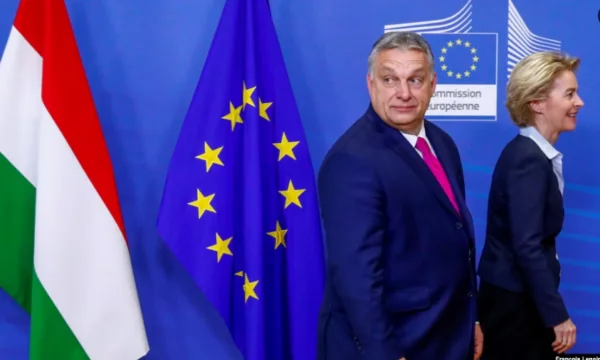
Hungary top: What do you expect from its leadership with the EU?
Periskopi(2 years ago)
(2 years ago)On July 1st, Hungary leads the presidency of the European Union. The next six months may be difficult for the EU leadership, taking into account that Hungarian Prime Minister Viktor Orban has conflicting attitudes with the EU: he is not satisfied with its sanctions against Russia, prevented military and financial aid to Ukraine and imposed [...]
On July 1st, Hungary leads the presidency of the European Union. The next six months may be difficult for the EU leadership, taking into consideration that Hungarian Prime Minister Viktor Orban has conflicting positions with the EU: he is not satisfied with its sanctions against Russia, prevented military and financial aid to Ukraine and questioned Kiev's aspirations for EU membership.
Furthermore, Hungary, the self-called non-liberal democracy “, has been penalised by the EU, which has frozen its 6 billion-euro funds, destined for it.
But despite such relations, Hungary's six-month presidency in the second half of 2024 may not be as dramatic and problematic that some may fear.
The presidency of the Council of the European Union ʹ is one of the bloc's main decision-making bodies, comprised of ministers of the governments of member states, keeps each of the member states rotating for a period of six months.
With this arrangement, each member state is likely to form a council agenda.
According to some sources in Brussels, the Hungarian presidency is not causing much sleepless nights. This, largely because of two factors: the current role of the presidency and the features of the political calendar.
The Reduced Role
The European Union Council presidency is no longer what it was.
There was a time when the country that was at the top really checked the agenda, holding summits in its capital and leading politics behind the scenes.
This has changed in 2004, when all important summits are decided to be held in the Belgian capital, Brussels.
The changes have then deepened in 2009 with the Lisbon Treaty designed to improve the efficiency and democratic legitimacy of the EU, which has created a range of new functions and has enabled power to focus on Brussels.
The Lisbon Treaty has established a permanent president of the European Council, which primarily belongs to the heads of state or government of member states.
Postin currently keeps Belgian politician Charles Michel already on the run. His mandate is five years old, and he heads all summits.
The council, too, has a very extensive and powerful secretariat made up of EU officials with expertise in all policy areas.
The Lisbon Treaty has also seen an EU foreign policy chief, in whose position is currently Spanish politician Josep Borrell, and the one on the run as well as a diplomatic body, the European Foreign Action Service, to give weight to the foreign policy position.
So how does all of this affect the Hungarian presidency? It reduces the influence of the two members most attacked by Brussels of Hungary's National Conservative Government: Orban and his foreign minister, Peter Szijjarto.
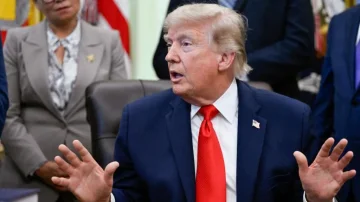
But Budapest will, of course, still have an impact on the discussions, as has been seen in the discovery of his slogan for the presidency, ♫ “Let's make Europe big again” CHA is inspired by Donald Trump.
The two men will still lead informal ministerial meetings, and even a summit in Budapest in November, but their role will be quite superficial.
They will also have to face questions at press conferences and foreign media, which are usually avoided.
What, then, specifically remains Hungary to do?
Other ministers, such as those responsible for agriculture or justice, will chair the Council's meetings in their fields. Hungarian diplomats will do the same in preparing working groups.
The whole idea of the rotating presidency is for officials at the helm to be honest mediators and to seek consensus among member states.
Instead of causing trouble, Hungary may decide to play well.
Officials from various member states have said Hungarian officials have acted professionally on the eve of the presidency, and have stressed that they will do everything according to the rules.
Political Calendar
The second factor that could limit Hungarian ambitions to impose its agenda is the political calendar. In the next six months, few are expected to happen in Brussels on new legislation.
This, because the EU capital will be busy appointing a new European Commission, which is the bloc's executive arm and the proposor of new laws.
This process includes hearings in the European Parliament for the adoption of new commissionors, one from each member state. The process is expected to last almost all autumn, and Hungary has no role to play.
There has also been an intense and largely successful effort by the Belgian-run presidency to perform certain tasks before Hungary takes up the role. For example, a new round of sanctions against Russia has been adopted on 24 June.
Green light has also been given to Ukraine and Moldova on 25 June to begin EU accession talks. The process of reviewing various chapters of membership policies of the two candidate countries is expected to last more than six months, and it is likely that Budapest will not address the issue at all, but that it will pass Poland, as EU leader from January 1st 2025.
While Hungary has voiced itself against Ukraine's current ambitions to join the EU, one of its priorities during the presidency is expected to be advancing the prospects of Albania and Serbia's membership, and perhaps even Bosnia and Herzegovina and Georgia.
Ahead of Hungary's presidency, the EU has also managed to send military aid to Ukraine, worth 1.4 billion euros, to support defence against Russia. This money has come from Russian frozen assets in the EU, and Brussels has managed to exceed Budapest's veto for the move.
But the Hungarian veto still stands above seven additional military aid installments for Ukraine, worth nearly 7 billion euros.
Hungary is used to shopping with Brussels. It could try to link its support for further military assistance to Ukraine with 6 billion euros in EU funds, which Brussels has blocked.
If Budapest fails to meet EU requirements for rule of law by the end of the year, it will permanently lose 1 billion euros. This is an agreement the Hungarians will want to make. /Radio Europe Free/