14 minutes ago
Hoti for the UN report: Government obstructing investments through unstable policies
Periskopi(2 years ago)
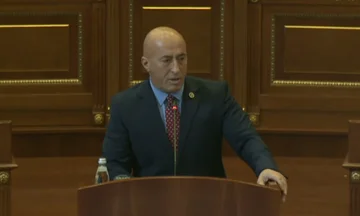
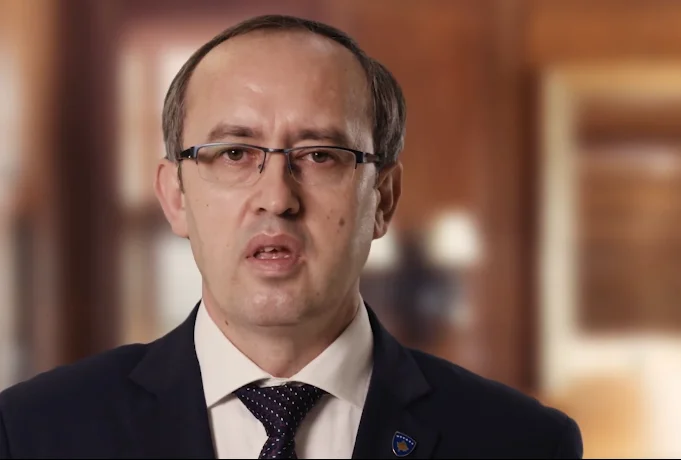
(2 years ago)LDK MP Avdullah Hoti has commented on the findings of the UN report concerning the investment climate in Kosovo in 2024. In a Facebook post, Hoti wrote that what is disturbing is the total lack of economic reforms in these years, resulting in worsening business environment and investment. “Unfortunately, [...]
In a Facebook post, Hoti wrote that what is disturbing is the total lack of economic reforms in these years, resulting in worsening business environment and investment.
Unfortunately, economic policies in these four years of governance are pushing Kosovo into economic and political isolation, creating a kind of social dependence, without the initiative for business and innovation, where social schemes are promoted as salvation for families in need, not employment, and private sector development” has written Hoti.
He has mentioned some of the findings of the UN report, adding that with this government nothing is certain.
“Brend night changes can occur in the course of”, Hoti wrote.
Full Posting:
Investment climate in Kosovo in 2024 according to UN Report
Report The UN, published these days, offers an objective and impartial summary of the investment climate in Kosovo in 2024. Of course, Kosovo has long-term challenges in the area of the economy, related to political developments that take time to address it. But what's disturbing is the total lack of economic reforms in these years, resulting in worsening business environment and investment.
Given Kosovo's limited capacity for large-scale investment financing and modern technology, foreign investments are essential to ensuring higher economic growth and bringing in the newest technology.
Unfortunately, economic policies in these four years of governance are leading Kosovo into economic and political isolation, to the creation of a kind of social dependence, without the institutions for business and innovation, where social schemes are promoted as salvation for families in need, not employment and private sector development.
Here are some of the troubled findings of the UN report:
1. The government's stubborn policies in the field of economy, political interference in the economy, and limited public-private dialogue pose a challenge to investors;
2. The different government regulations are adopted without meaningful debate with those affected by those regulations;
3. Private sector communication with government is insufficient;
4. Economic growth and productivity are limited by the informal economy, especially in sectors such as construction, agriculture and retail trade;
5. Kosovo's new labour force remains untapped due to incompatible with the institutions that have the workforce and skills required by employers;
6. The Business Recording Agency for a time suspended the license of the biggest media broadcaster in Kosovo;
7. Commercial substances in court take between six months and a few years to settle.
8. Trade brand census takes 9 months;
9. License approval takes 18 months;
10. Bank activity is limited by heavy economic conditions, poor contract strengthening, etc. ;
11. Kosovo continues to produce 95% of coal power through thermal power plants built in the 1960s and 1980s;
Twelve. On December 31, 2020, Kosovo signed the Investment Inentiva Agreement, which has entered into force on February 3rd 2021 (in the preliminary government), which has made Kosovo the first country in the Western Balkans to sign such an agreement.
Understandably, some of these challenges cannot be resolved within a governing mandate. The problem is that no attempts have been made to solve them either. Rather, the situation has deteriorated.
Problem in the area of the economy from the investors' perspective is the lack of predictability in economic policy. With this government nothing is certain. There may be changes in course of action overnight. We can wake up in the morning and understand that someone has suspended their license, someone else has been convicted by tax authorities, someone has been seized with wealth and so on.
Even when the state is right in the actions it takes, the important is the very careful implementation of the legal bureaucracy for taking action and ensuring full transparency. Clearly, the existing government does not have that purpose. This government is motivated by the political goals of pursuing what it calls oligarchs, who have at first declared enemies of the state and the people.