23 minutes ago
Britain's elections: Labus marks convincing victory, Sunak admits defeat
Periskopi(2 years ago)
(2 years ago)The Labusist Party has won convincing victories in the parliamentary elections in Great Britain on Friday, ending 14-year rule by the Conservative Party. centre-left Labusists have won the overwhelming majority of the seats in the British Parliament, comprised of 650 seats, while the Youth Sunaku Conservative Party has suffered the defeat [...]
The centre-left Labusists have won the overwhelming majority of the seats in the British Parliament, comprised of 650 countries, while the Youth Sunaku Conservative Party has suffered the worst defeat in its history.
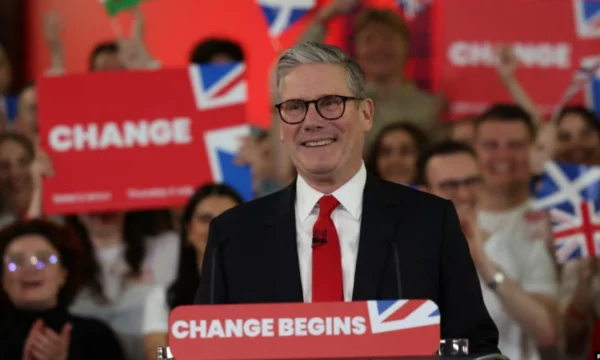
Friday morning, Keir Starmer pledged to bring changes to Britain as the country's next prime minister.
Sunak admitted defeat earlier and said he called Starmer to congratulate him for victory.
Starmer said during a speech Friday morning that “change now starts”.
We said we'd end this mess, and we'd do it; we said we'd start over, and we did. Today, we start the new chapter, we start the development of changes, the mission of a national renewal and the start of building our country”, Starmer said.
Meanwhile, Sunak claimed responsibility for his party's defeat and apologised.
“There are many things we need to learn from and to reflect on and I take responsibility for losing”, he said.
Since Britain has avoided the return trend from the last to the right in Europe, including France and Italy, many of the same populist currents appear in Britain.
Reform Leader UK, Nigel Farage, campaigned with messages against immigrants and received part of the supporters, who were expected to face disappointment.
Britain has experienced several turbulent years in part because of conservatives who have caused pessimism among many voters for their country's future.
The arrival of the United Kingdom by the European Union, followed by the COVID-19 pandemic, and Ukraine's Russian invasion dealt a serious blow to the economy, while holidays ignoring the rules of isolation, organised by then Prime Minister Boris Johnson and his staff, caused widespread outrage.
Johnson's successor, Liz Truss, shocked the economy further with a package of drastic tax cuts, and remained only 49 days in office.
Sunnak, who replaced Trussin less than two years ago, announced the July 4th elections despite polls presenting losses to his party. Analysts estimated that he saw some successes in the economy as a decline in inflation and economic growth as the best moment to lead the country to elections.
Sunak will officially submit his resignation this afternoon. Starmer, as leader of the winning party, will then meet with the king who will ask him to form a Government.
Later, the next prime minister usually heads down to Downing Street to deliver a speech to the public.
Over the next few days, the new leader will begin the appointment of government ministers, starting from top posts and moving into less responsible roles.
Parliament is expected to resume work on July 9th. The Speaker of the Lower House of Parliament will be elected from among MPs.
Each MP will then take the oath of loyalty to the king or make a solemn statement (declaring to tell the truth). This procedure usually lasts several days.
The opening of parliament and the King's speech, which defines the Government's programme of parliamentary session legislation, is expected on July 17th, though this date may be changed by the next government. / REL