18 minutes ago
Serbia's agreements with China, their impact
Periskopi(2 years ago)
(2 years ago)Agreements that were signed in Serbia during Chinese leader Xi Jinping's visit last month could limit media freedom in this country and increase the extent of China, experts and activists warn that Free Europe spoke about Radio. I think that anyone considered by Beijing as a critic of the regime should [...]
Agreements that were signed in Serbia during Chinese leader Xi Jinping's visit last month could limit media freedom in this country and increase the extent of China, experts and activists who talked about Radio Free Europe.
I think that anyone considered by Beijing as a critic of the regime should think twice before travelling to Serbia”, says Laura Harth, from the organisation for human rights Safewarmed Defenders.
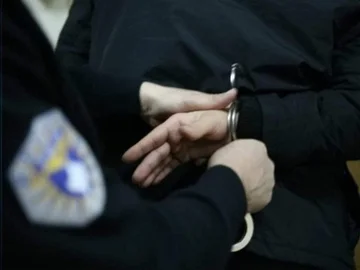
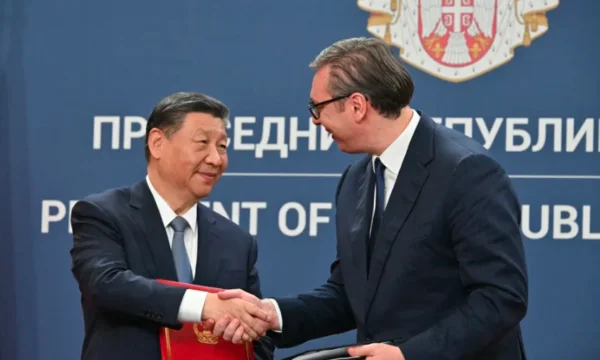
Harth thus refers to an extradition agreement signed in Belgrade during Xia's state visit on May 7th and 8th.
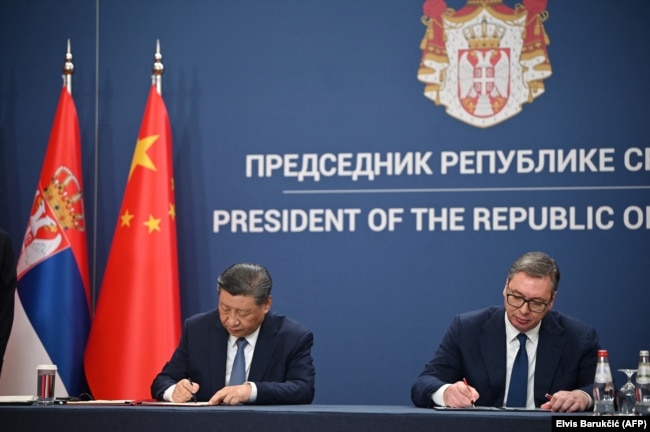
It is one of 28 agreements signed those days between Beijing and Belgrade, which relate to a range of issues ranging from infrastructure to energy.
But, it is the agreement on extradition that sparked alarm bells among human rights activists, who say the lack of judicial independence in Serbia could open door to abuse by Chinese officials.
“The signing of an extradition agreement with China, in itself, is not controversial, but the question is how to implement”, says Free Europe Radio Service Petar Vidosavlevq, from the Belgrade Centre for Human Rights.
Independent journalists expressed similar concerns about co-operation agreements, which were signed by Serbia's three main pro-government media and President Aleksandar Vuciq's press service, along with China's China's China State Television Radio Watch Organisation.
While the text of these agreements did not become fully public and they will have to be ratified by Serbia's Parliament to enter into force, activists warn that agreements when combined with the deterioration of Serbia's media environment can further reduce the space for independent information in this country.
The “Frika is that it will lead to an increase in anti-European nanovests throughout the Balkans”, Free Europe Radio Antoinette Nikolova, director of the Balkan Freedom Media Initiative.
Serbia's information environment is already fed up with Russian propaganda and will now become home to Chinese naturists”, she says.
The Slipper Toward extradition
Serbia has signed extradition treaties with many countries like: The United States, Germany, Belarus, Turkey, Croatia, Montenegro and Bosnia and Herzegovina.
But in the past five years, courts in several European Union member states stopped applying the demands for extradition from China, due to suspicions that the person whose extradition was required would face opposition, abuse and extra-trial revenge.
According to the organisation Safeward Defenders, China has signed more than 60 bilateral treaties for extradition with different countries in the world, and more than 40 of them have been ratified by national parliaments.
Since Xi took power in late 2012, Safeguard Defenders has recorded about 70 Chinese Government attempts to return 400 people to China through extradition procedures.
Most of them have been to Europe, and extradition requirements are considered weak on the legal basis.
The new extradition agreement is expected to strengthen even a broader network of legal regulations Belgrade has signed with Beijing in recent years.
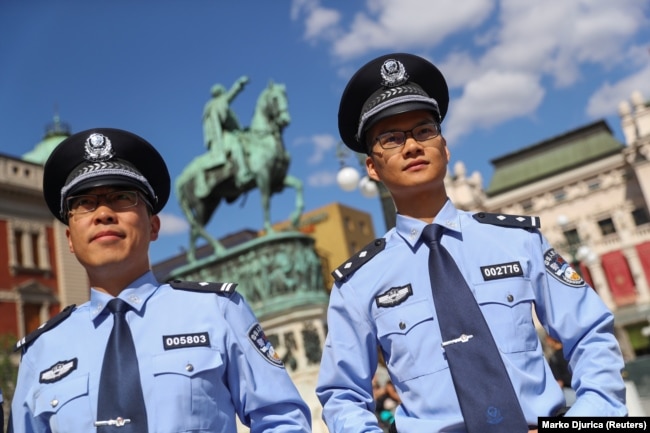
In 2019, Serbia and China signed an agreement on joint police patrols between the two countries that allowed Chinese officers to work together with their Serbian counterparts to address the influx of tourists and workers from China to Serbia
Belgrade was also one of 54 “police units outside the country, which were operated by Chinese authorities, to pressure citizens to return to China.
While most cases documented by police stations abroad appear to be suspected of crimes such as fraud or corruption, dissidents reported, as well, that such stations are used to monitor and threaten them.
Safeguard Defenders, the organisation that documented stations for the first time, said the Chinese station in Belgrade has been used for a case of forced return.
Quoting Chinese Government documents, the NGO said that, in 2018, a Chinese national living in Belgrade and identified only as Xia was charged with theft in China and “convinced him to return”.
According to the human rights group, he was identified by the Belgrade station and contacted through the Chinese message platform WeChat, where he eventually went “bind” back to China after he was initially reluctant to leave Serbia.
The extradition agreements are common worldwide, but international law also requires that they follow the principle of nontranslation, which prohibits a country from turning someone into a place of danger to be subjected to persecution, torture, or other human rights violations.
Vidosavlevic says the new agreement is disturbing, taking into account Belgrade's readiness to adhere to extradition requirements, whether they meet the principle of non-restitution, and mentions some past examples with Turkey.
Harth from Safeguard Defenders says the agreement sends disturbing messages even to Chinese citizens abroad.
All this causes a growing sense of fear in the Chinese diaspora communities, which are receiving messages from Beijing that can be achieved anywhere”, she says.
Media Co-operation
Since Xi has launched its foreign policy project, the Belt and the (BRI) Road, a decade ago, it has focused on financing and building infrastructure projects worldwide. The spread of Chinese media has also been focused.
At a BRI forum in October 2023, China Media Group A company that oversees the state media entities, such as the Xinhua news agency, the Global Television Network (CGTN) and China Radio International led that it signed contracts with 682 media organisations in 151 countries in the world and that it has broadcasts in more than 40 languages.
Agreements signed on May 8th in Belgrade established co-operation between China Media Group and three Serbian pro-government media: Serbia's Radio-Television, the daily newspaper Politika and Tanjug news agency.
Tamara Scroz, journalist and member of the Press Council A body monitoring the ethics of journalism in Serbian media says the agreements with Serbian media highlight the lack of transparency in co-operation.
“We are not sure of the extent of [co-operation], as well as the restrictions these media may face, due to such agreements... whether they will influence their editorial attitude or, if it is, simply, a direct exchange of material”, she says of the Balkan Radio Free Europe Service.
Scroza adds that existing prokinese narracies in Serbia will become “even more pronounced after signing agreements and memorandums”.
The media watchdog, Reporters Without Borders, ranked Serbia 98th among the 180 countries listed in its 2024 Press Freedom Index.
This was Serbia's lowest position since the index was established in 2002.
Tanjug and Politika did not respond to Radio Europe Free for Commenting, while Serbia's Radio-Television said it has been engaged in different types of partnership with Chinese media companies since 2013.
The channels of this company also have a term dedicated to Chinese documentaries since 2017.
“So far we have broadcast more than 200 Chinese documentaries, covering various aspects like [China's] history, customs, cuisine, culture, specific trades, monuments and daily life”, said a spokesperson for Radio Free Europe's Radio Balkan Service.
He added that the new agreement focuses on ways for “easing content exchange and promoting co-production”.
According to him, the company has similar agreements with broadcasters from Bulgaria, Turkey, Azerbaijan and Hungary.
Scrosa says the exchange of content with cultural themes is not problematic, but that the agreement is worrying if it leads to a censored and distorted presentation of life and politics in China, as well as Beijing policies worldwide.
The problem is not in what they're going to present in their programs, but in what they're not going to present”, Scrosa says.
If we only display images of Chinese folklore and nature, we, in fact, are not informing Serbia's citizens of the real situation”, it concludes. / REL