24 minutes ago
NATO clash Russia for Pristina Airport, the Russian “48x1> says Clark, Ceku recalls co-ordination with General Jackson
Periskopi(2 years ago)
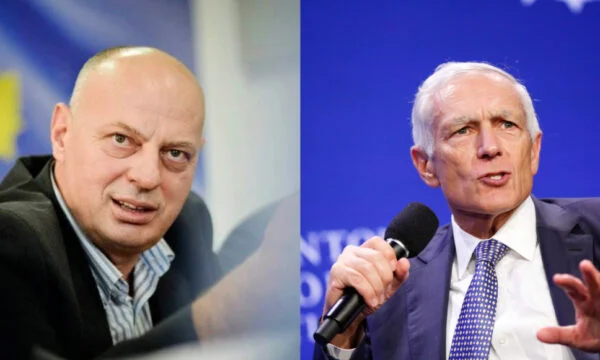
(2 years ago)The Russian Trust “calls retired American General Wesley Clark, the sudden delocation of about 200 Russian troops at Pristina Airport on June 12, 1999. Russia wanted to shame NATO, but also to exploit its imperialist ambitions, Clark says, 25 years after the incident. By the time it happened, he was supreme commander [...]
The Russian Trust “calls retired American General Wesley Clark, the sudden delocation of about 200 Russian troops at Pristina Airport on June 12, 1999. Russia wanted to shame NATO, but also to exploit its imperialist ambitions, Clark says, 25 years after the incident.
By the time it happened, he was supreme commander of NATO and was monitoring the deployment of a peacekeeping mission of the military alliance in Kosovo.
This is, in essence, a political problem and is being dealt with politically. It is not affecting the dislocation of our forces or our activities, so let's solve it at the political level”, Clark said at the time.
NATO would be deployed in Kosovo after the signing of the Kumanovo Agreement on 9 June, 1999 with which the war ended in Kosovo and then Yugoslav forces withdrew.
The KFOR peacekeeping mission was approved by the UN Security Council. His Resolution 1244 authorised UN member states to maintain an international security presence in Kosovo.
Russia, which played a role in convincing then Yugoslav President Slobodan Milosevic to end the war, aimed at a sector of its own in Kosovo, independent of NATO, recalls General Clark.
And, at night between June 11th and 12th, 1999, a container of about 200 Russian soldiers broke away from the SFOR peacekeeping mission in Bosnia and Herzegovina, replaced the letter “S” with “K” to make KFOR, and headed towards Kosovo.
On the contrary, from today's Northern Macedonia, British NATO troops were getting ready, as well, to enter Kosovo.
The Russians won the race. They arrived first in Pristina and occupied the airport in Slatina on the morning of June 12th. A few hours later the British arrived, and then the French, but the Russians were not allowed to enter the airport, threatening them with the use of weapons.
Our <x0 session was to put a fuel depot here at Pristina airport, but when we arrived, we saw Russians and Serbs, and the Russians told us that it is impossible to enter the” airport, a commander of a French KFOR contingent then told the AP news agency.
General Clark talking about the show. Expose Radio Free Europe, remembers such Russian troops' entry into Kosovo caught NATO was suddenly not part of the agreed peacekeeping plan.
It was a kind of Russian betrayal. That's all you can say. But, who knows... maybe the Russians had told Milosevic not to worry and accept the peace agreement, because they would [to Kosovo]. But, they didn't make it to”, Clark says.
The White House, at the time, announced that US President Bill Clinton, and Russian Boris Yelts, agreed to let NATO and Russian generals resolve the dispute over the airport.
US Secretary of State Madeleine Albright made it clear that NATO will not share command in Kosovo and that Russia will not be given control of any sector.
“We do not believe there should be a particular Russian sector, because we do not want to see the division of Kosovo. But I am convinced that we will make arrangements with the Russians so that they will become part of the” peacekeeping force, Albright said.
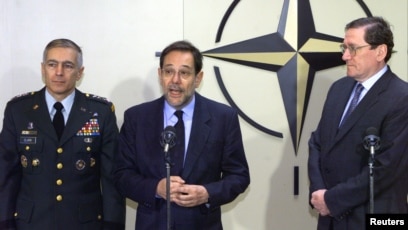
General Clark, once he heard news of the Russian troops' entry into Kosovo, ordered British and French troops to be put in a position to take control of the airport. For that, Javier Solana said he also had the support of then-NATO chief Javier Solana.
But his plan was blocked by British KFOR Commander Mike Jackson, who was also involved in the peace negotiations in Kosovo.
I don't want my soldiers to be responsible for the beginning of World War III”, Jackson reportedly said in a heated debate with Clarke.
Amid fears and concerns that Russian aircraft with reinforcements were leaving for Pristina, General Clark then planned to order British troops to block the tracks. But neither did this plan go forward, and the US asked Hungary, Romania and Bulgaria not to allow Russian aircraft to fly over their territory.
During the blockade at the airport, Russia demanded that its troops respond only to its commanders. But, NATO refused to admit it, for fear it would lead to the partition of Kosovo in the south with Albanians and the north and Serbs.
After several weeks of negotiations, the two sides agreed in early July that Russian troops would act as part of KFOR in sectors controlled by NATO states, but not directly under NATO command.
Clark says it is not clear who was in decision-making in Moscow, when Russian troops entered Kosovo in June of 99. According to him, there were many “tricks, fraud and misunderstanding” within the Russian government. He recalls that Russian diplomacy chief at the time, Igor Ivanov, said the Russians' entry into the airport in Pristina was “malpractice”.
But, the American newspaper, Washington Post, calling to intelligence sources, wrote that “among Russian officials in Moscow, including President Yeltsin, had a strong consensus that Russian troops should play a role in Kosovo, as Yugoslav President Slobodan Milosevic accepted peace conditions”.
Asked whether his plan to resolve the dispute with the Russians at Pristina airport would jeopardise the start of the third world war, as Jackson had said, Clark answers:
General Jackson made a really hyperbolic statement, which had no basis in reality. But, I have sympathy for it, has been exhausted, worked hard to negotiate the peace agreement. He has also managed the movement of troops [within Kosovo] and has been very tired and very emotional”.
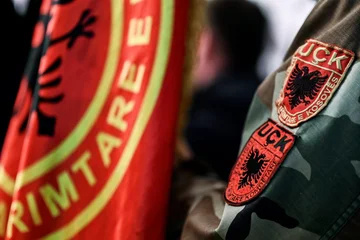
Despite the efforts, Radio Free Europe failed to get in touch with General Jackson, but spoke with Agim Ceku, who at the time of the incident at Pristina Airport, was commander of the Kosovo Liberation Army.
In recent weeks we were in direct communication with NATO command in Kumanovo, and on that day we received a call from General Jackson, who informed us that Russian forces, which would become part of the international military presence in Kosovo, were headed towards Kosovo. He asked us not to prevent them, so not to attack them, because NATO would deal with them. I, then, informed the captain of the Llap Zone of my pledge to General Jackson”, recalls Ceku.
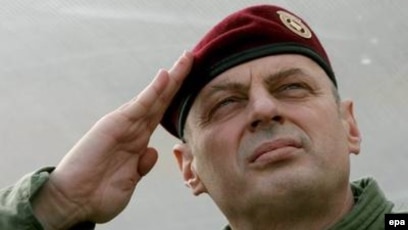
He adds that the situation was very tense and that the KLA was in constant contact with Jackson, though, according to him, the Russian Army was at the time weak.
Ceku says there has been information that among the Russian contingent that entered Kosovo, there were “and Serbian soldiers and officers in Russian uniforms”.
For Jackson's differences with Clarke, he says he heard later, after the situation was resolved.
General Jackson estimated that if the Russians were attacked, then the partnership that was established with them within the Contact Group on the Kosovo issue would also be thwarted. It could crash and cause various situations”, Ceku says of Expose.
Clark left the post of supreme NATO commander three months ago, on orders from Washington. He described this action as routine, as did the White House and the Pentagon.
Russian troops, meanwhile, remained in Kosovo for four years. On July 2, 2003, NATO announced that the Russian military contingent would withdraw from the KFOR peacekeeping force in Kosovo. NATO said the Russian government made the decision after improving the security situation in the region.
For General Clark, who retired from the military in 2000, Russia continues to have imperial ambitions.
“E you have Serbia -- the historic and traditional ally of Russia. Serbia is a magnet for attracting Russian imperial ambitions to Europe and today serves as an infection agent in the region”, Clark says.