16 minutes ago
Kenya police open fire on protesters as crowds attempt to attack parliament report dead
Periskopi(2 years ago)
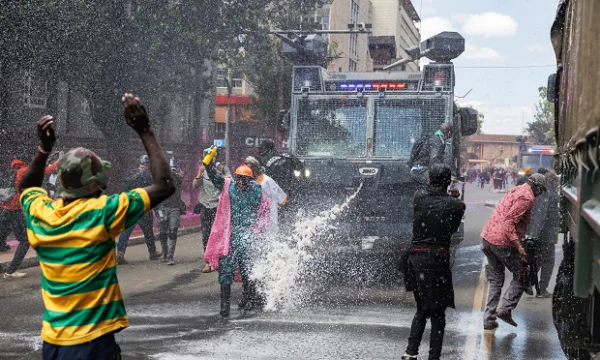
(2 years ago)Police have opened fire on protesters outside the Kenyan parliament as they tried to attack the building, while MPs inside approved a tax increase legislation. Police began shooting after tear gas and water cannons failed to disperse a crowd of thousands that had invaded the officers. Inside the building they could be seen [...]
Police have opened fire on protesters outside the Kenyan parliament as they tried to attack the building, while MPs inside approved a tax increase legislation.
Police began shooting after tear gas and water cannons failed to disperse a crowd of thousands that had invaded the officers. In the building, flames could be seen.
A medical assistant said at least 10 people were killed and a Reuters journalist outside parliament counted the bodies of at least five protesters, reports The Guardian, broadcast The Express.
“We want to close the parliament and each MP must leave and resign”, a protester, Davis Tafari, told the news agency. “We'll have a new government”.
Demonstrators oppose tax hikes in a country that is wavering from the cost of living crisis, and many are also calling for President William Ruto to leave. Protests and clashes took place in cities and other towns throughout the country.
Ruto won the elections almost two years ago on a platform to protect the poor working in Kenya, but has been caught amid competitive demands of lenders like the International Monetary Fund, which is urging the government to cut deficits to get more funds.
The Kenyans have struggled to deal with several economic shocks caused by the continued influence of the Cavid pandemic, the war in Ukraine, two years of drought and currency depreciation.
Parliament adopted the finance bill Tuesday, passing it on to a third reading by lawmakers. The next step is to send legislation to the president for signing. He could return it to parliament if there is any objection.
The law aims to collect an additional $2.7 billion in taxes as part of an effort to ease the heavy debt burden, with interest payments consuming only 37% of annual revenues.
The government has already made concessions, promising the removal of proposed new bread, cooking oil, car ownership and financial transactions. But this has not sufficed to satisfy the protesters.