23 minutes ago
New European Parliament Expected to Continue Support for EU Enlargement
Periskopi(2 years ago)
(2 years ago)Fear of any major growth of the extreme right in the European Parliament has not been realised despite the relatively small growth of parties belonging to this spectrum. Those parties, which are considered traditional pro-European parties, will also have the great majority in the new composition of the European Parliament that [...]
Fear of any major growth of the extreme right in the European Parliament has not been realised despite the relatively small growth of parties belonging to this spectrum.
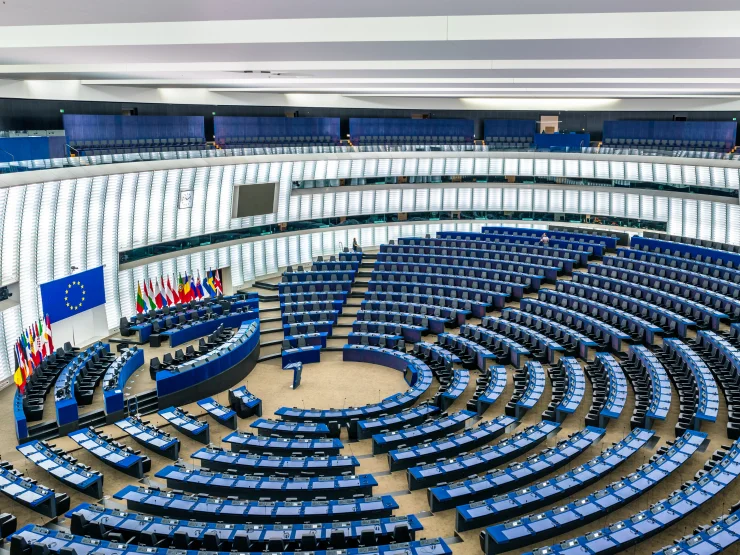
Those parties, which are considered traditional pro-European parties, will also have the great majority in the new composition of the European Parliament that has emerged from the elections, which ended on Sunday evening.
From diplomats in Brussels, it is considered good news for both the enlargement process and the European Union's reports with the Western Balkans. This, because even in this composition, there will be a sufficient majority of deputies who will continue to support the EU's commitment to these countries in the region, as well as their EU integration process.
According to the results that have been made known so far, there is not expected to be any dramatic change even when major political groupings, with some changes, have maintained their earlier positions.
The European People's Party (PPE) is expected to have 186 seats, which would be 10 more countries than in the latest composition. The socialist S&D group will have 135 seats -- 4 less than in 2019-2024 -- the Liberals from Renew are expected to have 79 seats that are in 23 countries less than last time, so they may be considered large losers.
But together these three groups will have about 400 seats in the 720-seat Parliament, and if agreed, they can ensure the number of votes for key EU decisions, as has been earlier, including enlargement.
In favour of enlargement, besides the cited parties, there are also: the Greens Group, which will have 53 seats and the grouping of the 73-seat ECR Conservative Partys. ECR is a rightist party, but MPs from this group in the past have strongly supported the enlargement process.
The only party that has been against enlargement was the ID and Democracy (ID) group, which is expected to have 58 seats in the European Parliament. Eventually, this number may rise depending on which parties will join this grouping, but as a number, no risk for supporting the enlargement process on the part of the European Parliament.
For many years, and especially in recent composition, the European Parliament has been the EU institution, which has largely supported the enlargement process. Furthermore, Parliament has demanded that this process be accelerated, so that candidate countries can be included in European Union programmes and structures even before becoming formal members of the bloc.
The European Parliament has often criticised member states that are not fulfilling the obligations the EU has made in relation to the countries of the region. Western Balkans and other countries of the enlargement process.
Before the work of the last European Parliament was completed, a proposal for EU reforms was also adopted at this institution so that its faster enlargement could be enabled.
Among the measures, Parliament had also proposed the adoption of several largely qualified decisions on the Council, so that there will be no frequent blockades on the part of some member states that use their EU membership to prevent neighboring countries from advancing because of bilateral differences.
Based on the distribution of countries at the new session, it is estimated that this support of the European Parliament will continue in the last five years.
But the problem for enlargement could pose an increase in the influence of far-right parties in some European Union member states. Some diplomats in Brussels, with whom Radio Free Europe has spoken, have warned that there may be changes in the approach of several states. This is possible as decisions for each step in the enlargement process are taken in the EU Council with the consensus of all member states. And it's enough one to block it.
The Netherlands is cited as a country that can present future problems in this direction, as it is expected that the Government will be formed at the top of which will be the first extreme right, more precisely the Gert Wilders-led Freedom Party.
This party has had critical approaches to enlargement and has opposed it. Although the government in the Netherlands has not been formally formed, talks on a coalition have ended and reconciliation has been reached.
The Netherlands is not expected to change its approach dramatically, because even the far-right party, which will lead Government, has had to compromise in terms of enlargement. However, it has been warned that restrictions will be required for new EU member states on issues such as freedom of movement of workers on the common market and access to certain EU funds.
Such restrictions, beyond what enable current EU treaties, are not formally possible. But such insistences show in what direction the attitudes of some member states can go.
The extreme right has also marked increases in Austria and Belgium, while winning in France. Hence, the positions of member states see the potential danger of the EU enlargement process rather than the number that far-right parties have secured in the new composition of the European Parliament.
Some MPs from the old parliament's composition, who have been re-elected but do not want to speak out publicly to formally respect the process of formal confirmation of their election, believe parliament will be a strong voice for the Western Balkan countries, and for the enlargement process, which will pressure the Commission and the Council for this process to be faster. /Radio Free Europe