9 minutes ago
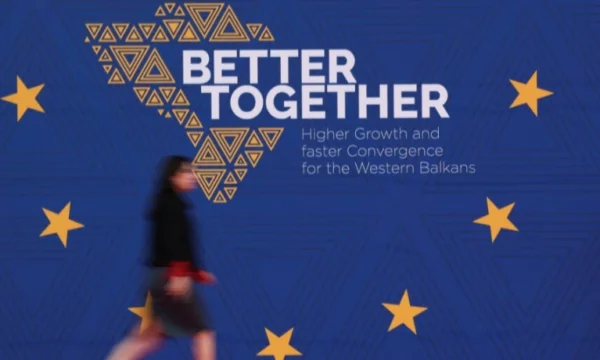
EU, Western Balkan ministers meet in Luxembourg today
Periskopi(2 years ago)
(2 years ago)The European Union is boosting co-operation with Western Balkan countries in the areas of security, defence and foreign policy. The EU considers this a priority, as the challenges to the security of this region are similar to those facing the EU. On this subject, the European Union Foreign Ministers and [...]
The EU considers this a priority, as the challenges to the security of this region are similar to those facing the EU.
On this topic, the European Union foreign ministers and their counterparts from countries in the Western Balkans will discuss 24 June (now) in Luxembourg.
The EU prepared an orientation document for co-operation with countries in the region and will be discussed at the joint ministerial meeting.
“The challenges related to foreign and security policy are increasingly complex in the current geostrategic circumstances, and this puts European and global order at risk”, the document, which saw Radio Free Europe, said.
The importance of unity, common values, and common goal within the European family are key things, especially with partners aspiring to join the EU. Standing together with the EU something that is also reflected through the adoption of our partners with common foreign and security policy is a sign of strategic orientation, based on common values and principles, especially on respect for the rule of law and international law”, the document is also said.
It mentions how countries of the Western Balkans, along with their EU integration process, have also increased participation in European processes, foreign policy and security.
This is reportedly done through regular EU-Western Balkans summits, participation of countries in the region in joint ministerial meetings, EU high-level events, co-operation in avoiding sanctions on third countries, co-operation in international organisations, such as the UN and O The SEU, but also military co-operation and the development of rule forces.
The European Union is said to be helping countries in the region both in mine-clearing processes, in the fight against manipulation and dezinformation coming from abroad, especially Russia, and in the crackdown on organised crime groups.
For the EU, as reported in the document, it is also important to co-operate in the fight against terrorism, violent extremism and arms trafficking.
The EU's biggest engagement in the area of security and defence in the Western Balkans region is the Althea mission in Bosnia and Herzegovina, which consists of about 1,600 troops, as well as the mission in the field of order and law in Kosovo, EULEX.
The last “, the EULEX mission in Kosovo, has contributed not only to preserving security in Kosovo, as the second responder, but also to improving rule of law. The facilitated dialogue by the EU [between Kosovo and Serbia] has served not only as a platform for advancing the normalisation of reports, but also for preventing tensions and crisis management“, the EU document says.
It also mentions the EU's ambition to strengthen the countries of the Western Balkan region's commitment in the area of foreign policy and security, even before these countries become formal members of the bloc.
“We must intensify political engagement at all levels, including through regular and coordinated visits“, this document says.
The European Union as the priority of engagement in the region sees the advancement of the reconciliation process between Kosovo and Serbia, through the facilitated dialogue itself.
The priorities are also continued assistance in increased defence capacities as well as assistance in combating manipulation and dezinformation.
Special assistance also mentions the plan for growth and reforms in Western Balkan countries that the EU has already approved, aimed at accelerating their preparation for becoming EU members.
The EU expects the countries of the Western Balkan region to continue making their contribution to the aid to Ukraine, which is struggling against Russia's invasion.
Although not mentioned exclusively in the document are countries of the region, all of them except Serbia have full adaptation to the European Union's positions in the area of foreign and security policy.
Serbia, meanwhile, has not backed the sanctions the European Union has imposed against Russia and Belarus.
The discussion Monday at the ministers' meeting is seen as a contribution to the EU's overall efforts to achieve a greater convergence with the countries of the region in all areas.
Of them, Montenegro, Serbia, Albania, Northern Macedonia and Bosnia and Herzegovina have either already opened negotiations for EU membership, or are candidate countries.
Kosovo has only applied for membership in this bloc in 2022. / REL/