6 minutes ago
A step from “to “is not known when” - How Kosovo's Road Gone to Council of Europe
Periskopi(2 years ago)
(2 years ago)A step from “to “is not known when”! So the road to the Council of Europe diverted Kosovo to a period of only thirty days. When the Parliamentary Assembly of this organisation voted in favour of Kosovo on 16 April, the country's prime minister, Albin Kurti, said that “we are one step closer and only one step away from” membership [...]
A step from “to “is not known when”! So the road to the Council of Europe diverted Kosovo to a period of only thirty days.
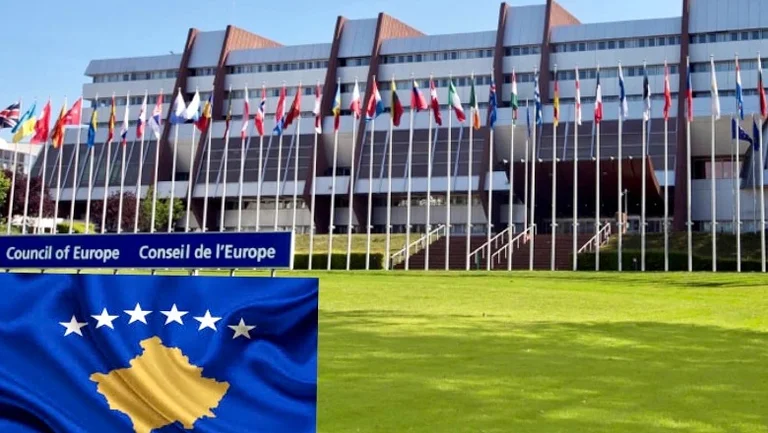
When the Parliamentary Assembly of this organisation voted in favour of Kosovo on 16 April, the country's prime minister, Albin Kurti, said that we are a step closer and only one step away from the” membership in the governing organisation on the continent for human rights.
A month later, when its Committee of Ministers would make the final decision for Kosovo, it was not in any order of days.
Kosovo Deputy Foreign Minister Kressnik Ahmeti said it prompted the attitude of several countries for Kosovo to initially accept the draft state for the establishment of the Serb majority municipalities' association and take it to the Constitutional Court for assessment.
The Kosovo government, initially, rejected this condition, but in a last-minute effort to change the situation, Foreign Minister Donika Grovalla said it has notified the Council of Europe through a letter, that Kosovo is preparing the draft state to send it to the Constitutional Court by the end of May.
We have very seriously expressed our will to contribute constructively. This step was not an easy one for the Government of Kosovo. We have expressed our will and we expect what reaction will be”, Gervalla told reporters.
And the reaction was not so positive. The German Embassy in Pristina, calling to other sites in Quint U.S., Britain, France and Italy, said their request was to hand over the draft status to the Constitutional Court before the Council of Europe Committee of Ministers meeting.
Kosovo must now do the hard work. This has not yet happened”, the German State Embassy said.
On the same day, Germany, France and Italy indicated that, on May 15th, they have sent a letter to Kosovo Prime Minister Albin Kurti, in which they have voiced support for a draft status of Western diplomats.
The Kosovo government said it is drafting a draft of its own, inspired by a version of a German organisation.
The association mentioned would co-ordinate, among other things, work in education, health care and economy in Kosovo's majority Serb municipalities.
For its establishment, Kosovo and Serbia agreed since 2013. The agreement was also adopted in the Kosovo Assembly, but the Constitutional Court later found that it was unconstitutional, since it did not include other ethnicities.
Despite guarantees by the US and the European Union, Kosovo now fears such association would affect the functioning of the state.
In an interview given Radio Europe Free on 19 March to Kosovo Prime Minister Albin Kurti said Kosovo has rejected the draft state of this association, drafted and delivered by Western diplomats in October 2023.
Kurt reiterated the same attitude this week, saying that “has nothing new”.
Toby Vogel, from the Council for Democratic Policy in Brussels, says the Government of Kosovo's latest initiative about the draft state is too late.
This last second step in the hope that it might affect some votes is surprising to me if there wasn't any coordinates. The people I talked to say there was no such co-ordination with the European Union or Quentin. If this information is not wrong, I don't understand the purpose behind the letter”, Vogel says.
He cannot judge whether Kosovo has sinned that it has not acted in time to take the seat in the Council of Europe, but says that, clearly, the government's actions are not serious.
And they will reinforce the impression of Quint and the EU that Kurti does not always act with confidence. Whether this impression is justified or not, playing political theatre like this, on a very serious issue, will only reinforce that image”, Vogel says.
For Augustin Palocajn, a journalist who has been following European policy for years, Kosovo has lost a very good “” to membership in the Council of Europe, which is not known when it will come back.
We have often reported on the benefits Kosovo citizens have from membership in the Council of Europe and now, due to non-membership, they have consequences. For example, they won't be able to access the European Court for Human Rights. Sixes are now too small to have moves for Kosovo's integration into any other international organisation, including the launch of procedures for obtaining EU membership candidate country status”, Palockaj says.
By regulations, the Committee of Ministers of the Council of Europe, consisting of 46 member states, meets once a year, meaning that the next meeting will be in May 2025.
But Gerald Knaus, from the European Initiative for Stability, which closely conveyed Kosovo's journey, expects an extraordinary meeting perhaps within weeks.
“If Kosovo hands over this draft to the Constitutional Court, as it has now said, then there must soon be a summit, and Kosovo must be accepted this summer. This looks real now. It takes time because it is not easy for governments in Europe and in Pristina to find consensus. It's late, but it's not too late”, Knaus says about Free Europe Radio.
Palockaj, however, is not optimistic about that.
The claims that there may be extraordinary meetings are only attempts to reduce the damage that has been done to Kosovo's non-location in the order of days and the failure to pass its application for membership. So it is not known when the next time will come. We have an example of W NESTO [UN Culture Agency], where Kosovo for only two-thirds of votes has not been accepted. Then, nine years have passed and no other case for membership in U has emerged NESTO”, Palocaj says.
Palockaj adds that, meanwhile, the positions of countries that, so far, have supported Kosovo.
He takes North Macedonia as a possible example, where, last week, nationalist party V MRO- The DPMNE won the parliamentary and presidential elections, raising concerns about the country's future relations with neighbours, but also with the EU.
To be admitted to the Council of Europe, in favour of the applicant country there must be at least two-thirds of the votes on the Committee of Ministers.
Of the 46 member states as long as there are organisations, Kosovo has recognised 34.
To ensure membership, ministers of at least 31 countries would have to vote in its favour.
For now, Kosovo remains at a halt until the Council of Europe's leading country takes it into the agenda of the Committee of Ministers either at extraordinary meetings or at any regular meeting in the years to come. In principle, the procedure at the Parliamentary Assembly does not repeat itself.
Kosovo has been unable to become part of any major international organisation for years and has also played a role in the anti-Serbia lobby.
One of the last failures occurred in 2018 when the international police agency, Interpol, e refused Kosovo's admission for the third time.
Responding to the Kosovo Government's recent initiative for the Association draft, the head of the Office for Kosovo in the Government of Serbia, Petar Petkovic, said it is the “a major fraud attempt”.
“It's about a clean counterfeit through which Kurti wants to avoid his obligations from dialogue [to normalise relations] with Serbia”, Petkovic said.
Vuciq calls the next “” Kosovo's announcement of draft status status for association
But, Vogel says what needs to be changed now is the approach of the West towards Serbia.
The “for Association has agreed under a completely different situation since now. The agreement has been reached at a time when dialogue between Belgrade and Pristina has been focused on creating conditions for a comprehensive agreement between the two countries, which would mean at least de facto recognition of Kosovo by Serbia. We are now in a situation when the Government of Serbia has officially announced to the EU that it will not accept anything that would be Kosovo's de facto recognition”, Vogel says.
The association and de facto recognition of Kosovo are part of the Ohrid Agreement between the two countries, reached last year.
The European Union insists it should be implemented, even though it is not signed.
Last month, the EU officially ruled out Serbia's integration into this bloc with the normalisation of relations with Kosovo, while against Kosovo retains punitive measures that were taken since last year, following the escalation of tensions in the north.