9 minutes ago
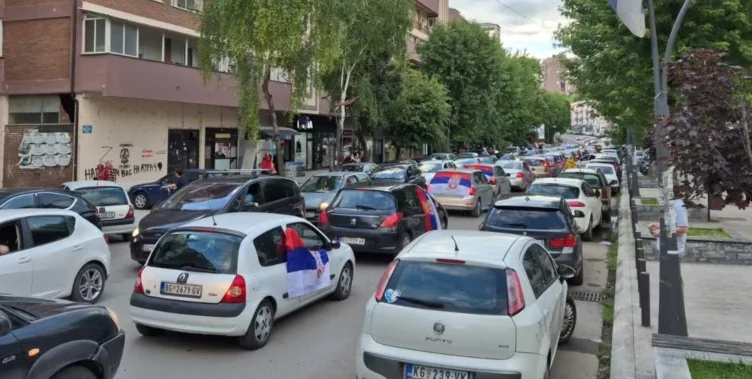
Serbs in the north parad their cars in support for Vuciqi following the adoption of Srebrenica resolution
Periskopi(2 years ago)
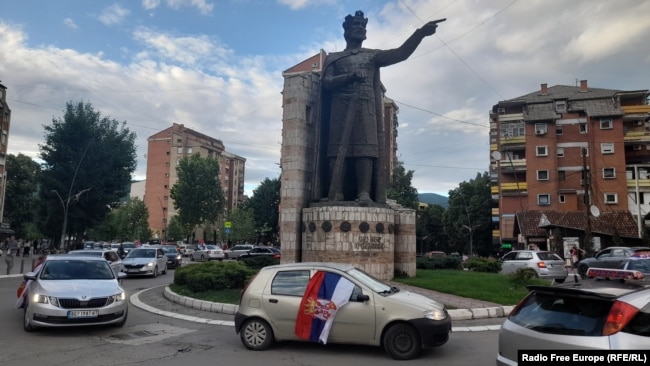
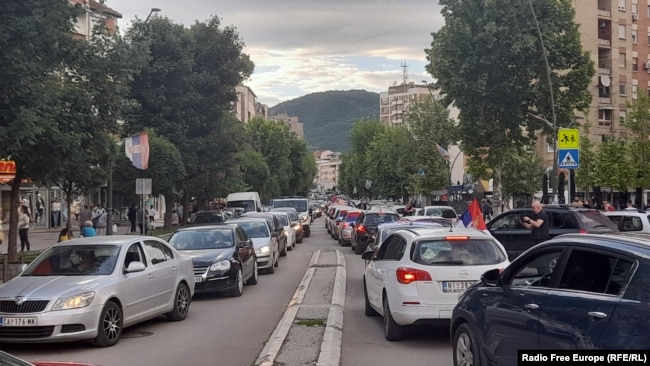
(2 years ago)Citizens in northern Mitrovica have paraded their cars on the streets of this city, as a sign of support for Serbs and Serbia's president, Aleksandar Vuciq. Tens of vehicles, in which Serbia's flags were placed, moved to the streets of this municipality after the resolution [...] was adopted at the United Nations General Assembly.
Citizens in northern Mitrovica have paraded their cars on the streets of this city, as a sign of support for Serbs and Serbia's president, Aleksandar Vuciq.
Tens of vehicles, in which Serbia's flags were placed, moved to the streets of this municipality after resolutions for genocide in Srebrenica was adopted at the United Nations General Assembly.
It is not known who stands behind this organisation in northern Mitrovica, one of four municipalities in northern Kosovo, inhabited by Serb majority.
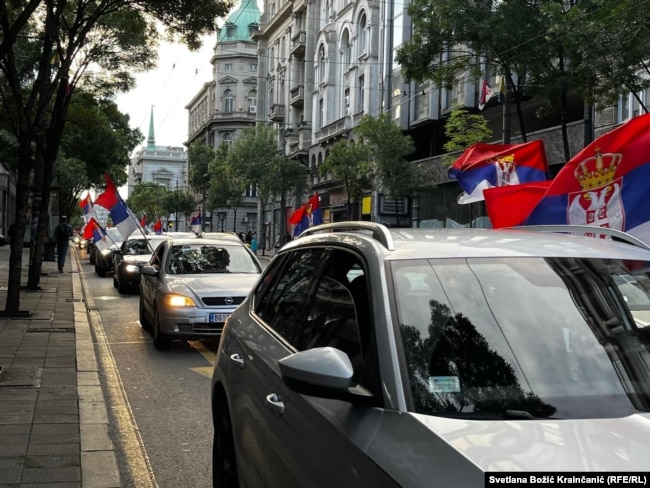
Meanwhile, in Serbia's capital, Belgrade, hundreds of cars, with Serbian flags, passed through the main streets of the city, in protest of the adopted resolution, writes Radio Free Europe.
Meanwhile, in Podgorica, citizens gathered in front of the Montenegrin Government building to reject the state vote for the resolution.
Citizens who gathered cheered “on” and “Russia”, as Russian and Serbian flags were seen.
On May 23rd, members of the United Nations General Assembly adopted the resolution announcing July 11th International Day of the Memorial of Genocide Victims in Srebrenica.
During the debate, Vuciq said it was a highly politicised “resolution” that “would not contribute to reconciliation either in Bosnia and Herzegovina or in the region”.
This resolution, co-sponsored by Germany and Rwanda, has prompted harsh reactions in Serbia and in the Serb entity of Bosnia and Herzegovina, Republika Srpska, where leaders have said it will label all Serbian people as “supporting” mass murder.
In Srebrenica, Serb forces killed over 8,000 Bosnian men and boys in July 1995.
Crime in Srebrenica is known as genocide by international courts.
The adopted resolution, among other things, calls for the unreserved condemnation of any denial of genocide in Srebrenica, as well as the actions that glorify war crimes convicts, including those responsible for genocide”.
For the genocide in Srebrenica so far, more than 50 persons were sentenced to about 700 years in prison.