8 minutes ago
Serbia tries to prevent Kosovo, urges NATO not to advance status, citing Association
Periskopi(2 years ago)
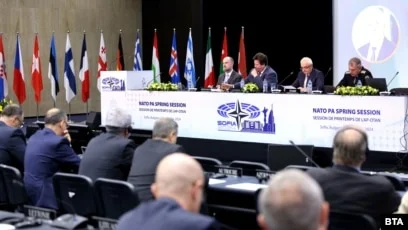
(2 years ago)The delegation of Serbia's Parliament, which has attended the NATO Parliamentary Assembly meeting in Sofia through a letter, has asked this Assembly not to grant the Kosovo Assembly the status of associate member. The Serbian delegation met with the head of the US delegation to NATO, Michael Turner, who was [...]
The delegation of Serbia's Parliament, which has attended the NATO Parliamentary Assembly meeting in Sofia through a letter, has asked this Assembly not to grant the Kosovo Assembly the status of associate member.
The Serbian delegation met with the head of the US delegation to NATO, Michael Turner, to whom a letter was delivered by Serbia's chief parliamentwoman, Anna Brnabiq. Through the letter, Serbia called on members of NATO's Parliamentary Assembly not to approve the advance of Kosovo's status from observer to associate member, the Serbian Parliament was told at the 26 May announcement.
The NATO Parliamentary Assembly, where Kosovo aims to advance its status, is institutionally separate from NATO, but serves as an important link between NATO and the parliaments of member states.
It consists of 281 delegates from all 32 NATO member states.
In addition, delegates from 9 associate countries, four associate Mediterranean countries, and eight parliamentary monitoring delegations are participating in its activities.
Association members can submit resolutions and changes to resolutions. Also, they can serve as special rapporteurs associated with the committees to present their prospects in NATO-The Parliamentary Assembly reports.
However, they have no right to vote for reports, resolutions or Assembly leadership, nor do they contribute to its budget.
Currently, associate members are nine between them and Serbia and Bosnia and Herzegovina.
The Kosovo Assembly, for years, is a two-seat monitoring delegation. With the level of representation established, the Kosovo participating delegation would also expand.
Meanwhile, in the Serbian Parliament's announcement, it was said that granting such status would present rewards to Pristina, which, according to Belgrade, is doing everything to prevent dialogue being mediated by the European Union and to avoid obligations from agreements reached in Brussels.
As reported in the report, Serbian delegation deputy head Natasa Jovanovic reminded the NATO Parliamentary Assembly of the partnership based on the situation in Kosovo “as it comes to a partial secession of a part of the territory, of an internationally recognised state”. According to Jovanovic, territorial issues must be resolved through an agreement.
Serbia also accused Kosovo of refusing to implement all agreements reached in the dialogue in Brussels and, according to Belgrade, 11 years after the agreement reached is not establishing the Association of Serb-run municipalities.
Kosovo and Serbia have reached agreements on Association in 2013 and 2015. Despite constant calls from the European Union and the United States, Pristina has yet to take steps to form association.
Kosovo missed the opportunity to become a member of the Council of Europe organisation in mid-May because the association was set as a condition. Kosovo through a letter submitted to this organisation said it would send to the Constitutional Court for a draft status review for Association, in exchange for accepting into this human rights organisation.
Kosovo's top diplomat, Donika Grovalla, said the draft status quo would be inspired by the one presented by German organisation Friedri ch-Ebert-Stiftung, not the draft status that was presented to Kosovo and Serbia by the EU last October.
But Kosovo did not join the Council of Europe Committee of Ministers, which was held on May 16th and 17th in Strasbourg. However, the Council of Europe has said it is examining the way to proceed with the Kosovo case. /rel