16 minutes ago
Republika Srpska offers agreement for <x0-ND peace distribution” in Bosnia and Herzegovina
Periskopi(2 years ago)
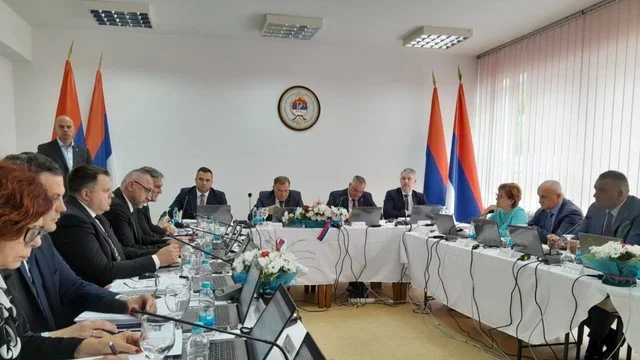
(2 years ago)In the next 30 days, the Government of Republika Srpska (RS) will establish an agreement that will be sent to Bosnia's next entity, the Federation of Bosnia and Herzegovina, for the peaceful <x1ndendar”, RS Prime Minister Radovan Viskovovic announced, following the meeting of the Republika Srpska Government in Srebrenica on Thursday, 23 May. Government hearing was [...]
In the next 30 days, the Government of Republika Srpska (RS) will establish an agreement that will be sent to Bosnia's next entity, the Federation of Bosnia and Herzegovina, for the peaceful <x1ndendar”, RS Prime Minister Radovan Viskovovic announced, following the meeting of the Republika Srpska Government in Srebrenica on Thursday, 23 May.
The Government session was held on the eve of the UN General Assembly session (OKB), on the agenda of which is also the resolution for genocide in Srebrenica.
This is not a split, peaceful division is not a split, the right guaranteed with the Constitution is a peaceful separation.
We will offer, if you consider us to be a genocide nation, which we are not, then we don't have to live together”, Viskovic said, without providing further details about the steps he will take.
RS President Milorad Dodik also attended the executive meeting.
The resolution, which proposes that July 11th be proclaimed International Day of the Srebrenica Genocide Victims, and condemns denial of genocide and the glorification of war criminals, was sponsored by thirty countries.
Its official proposses were Germany and Rwanda.
Support for it, so far, expressed all Western Balkan countries except Serbia and the Serb entity of Bosnia and Herzegovina, Republika Srpska.
Their officials, despite international court rulings, deny that genocide has been committed in Srebrenica against Bosniaks and say there has been a terrible “crime”.
In July 1995, Bosnian Serb forces killed over 8,000 Muslim men and boys in Srebrenica.
Over 50 persons were sentenced to about 700 years in prison for the genocide.
Among them are Republika Srpska's wartime president, Radovan Karadzic, and the general commander of the then Serbian Army, Ratko Mladic.
Both were sentenced to life imprisonment.
Serbia actively lobbied against the adoption of the resolution on Srebrenica and, one day before its UN release, the Republika Srpska Assembly adopted a protest note to UN member states, demanding the withdrawal of the resolution.
This, despite the fact that neither Republika Srpska nor Serbia are mentioned in the document.
The International Court of Justice in The Hague characterised crime in Srebrenica as genocide in 2007.
The court found that Serbia was not responsible for the act or accomplice, but declared it did nothing to prevent it. / REL