12 minutes ago
Picula: Serbia wants to compensate for Kosovo's loss by increasing its influence in Montenegro, Bosnia and Herzegovina
Periskopi(2 years ago)
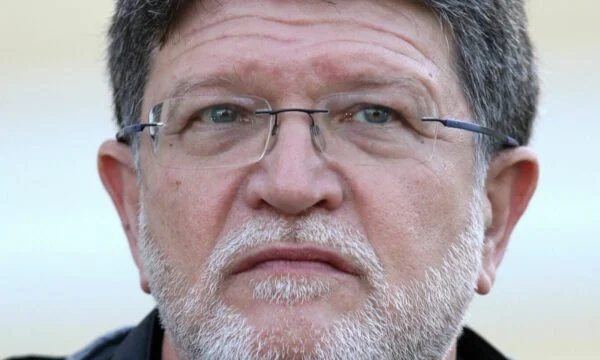
(2 years ago)Representatives to the European Parliament (PE) Tonino Picula estimated that in the context of geopolitical and instability tensions in the region, the West is not giving up access to “mos was shaken” in the Balkans. Picula, otherwise permanent rapporteur The EP for Montenegro since October 2019 and the head of the Western Balkans processing group since [...]
Representatives to the European Parliament (PE) Tonino Picula estimated that in the context of geopolitical and instability tensions in the region, the West is not giving up access to “mos was shaken” in the Balkans.
Picula, otherwise permanent rapporteur The EP for Montenegro since October 2019 and the chief of the Western Balkans' task force since January 2020, says in an interview for Radio Free Europe that “Serbia wants to compensate for Kosovo's loss by increasing its impact on neighbouring countries, above all in Montenegro and Bosnia and Herzegovina, which affected the hyperpollarisation of past years”.
“The governments in Serbia may change more often than before, but the only one determining direction and pace is Serbia's President Aleksandar Vuciq and he is virtually irreplaceable, as he and his party have grown to every public, economic and media life in Serbia”, Picaula said.
REL: How do you assess the foreign policy of the Government of Montenegro, which is still formally in line with Brussels politics, even though a large part of the government basically do not share those values (the attitude towards Kosovo, Srebrenica, Russia)? Could that be the problem?
Picula: I would say that the increasingly frequent soloization of individual politicians, who openly belong to or are largely influenced by the prorus and Vuciqi forces in Montenegro, causes the raising of eyebrows and concern. In the case of denying genocide in Srebrenica, I would add that they also cause anger. Such actions could become a more serious problem for Podgorica if they develop into a dominant matrix of Montenegro's foreign policy activities. I hope that the current government will not deviate from that direction, because it can have serious, perhaps unpredictable, consequences, both for Montenegro's Euro-Atlantic reputation, and certainly for the pace of the EU membership process.
REL: You have often talked about Serbia's influence on political events in Montenegro. In what direction can things go if we consider the composition of the new government there and the increasingly clear priorities of foreign policy, but also increasing its influence in Montenegro in recent years?
Picula: Governments in Serbia may change more often than before, but the only one determining direction and pace is Aleksandar Vuciq, and he is virtually unchanged, as he and his party have grown up in every port of public, economic and media life in Serbia. In general, Serbia wants to compensate for Kosovo's loss by increasing its influence in several other neighbouring countries, mainly in Montenegro and Bosnia and Herzegovina. In this direction, there has been a steady increase in Belgrade's influence in Montenegro in recent years, especially immediately before and after the event, let's say, showed tectonic changes, respectively, the August 2020 parliamentary elections. And unfortunately, precisely because of the phenomenon of foreign interventions, we've witnessed major political unrest, tensions, let's say openly hyperpollarization in recent years. All of this, of course, affected the slowdown in Montenegro's road towards EU membership.
REL: In an interview, when you were talking about Montenegro, you used the “definition being politicised and clericized to”. Is this a fundamental problem in Montenegro, as the influence of the Serbian Orthodox Church (KPS) is steadily increasing, not only in politics but also in education, culture and media?
Picula: The SPC influence in Montenegro today can definitely be analysed and seen through its political role rather than through its religious activities. Just remember the regulation of the first coalition government after the election defeat of the Democratic Party of Socialists (DPS). Therefore, I would say that the KPS, with active support of the Serbian state, has significantly increased its already major influence in recent years and does not give up promoting its political agenda, at the expense of Montenegrin citizenship and pro-Atlantic partnerships in Podgorica.
REL: Through the KOS, Serbia and the Bosniak-Hercegovian entity, Republika Srpska comes Russian influence, which has its representatives in the Montenegrin government. Prime Minister Milojko Spajic said to the European Parliament's Foreign Policy Commission in mid-April that the Russian “influence in Montenegro is at the lowest historical level” and that “nobody has a megaphone in parliament with a pro-ruse agenda”. Does the government underestimate the Russian influence in Montenegro?
Picula: I believe those statements, built mainly for an audience and international scene, do not reflect the true state of affairs. Even the international community is not naive, so I believe those statements were understood more as an attempt to present a more desirable situation than what exists objectively. The situation is definitely not pink, the EU is aware of the impact of disinformive and political actors who systematically promote Russian concern. There's everything we got, from anti-Ukrainian anti-stiminal feelings. - NATO, at the mini-confidence of citizens across the EU in democratic institutions. Protagonists of that scene of deinformation in the EU, let's face it, are not only some opposition margins, but there are also powers in some member states.
REL: From Brussels, even from the United States, there is more praise than criticism of Montenegro's government. How do you appreciate that relationship?
Picula: The West is not giving up on the concept of defending stability at all costs. That's why I like to call that part of the officials and parts of the Brussels administration “Stabilisationkler”. But the same happened at the time of the former DPS government. Many critics from the progressive and pro-Montenegro side said even then that the EU and the US were defending the government at all costs. It seems that this continues today, because the “dancing approach” in the Balkans is a priority set for them in this context of the unstable situation in the region and geopolitical tensions on the world stage. For this very reason, for example, they tolerate the outbreaks of the Duke of ethnic at the helm of Montenegro's Parliament, as well as the faithless escapes about the Srebrenica resolution, or voting for Kosovo on the Council of Europe.
REL: Authorities in Montenegro expect the country to receive a positive IBAR (recognition of meeting temporary standards in chapters 23 and 24 ʹ that concern rule of law) in June. How much did unstable regional and global events affect EU criteria to be softer and Montenegro to take it despite failing to meet all the specific conditions?
Picula: I wouldn't say there's been any significant easing of the criteria, but I think there's been a moment that every candidate country should use wisely in the context of obtaining IBAR. It would be bad if Montenegro were to stop there, any positive step forward should be motivation for further work in reforms, without which it cannot become the key step towards EU membership.
REL: How devoted is the current government to meeting the standards for the implementation of society and enough to have access to Brussels' financial funds?
Picula: First of all, this question should be seen and analysed under the priorities of the current government. It is a priority entry into the EU as a community of democratic or exclusively union with a community that generously approves large financial resources. It should not be forgotten that the EU is not only a common market, but also a set of values, but also a sharing of some risks. However, a large number of countries insist on respecting so-called foundations, because most in the EU are not aiming to spread nonliberal concepts and an autocratic way of governance within the community. And I think that any candidate for membership must primarily take care of the right message, so that the pro-European social forces can be emancipated in the membership process and not strengthen autocratic tendencies.
REL: The European Parliament elections come soon. If there is a right-wing empowerment in those elections, how would that affect not only Montenegro but also the region, despite its political instability?
Picula: In my opinion, the fundamental question is whether renewed interest in enlargement policy will better link the EU in times of geopolitical reorganisation, or whether it will probably deepen or even cause some new divisions among member states. The second question is very important and is directly related to what you are now interested in, which ideology will seal the future functioning of the EU and thus profile the enlargement policy itself. I believe the new enlargement should not increase the number of semi-democratic or undemocratic EU member states. And I think that despite polls showing the strengthening of the right, it is undeniable, as well as the results of some elections in member states, I think that the coalition of the European People's Party, Socialists and Liberals with the support of the Greens will continue to form that pro-European majority in the European Parliament and the EU. And I believe that this majority will be able to find a common language more easily about the need for EU enlargement than maybe about some other more complex issues. At least judging by this mandate -- virtually already finished -- in the EU.