2 hours ago
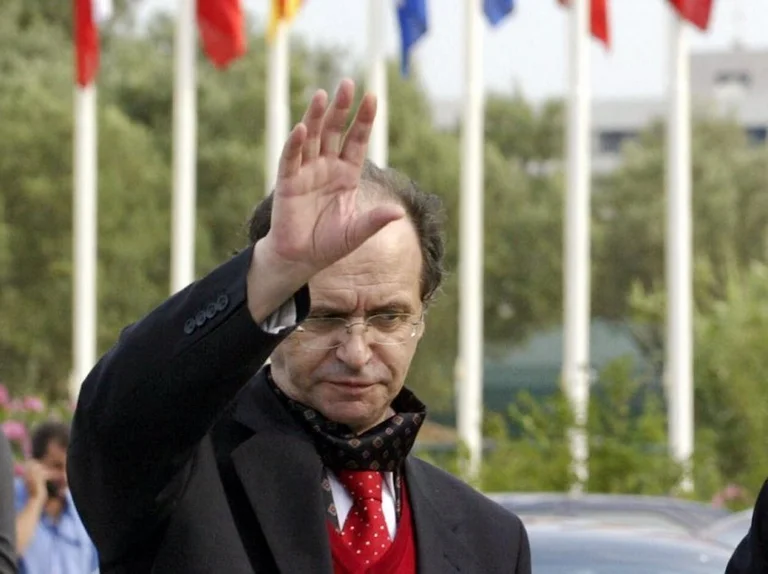
Photo by Rambouje with scratched Rugova found at Jakup Krasniqi's house accepted as evidence in The Hague
Periskopi(2 years ago)
(2 years ago)During his testimony at The Hague, witness Jan Kickert was presented with a photo in which it was said to be seen as the Rambouillet delegation, which was scratched by former President Ibrahim Rugova. The drill was allegedly made by Jakup Krasniqi. After the witness identified the person scratched in the photograph as Rugova, the prosecutor requested [...]
After the witness identified the person scratched in the photograph as Rugova, the prosecutor demanded that this evidence be accepted in material evidence.
But, responding to the court's question, prosecutor John Capin said the damaged photograph, which was found in Krasniqi's house, reflects the feeling of hostility the accused of Rugova has followed.
As far as I know, this was taken from a photo album by Jakup Krasniqi's house. It's one of many photographs, but none of the other photos are scratched and damaged like this picture. We think this photo has been damaged because it reflects the feeling that this accused of this person had, the hostility of around”, said prosecutor Capin, adding that they think Krasniqi did this.
Prior to that, accepting this photo as material evidence rejected Krasniqi's defence through lawyer Aiden Ellis.
Ellis said it has a biased effect because it is not known under what circumstances it was found in Krasniqi's house.
We object because there is no survey and there is no provative value. According to us, this is not a document that serves to identify members of the Rambouillet delegation because the court has a lot of materials regarding Rambouje, but this is biased as a document because Ibrahim Rugova's picture has been scratched, that's true. The prosecution is unable to say who scratched his picture when his picture was scratched and I'm convinced that the prosecutor means that this is a document that was found during the search of Mr. Krasniqi's house”, Ellis said.
He also said that this photograph has no evidence that S dealt with Krasniqi's house, and according to them, the survey is very small.
There is no evidence proving how this photograph ended in Mr Krasniqi's house and we think that the survey is too small and has a biased effect to accept this photograph without proving... on what condition this photo was found at Krasniqi's house. We think the vulnerability and prejudice effect this photograph has is extremely harmful and there is no provative value”, Ellis said.
However, Judge Charles Smith said that this photo would be accepted in material evidence and that its provative value would be later determined by the court.
The persons whom the witness Kickert identified in the photograph discussed at the session were Xhavit Haliti, Ibrahim Rugova, Fehmi Agani, Skender Hyseni, and others.
“Xhavit Halitin, Skender Hysen, Ibrahim Rugova, Rama Buya, Bren Shala, Veton Surroin, Fehmi Agani, is someone else from the opposition here and all right on the left Jakup Krasniqi, Hyseni”, he said.
Prior to that, the witness claimed to have contacted Hashim Thaci via phone in 1998 and 1999.
I assumed he contacted me with a satellite phone. He called me on my cell phone and I thought he was using satellite phone that cell phones in Kosovo at the time were not staying in the entire body of”, he said, adding that he had never seen him use a satellite phone.
The prosecutor also focused on a series of meetings that had been witnessed with Hashim Thac in, Kadri Veselin and Jakup Krasniqi in July 1998, which showed their goal as diplomats.
Our aim was to identify a KLA person who would be able to get involved in the political process and be authority on behalf of KLA”, he said, adding that they knew nothing about The KLA was working.
While for another meeting, which was held in January 1999 over the release of five Serbian soldiers, the witness said it has been a long meeting because KLA members consulted and were under the impression that decision-making was collective.
The “has been a long meeting because I think the decision couldn't be made immediately. To consult maybe. Kosovo Albanian representatives at that meeting consulted others. That was not unusual. During all the commitments we've had with the KLA there hasn't been one person who could make the decision on his own. We, we had the impression that decision-making was collective”, he said.