10 minutes ago
The oathing ceremony in Skopje, the EU reacts to Silanovska, who referred to her state as “Macedonia”
Periskopi(2 years ago)
(2 years ago)The European Union has reacted after Gordana Silianovska - Davidkova's sworn-in ceremony in the post of new president of Northern Macedonia, referred only to as Macedonia. The surrender-accession ceremony of the head of state's task has also been performed today. But this has prompted Brussels' reaction. “EU expresses regret [...]
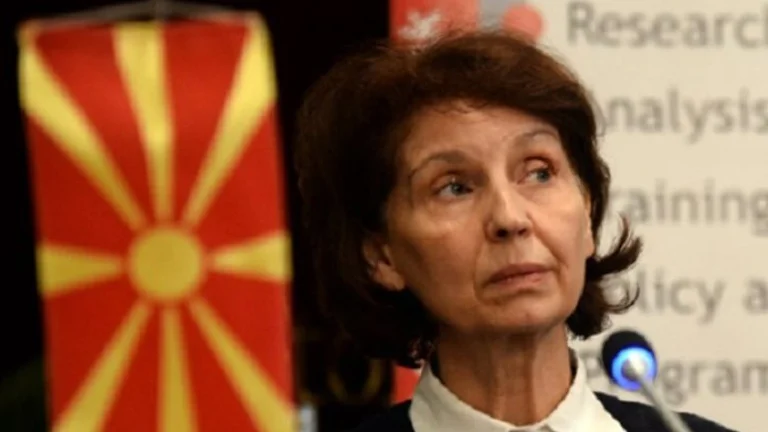
The European Union has reacted after Gordana Silianovska - Davidkova's sworn-in ceremony in the post of new president of Northern Macedonia, referred only to as Macedonia.
The surrender-accession ceremony of the head of state's task has also been performed today.
But this has prompted Brussels' reaction.
“The EU laments the fact that the new president of Northern Macedonia, President Siljanovska-Davidkova, did not use the country's constitutional name during today's swearing-in ceremony.
The EU recalls the importance of fully respecting existing legally binding agreements, including the Prespa Agreement with Greece”, said in response from Brussels.
The Prespa Agreement was reached on 17 June 2018 between Greece and Macedonia's former Yugoslav Federal Republic to resolve the conflict between them over the name, resulting in the new name Northern Macedonia.
Greece's Ambassador to Northern Macedonia, Sofia Filipodu, invited to the session, left in protest of the fact that this one during the oath referred to the country as “Macedonia”.
In this regard, the Greek Foreign Ministry has also reacted, stressing that far-reaching progress in relations between the two countries and the European route of Northern Macedonia depends on full implementation of the Prespa Agreement and primarily on the use of the country's constitutional name.
Notification:
“During its oath today in the Assembly, and despite the fact that in the official text of the oath that was dictated to the country, the North Macedonia “”, the new president of the Republic of Northern Macedonia. Mrs. Silianovska-Davidkova chose to call her country “Macedonia”.
This act flagrantly violates the Prespa Agreement as well as the Constitution of the neighbouring state, which has harmonised with its international obligations. The Greek government, despite objections it has voiced during the ratification of the agreement, respected it as a ratified international treaty that has priority over any other provision of the law.
Greece, in this context, flatly stresses that further progress in its bilateral relations with Northern Macedonia, as well as its European course depends on full implementation of the Prespa Agreement and, above all, on the use of the country's constitutional name”.