2 minutes ago
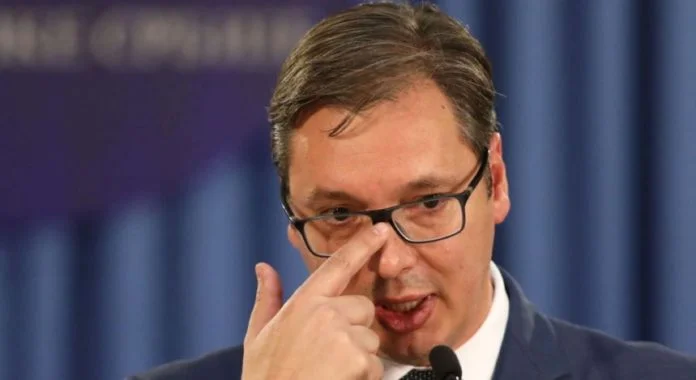
Vuciq says difficult days await Serbia cause of Kosovo, Srebrenica
Periskopi(2 years ago)
(2 years ago)It will be difficult, the most difficult so far, so Serbian President Aleksandar Vuciq said late, as he warned Serbia's “difficult days. Later, he identified as the challenge decision-making in the Council of Europe for Kosovo's accession and a draft resolution to the United Nations for genocide in Srebrenica. In an extraordinary session [...]
It will be difficult, the most difficult so far, so Serbian President Aleksandar Vuciq said late, as he warned Serbia's “difficult days.
Later, he identified as the challenge decision-making in the Council of Europe for Kosovo's accession and a draft resolution to the United Nations for genocide in Srebrenica.
At an extraordinary session of the Government of Serbia on April 4th, he called for the formation of teams for “co-operation of all forces”, in which the Government, Parliament and the president of State should participate.
Vuciq was the only one to speak at the session, presenting a series of requests and suggestions to the Serbian government.
Kosovo and Council of Europe
All efforts to keep Kosovo from membership in the Council of Europe were made, Vuciq asked at the Government of Serbia meeting.
The Parliamentary Assembly of the Council of Europe will vote on Kosovo's accession on 16 April, while the final decision is expected at the meeting of the Council of Europe Committee of Ministers 16 May.
In addition to forming a team that will deal with the issue, Vuciq asked the government that all be sent a so-called non-paper.
In this informal diplomatic document, Serbia's position for Kosovo membership in the Council of Europe, which is the main organisation on the continent in the field of human rights, should be expressed.
Instead of insisting that “Kosovo is not a state”, Vucic suggested changing approach, stressing that Kosovo has not formed the Association of Serb majority municipalities.
For this association, Kosovo and Serbia agreed with an agreement in 2013, within the dialogue for normalisation of relations, but Kosovo did not form it.
In the Council of Europe are 46 countries, including 27 members of the European Union and all countries in the Balkan region.
Most EU member states have recognised Kosovo as a state.
In two cases, Serbia voted against Kosovo's request for admission to the Council of Europe, which Pristina submitted since May 2022.
But, with the Ohrid Agreement on normalising relations between Kosovo and Serbia, it was forced not to prevent Kosovo's accession to international organisations.
That agreement, the two countries reached February 2023, while its implementation annex agreed in March of that year.
However, officials in Belgrade repeatedly say they will not implement all provisions of the agreement.
Kosovo, too, failed to implement some of its obligations, including those concerning the formation of the Serb majority municipalities' Association.
Vuciq warned of the possibility of going to New York on April 21st to negotiate with as many UN member states as possible.
He said he wants to talk personally with the presidents of African friendly countries, such as Egypt, Algeria, Congo, Namibia and Uganda.
He added that there is no act in the UN that says Germany has committed genocide in World War II.
In addition to Vuciqi's claims, there is currently no official information on the Srebrenica genocide resolution, which the UN would reveal.
Speaking to the public on 29 March, Vuciq said Serbia has received information from the UN General Assembly that such a resolution will be in order on April 27th, as the proposal of Germany and Rwanda.
He estimated that with the adoption of that resolution, the initiative to abolish Republika Srpska would also emerge, and then the request for war damages from Serbia.
Milorad Dodik, leader of the Republika Srpska entity in Bosnia and Herzegovina, said on April 2nd that he opposes the draft resolution of the genocide.
“They insist on negligating only Republika Srpska and a nation”, Dodik said.
Official Belgrade has for years rejected the adoption of resolutions or statements that crime in Srebrenica calls genocide.
Serbian officials say a terrible crime has occurred in Srebrenica, but do not admit it was genocide.
Nine years ago, at the UN Security Council, Russia blocked the adoption of a resolution condemning the genocide in Srebrenica, which was proposed by Great Britain and supported by the United States and European Union countries.
Even then Serbia lobbied against adopting the resolution.
In March 2010, at the time of the then government, Serbia's Parliament adopted the Declaration of Crime Sentence at Srebrenica.
That document condemns the crime committed in the way the International Court of Justice has determined, but the term genocide is not mentioned in the statement. /REL/