12 minutes ago
Serwer shows why Serbia fears Kosovo membership in Council of Europe
Periskopi(2 years ago)
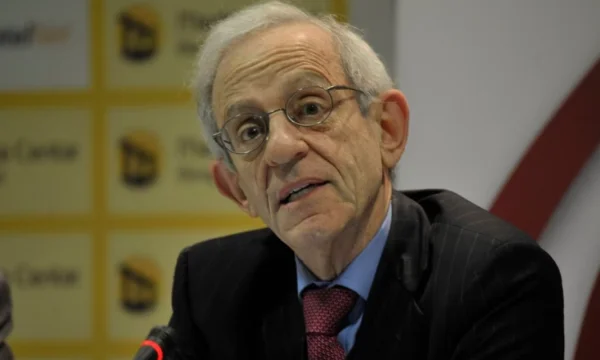
(2 years ago)Analyst and connoisseur of Balkan issues, American Professor Daniel Cerer, has said Serbia is currently engaged in a vicious campaign to block Kosovo's membership in the Council of Europe (KiE). He has shown why the Serbian state is fearing Kosovo's membership in this organisation. Serwer says Serbia [...]
Analyst and connoisseur of Balkan issues, American Professor Daniel Cerer, has said Serbia is currently engaged in a vicious campaign to block Kosovo's membership in the Council of Europe (KiE). He has shown why the Serbian state is fearing Kosovo's membership in this organisation.
Serwer says Serbia is doing this despite a clear commitment to the February agreement that Americans and Europeans claim is legally binding, which said Serbia would not oppose Kosovo's membership in any international organisation.
In his text at the Peacespace.net, Serwer says he does not know whether the EC will accept Kosovo in late spring.
Of course you should. The key qualifications of the KiE is rule of law”.
American analyst says Kosovo has steadily improved and ranks above the average regional average in eight dimensions of rule of law. The “is the third in the region, shortly after Montenegro... but well ahead of Serbia's declining results. Pristina has recently resolved a major complaint. It recognised the property rights of the Decani Monastery, an unresolved issue for more than 20 years”.
Corruption, law enforcement, and criminal justice are its worst dimensions. These are all symptoms of a new and relatively weak state.
American professor says KiE's main goal is to promote democracy, human rights and rule of law throughout Europe and beyond
In principle, you would think that people who are truly discriminated against would welcome their country's membership in such an organisation. However, Belgrade opposes, with all its forces,”, he said, broadcast Telegrafi.
“The issue is not just that of ideals, there are practical consequences of KiE membership. Membership opens citizens access to the European Court of Human Rights (GJEDNJ). This is a serious privilege. If a national justice system fails in the eyes of a citizen of a KiE member state, that citizen could appeal to the GEDNJ, which has a strong tradition of judgment in favour of equality and discrimination, including the Balkans. This does not mean that its decisions always apply, as Bosnians say, but strengthens those who suffer discrimination. Member states could also file complaints against other member states, another privilege Belgrade should welcome”, the American analyst wrote.
Serwer says Belgrade opposes Kosovo's membership in the KiE for several reasons.
“First, Belgrade does not want to accept that Kosovo is a state. Second, she fears that Kosovo will file complaints against Serbia. There are many reasons for such complaints stemming from discrimination and other human rights violations against the Albanian majority within Serbia, the treatment of Kosovo citizens in Serbia, and Serbia's failure to account for its crimes during the Kosovo war”.
Third, Serwer says, Belgrade is also trying to pressure Kosovo to create an Association of Serb majority municipalities, which it views as important for formalising its relations with the Serb population within Kosovo. The KiE Parliamentary Assembly considers this an issue Kosovo must resolve after membership. Such minority associations are common among the KE member states, and Kosovo has promised to create one. But reasonably she does not want to do so until Serbia recognises its sovereignty and territorial integrity”.
In the end, the American expert says that <x0-facts [for Serbs] is that non-member Kosovo today is more qualified for membership in the Council of Europe than the current member Serbia”.