2 minutes ago
After the referendum, are Serbs boycotting the north even population registration?
Periskopi(2 years ago)
(2 years ago)Registerers have not yet knocked on the door of the six-member Miletiq family in Leposaviq, even though more than three weeks have passed since the Kosovo population registration process began. This family says it is not certain that it will answer questions from the questionnaire, even if someone was going to knock [...]
Registerers have not yet knocked on the door of the six-member Miletiq family in Leposaviq, even though more than three weeks have passed since the Kosovo population registration process began.
This family says that it is not safe to answer questions from the questionnaire, even if someone was to knock at the door for the next two weeks.
This has become more political issue”, says Dillibor Miletiq for Radio Free Europe, referring to the census that has started on 5 April and will continue until May 17th.
He adds that no one has explained to you the details of this process and that conflicting messages are being heard by both Pristina and Serbian political representatives.
Although he believes it would be good to know the exact number of members of the Serb community, he says “ky is not a favourable time for recording”.
“I don't know yet what I will do [as far as registration]”, says this Leposaviqi resident of the Serb-inhabited municipality in northern Kosovo.
Registerers have not yet visited the pensioner from North Mitrovica, Dragan Illiq.
In this municipality, also inhabited by Serb majority, he lives alone with his wife, but says he will not participate in the census, even if someone knocks at the door and asks them to answer some questions.
The people are not stupid, the people see, the people understand. This record means destruction for him. Simply, this is the situation in Kosovo now”, Illic tells Radio Free Europe.
Miletiq and Illic families are not the only ones who hesitate or refuse to register.
Most Serbs in four municipalities in northern Kosovo refuse to register, officials saidStatistics Agency Kosovo on Monday.
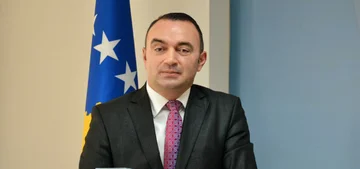
The director of this agency, Avni Kastrati, said boycotting the census is not good for the Serb community, and if it continues, he added, it would only become the population assessment.
The “call for the boycott has taken part in the Serbian List -- the largest Serbian party in Kosovo -- which enjoys Belgrade's support.
Before the census began, she has said members of the Serb community will not participate in the census, due to <x0pression” from Kosovo authorities.
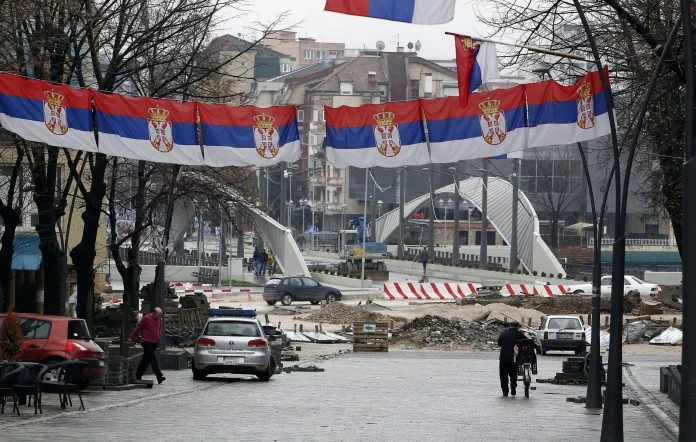
In Serb-run municipalities in the north, tensions are already high, and how long. The crises have continued since Serbs left Kosovo institutions in the north, with the Serbian List initiative in November 2022.
After their withdrawal, the leadership of four municipalities in northern Mitrovica, Zvecan, Zubin Potok and Leposaviq have taken over, which has increased tensions.
Serbs in northern Kosovo have not even participated in the latest population census in 2011, while members of the Serb community south of Ibri have generally boycotted it, at the invitation of official Belgrade.
According to that census, the total number of residents in Kosovo is about 1.8 million, out of whom about 25,000 are Serbs. However, according to civil sector estimates, there are about 100,000 members of the Serb community living in Kosovo.
What's the situation on the south of Ibri?
Free Europe Radio asked the Kosovo Statistics Agency how many members of the Serb community have responded to the census so far, but received no answers.
Kosovo Statistics Agency Director Avni Kastrati said at a news conference Monday that Serbs south of Ibri are subx0> massively reregistered”, but did not give any figures.
Nebojsa Vesiq lives with his 4-member family in Klokot, which is one of six Serb majority municipalities south of Ibri.
Speaking to Radio Free Europe, he shows he has responded to the census because, as he says, it is necessary to know how many members of the Serb community live in Kosovo.
Let's know who we are, where we are. The only problem is that it lasts a little too long, takes the time”, he says.
One of the consequences of boycotting the census may be to reduce the budget for municipalities, because funds are allocated according to the number of residents in a local self-government.
A total of ten Serb-run municipalities are in Kosovo.
Bekim Salihu, from the Kosovar Institute for Advanced GAP Studies, has earlier told Radio Free Europe that boycotting the census could negatively affect local economic development.
According to him, if the exact number of residents is not known in a municipality, then it is impossible to assess human and economic potential which could lead, according to him, to a lack of strategy or planning.
Boban Simi, from the nongovernmental organisation Centre for Affirmative Social Action (CASA), says the registration process in municipalities in the north “almost doesn't take place at all” and that, according to him, is the consequence of poor “organisation and lack of campaign” by the Kosovo Statistics Agency.
He stresses that this is not the only process organised by Kosovo institutions in the north and being boycotted by members of the Serb community, and he remembers here the polls that took place this month for the replacement of Albanian leaders in northern Mitrovica, Leposaviq, Zvecan and Zubin Potok.
Serbs boycotted these polls at the invitation of the Serbian List.
If we take into account that the census ends on May 17th and, meanwhile, it is the holiday of May 1st and Easter when many people will be outside Kosovo it is hard to expect to have any visible change in the census trend in the north”, says Singlety to Radio Free Europe.
Registerers are obliged to visit the same household three times if they do not find someone from whom they would receive the data in the first two times.
During their visit to the housekeeping, recorders are obliged to leave an announcement that they were and have not found anyone.
Kosovo's Statistics Agency has called on citizens to be active and to address their municipalities if the recorders do not visit them in the next five or six days.
Those who decide not to register may also face fines that the law envisions - between 30 and 2,000 euros.
Fines for businessmen are even higher and totaling up to 20 thousand euros.
During the first 24 days of the process, some 8911,000 people have registered.
The preliminary results of the census are expected to be published in the second half of June. /Radio EuropeLire