12 minutes ago
Petritsch: Kurti Vuciq agreement has international currency, the word given by a leader is as valuable as signing
Periskopi(2 years ago)
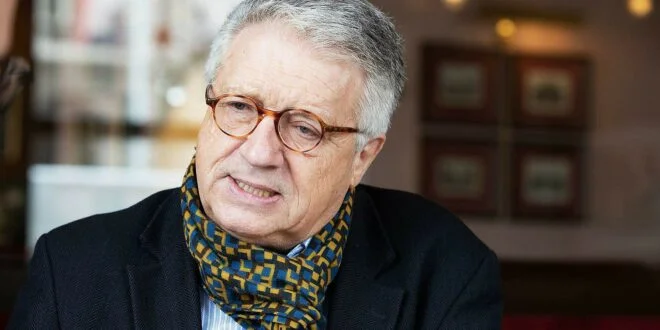
(2 years ago)The Brussels and Ohrid Annex agreement have international validity because the word given by a president or prime minister before international mediators is as valuable as signing. So says in an interview for Radio Kosovo, Austrian diplomat Wolfgang Petritsch, former EU representative in the Rambouillet talks. For the [...] Agreement
The Brussels and Ohrid Annex agreement have international validity because the word given by a president or prime minister before international mediators is as valuable as signing. So says in an interview for Radio Kosovo, Austrian diplomat Wolfgang Petritsch, former EU representative in the Rambouillet talks. For the 1999 Rambouillet Agreement, he says it has a historic value because it opened the way for NATO military integration. Kosovo now is 100 per cent in the EU's joint security policies agendas, and Vuciq knows that any military action against Kosovo would mobilise NATO for countering”, Petritsch notes.
Twenty-five years ago you were the European Union's representative in the negotiations held in Rambouille, where the Rambouillet agreement was reached. How do you assess today, 25 years later, the historical significance of this agreement?
Wolfgang Petritsch: I would say that this agreement has real historical significance. In the first place for Kosovo, because it was the first step of its international recognition and the first step of starting the break from Belgrade. As you know, in Rambouille, we initially negotiated the return of a high Kosovo autonomy.
But in the last paragraphs of the deal, we found a very complicated formula, which we had later determined to hold an international conference where all sides would participate: Kosovo, Serbia, the European Union and the US - representatives of the international community, including Russia, to discuss Kosovo's final status and its destiny for the future.
In the agreement, we had determined, after three years, to respect the will of the people of Kosovo through organising a referendum on one side, and on the other, to consider OSCE principles.
This has been the most important point we adhere to even today and 25 years later, because the agreement aimed at abolishing Serbia's sovereignty over Kosovo in the background. We have discussed this topic then, and from this point on, Rambouille opened the way to Kosovo's future.
Second issue: The Rambouillet Agreement opened the way for international military intervention, which was made without the UN mandate, because there was the danger of mass expulsion of Kosovo's population, which we have described as ethnic cleansing, as we know it from the Bosnian case, which we wanted to prevent.
Unfortunately, we failed, as you know, with the start of military intervention, Yugoslav Army forces expelled hundreds of thousands of Kosovo Albanians who were forced to flee to neighbouring countries. Fortunately, after the end of the war, the presence of international troops was defeated by the immediate return of these violent refugees from Kosovo.
This means that unlike other cases, where there has been conflicts and military interventions, the quick return of refugees was possible and, as we know, the return of refugees to Kosovo is not a subject today. So we should be happy about that, since this has not happened in many lands, such as the case today with Palestine. As you know in Palestine today, just like 50-60, or 70 years ago, we still have Palestinian refugee camps in the Middle East region, such as Jordan, Egypt, etc.
Thus, international military intervention in Kosovo ended a conflict and enabled people to return to their homes, as this issue carried the risk of remaining an endless open conflict.
Military intervention avoided the risk of Albanians expelled from Kosovo continuing to live in refugee camps outside Kosovo for years. This is a huge achievement, but on the other hand, this intervention was later used by Putin to take over the Crimea, saying that “if Americans did this in Kosovo's case, we can do it”.
Of course, this is not a correct comparison, but it is the political use of a situation, which has no comparison, as Kosovo's case cannot compare with that of the Crimea. Politically, that was used by Putin.
Later, at Canada's initiative, an international scientific and political group of eminet experts developed the theory of the principle of law and responsibility for protection from massive and serious violations of human rights by a state.
So, the so-called principle “The Responsibity to Project”, or “responsibility to protect” which is a global political commitment which was approved by the UN General Assembly at the 2005 World Summit, addresses major concerns about preventing genocide, war crimes, ethnic cleansing and crimes against humanity. This rule was later misused by Russia, as I mentioned.
However, the international and western military intervention created favourable conditions for the people of Kosovo we talked about, and now Kosovo is on track to reach a permanent and final normalisation agreement with Serbia. When that will happen, we do not know, but I think that the solid basis for this Kosovo that is today is established with the Rambouillet Agreement.
Nine years later, in early 2008, he declared independence, now recognised by 117 countries, among them by 22 European Union member states. Unfortunately, we have five other EU states, which still do not recognise Kosovo. How do you explain this?
Wolfgang Petritsch: Yes, it is regret that there is no united EU position. But there's a difference! All these five states do not want to harm Kosovo, but they do so from internal political reasons. For example, Cyprus is a divided state, as if to say it has a small Turkish state, which is not recognised by anyone.
We know that in Spain a large territory like Catalonia tends to be separated from Spain.
Slovakia, too, has a Hungarian minority and fears they could be separated from Slovakia and join Hungary. So, it's internal political reasons, but it has nothing to do with Kosovo.
I'm telling you that if there is some progress in the dialogue, which is being eased by the European Union, then these five non-recognitional states will change their attitude and recognise Kosovo.
This is perfectly clear and I say it because I have personally spoken to representatives of all five countries. And I am told how much progress should be marked in the talks that are under way between Kosovo and Serbia, they are willing to recognise Kosovo's independence. In principle, the problem is Russia, while these five EU countries will act pragmaticly as long as a corresponding progress is recorded in the talks.
A year ago Kosovo and Serbia reached an agreement in Brussels and later in Ohrid agreed on details of the implementation of the agreement, but this agreement is still not being implemented. You personally expect progress in implementing the agreement, or are you more skeptical?
Wolfgang Petritsch: As if, as a connoisseur of situations in the Balkans and Europe, I am more skeptical. For example, you know the difficulties Bulgaria is drawing out to northern Macedonia, blocking the start of membership negotiations with conditioning official recognition of the Bulgarian language.
This is evidence that even within the European Union we are still not willing to respect all the differences that exist between us, whether small or large. Or the case of Serbia, which is continuing not to recognise Kosovo's independence and this issue can only be resolved through the European Union's mediation.
Therefore, I say that the more progress there is in dialogue, the closer the goal of normalising relations between the two countries will be.
As we know, in 2024, where we are now, we have elections in the EU and those in the United States. As of this, I do not believe there will be visible progress in the dialogue for normalisation.
Mr Lajcak, also completes the mandate, and that means that the European Union should appoint a new team for facilitating and mediating dialogue.
Let's hope that in 2025 we will move forward, although I am afraid there may be a setback in the dialogue process.
It is important to note that during the EU-mediated dialogue in the past ten years, there has been great progress. This has happened recently, as is the agreement on mutual recognition of license plates.
Of course, there are substantial changes, but it is insufficient anyway. I hope that the new European Union team for mediating and facilitating dialogue will exert a great pressure on Belgrade to move forward, because we already have an agreement and it must be implemented!
Even though Mr. Kurti and Mr. Vuciq have reached agreement in Brussels and the one on the annex of the agreement in Ohrid, Mr. Vusic, despite Mr. Kurti's request, did not sign it. Now this agreement they have agreed to in the presence of EU mediators and made pledges that they will implement, is there international validity, so could it be held responsible for the parties without signing the signatures, since both have, as it is known, pledged to implement it?
Wolfgang Petritsch: It is European practice that when two senior politicians, heads of the two states agree and take vows before international witnesses, which in this case is the European Union, so when they give a verbal consent to a certain issue before international mediators, then this agreement is valid, so there is international validity.
These agreements, this in Brussels and Ohrid, as before, are valid, and I believe Brussels will hold other meetings with Belgrade to force it to recognise the agreements and pledges it has taken on.
This agreement has already been accepted because the word of a president or a prime minister is as valid as signing it.
The European Union is calling for Kosovo to form an Association of Serb majority municipalities. The Kosovo government so far has not presented an Association statute. In your opinion, what should the statute include?
Wolfgang Petritsch: I think it should be seen the fact that in northern Kosovo are Serb majority municipalities and with them, I think, co-operate and support, such as in economic and infrastructure issues, such as the environment, the management of waste, on issues related to culture, education, language, history, preservation of tradition, etc.
In this issue, they must be granted rights, but we also know that association cannot have rights that harm status and hinder state development.
Is that also the fear Prime Minister Kurti is expressing?
Wolfgang Petritsch: Exactly, so as we see, the international community is absolutely aware, that there they do not want a second Serbian republic, and that is of great importance to emphasise.
Here, I would have recommended Pristina to propose the statute for Association, because it is known from experience that the priority belongs to the one who during the negotiations makes the first proposals.
This puts the first proposal to priority, since the other side must then be declared regarding the proposal and if it refuses, therefore, says no, or offers another proposal from the first, then it means that you have grasped the essence of negotiations and the nature of compromise.
Currently, Serbia is blaming Kosovo for a decision by the Kosovo Central Bank, which has imposed a regulation where, according to Serbia, Serbian citizens using the dinar have been affected. Talks are under way among chief negotiators in Brussels. We all know that in Kosovo, official currency is Euro. How do you see the solution to this problem?
Wolfgang Petritsch: In principle, every country has the right to determine which currency to use through the Central Bank itself. At the same time, in this case it is important to know how sensitive the use of the dinar in northern Kosovo is.
In my view, given this, the prime minister has had to consider the daily life that Serbs do in the north, because when citizens are suddenly faced with the difficulties of retirement, or when they need to buy, then there is negative consistency for anyone affected by such a decision.
I know it's hard to talk about, it's always hard to compromise, but this is the art of politics. So that when you make a measure, your citizen will not be harmed. And now, I think this is good to repair and with negotiations and dialogue to find a transitional solution.
Mr. Petritsch, you sometimes meet American officials like Mr. Escobar or Mr. Hill, with whom you worked together in Rambouillet. How do you assess the current reports between the US and Kosovo, as there have been several statements by American officials, who have talked about damaging relations?
Wolfgang Petritsch: Yes, there are currently relatively tense reports between Washington and Pristina, as Washington is starting to lose patience. They have spent 25 years of military intervention, and Kosovo is the only country in the world to be saved through military intervention.
Kosovo is absolutely an exception in Europe's new history. I cannot remember another case when a state as in the case of Kosovo was created by the international community through political and military intervention.
The United States, like Washington, is saying they've done a lot for this country. They are so committed to the freedom of the people of Kosovo and now want to see, they say, compromise solutions to certain issues, which may perhaps be painful in a way for Pristina but are necessary.
One thing to know: it's the American way of thinking and acting, which I also support when they say in Brussels:
We want to end this conflict between Kosovo and Serbia, which has been taking 25 years. We know it's very painful for Belgrade, because that's the part that's lost the war. And on the other hand, it's hard for Pristina, but it has to be, because it can't go on anymore, so that we can face a conflict in the middle of Europe for more than a quarter century. We're forced to deal with the war in Ukraine, we have to deal with the conflict that broke out in the Near East and we don't want to have an unfinished dispute right in the middle of Europe”.
That's why the U.S. says we have to concentrate political power on Ukraine and the Near East.
As you know, the United States has a lot of internal issues. I think it is in Kosovo's interest to think about this issue, as we still do not know who will win the US presidential election in November.
If there is a return of Trump, then that would have a huge impact on the security situation both in Europe and Ukraine, but likely in the Western Balkans. Therefore, I think that the more progress is made now in the process of dialogue on normalising relations, the better. Because, as you know, in the time of President Trump there has been a certain dose of anti-Kosovo policy, as has been the case with Yerenelli and it would not show much interest in Kosovo.
I think it is very important that the official Pristina be opened to Serbs because I know there are many Serbs, more in the south, who want to live in harmony together with Albanians. Therefore, these positive Serb forces, which are now under great pressure from Belgrade, must be supported, supported, seen and convinced that Kosovo is a state that is here for Serbs as well.
On September 24th, we had an attack on the north, where a Kosovo police officer was killed. There is no day that Mr. Vuciq does not threaten Kosovo with his war rhetoric. Do you see any danger to Kosovo's security despite KFOR's presence?
Wolfgang Petritsch: I think this wave of threats is unfortunately part of the policy that has roots in rhetoric, which caused the wars which destroyed the former Yugoslavia.
But I want to tell you one thing: With conviction, I say Vuciq is not one who would repeat Milosevic's mistake of going to war NATO, because any military action against Kosovo would mobilise NATO for rebuttal, and Vuciq knows that.
I tell you with full conviction and tell you that there can be no war in Kosovo, as it did with Milosevic.
But I worry that incidents such as the one in Banjska are possible and that they would shift the peaceful process many years back.
Something like this should definitely be prevented, and this during this year -- 2024 -- should be guaranteed with KFOR presence in the north.
Do you see any danger Kosovo can take from Russia?
Wolfgang Petritsch: I don't think Russia deals directly with Kosovo. It is busy in the war in Ukraine, where it has experienced major human and military infrastructure losses, but it can be said that Russia is a factor that exploits the situation.
It wants to prevent, but not that there is any interest in strengthening Serbia or Serbs.
It is more interested in weakening the European Union's influence in the Western Balkans.
Russia wants to create conviction that the EU is not a successful organisation and that is actually its real goal and particularly uses a type like Dodik to achieve it.
Russia is not a serious factor for the Western Balkans, or for Kosovo, but of course, caution is needed.
A question for Kosovo's Euro-integration processes. Where is Kosovo on this road?
Wolfgang Petritsch: I believe Kosovo is on the right track. These two wars that took place have sparked alarms in Brussels and European capitals, especially in Paris, but also other capitals for the necessity of strengthening stability in the Western Balkans, and this can be done by offering accelerated procedures these countries with the European Union.
For example: Kosovo is now 100 percent in joint EU security policies agendas, and this is a very important investment in the integration process and I believe that progress will be made in the years to come through negotiations and negotiations on integration with EU countries.
But one important thing remains. The process of dialogue and formation of association remains a condition for fast approaching the EU.
On 16 April, the Parliamentary Assembly of the Council of Europe will discuss Kosovo's accession to this organisation. Are you optimistic that Kosovo will be accepted?
Wolfgang Petritsch: I think there is already a majority for Kosovo's admission to the Council of Europe. Every time I meet with my Serbian friends, I tell them: “Kosovo still needs to become a member of the Council of Europe, because this is very important”.
Membership in this organisation is important, as there are institutions that care for human rights and minority rights in the region, so that minorities enjoy their rights and that is a great priority for Kosovo Serbs.
Kosovo's membership in the Council of Europe means the first step towards integration into the European Union, but this also brings new instruments for protecting all minorities, therefore Serbs, Ashkali, Roma and others must say, that it is very important that Kosovo become a member of the Council of Europe.
A while ago, I also wrote to Father Sava at the Decani Monastery, and I am glad that these days a solution was found to the issue after a long conflict.