8 minutes ago
Osmani: Kosovo not rejecting implementation of its obligations
Periskopi(2 years ago)
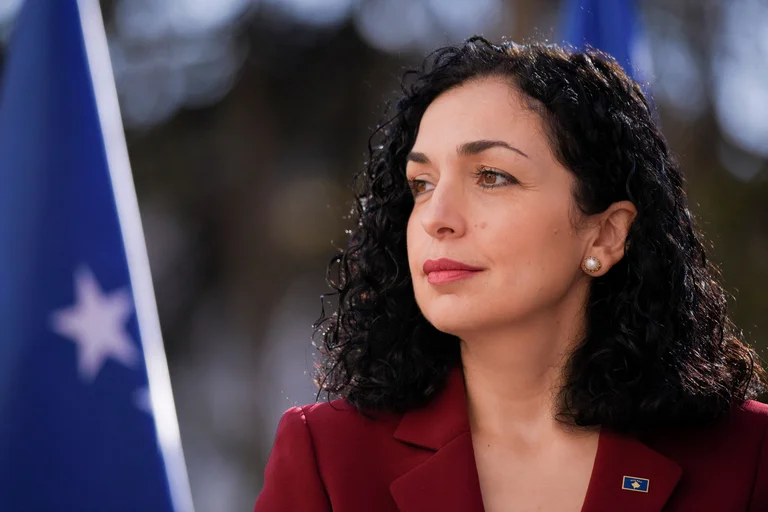
(2 years ago)Republic of Kosovo President Vjosa Osmani said Kosovo does not oppose the implementation of its obligations, but requires a binding agreement on both Kosovo and Serbia. In an interview for New York's Voice of America, where President Osmani faced Serbia's president yesterday at the Security Council meeting for [...]
Republic of Kosovo President Vjosa Osmani said Kosovo does not oppose the implementation of its obligations, but requires a binding agreement on both Kosovo and Serbia.
In an interview for New York's Voice of America, where President Osmani faced Serbia's president yesterday at the Security Council meeting for Kosovo, she said Kosovo would address the Constitutional Court for the Constitutional Law of Association after an agreement was reached on how the actions emerge from the agreement signed in Ohrid by Kosovo and Serbia last year.
Voice of America: President Osmani, senior US officials Assistant Secretary of State O'Brien two days ago in Belgrade and the American representative at the UN today, demanded that Kosovo establish association. How will you respond to this call?
Vjosa Osmani: Kosovo has repeatedly shown the will to implement the agreement reached in Brussels in February last year and the March annex of last year overall and as soon as possible. But as in any other agreement, implementation has the implementation plan, or the sequence plan, which is still being negotiated in Brussels and envisions both sides, in parallel, to implement the agreement, or its parts of the agreement.
In this context, the agreement does not have only the article of Association; there are other provisions, which, among other things, require Serbia to recognise Kosovo's sovereignty, territorial integrity, not to use violence as a tool, or force as a means for interstate reports and requires Article 4 not to create obstacles, or to reject Kosovo's membership in international organisations.
So the only thing Kosovo is asking for is for the agreement to be implemented in all, not only on one side to require full implementation, but on the other hand not to require implementation of either of the provisions. Of course we know this is Kosovo's international obligation, but there are some principles that we have in mind and we have them as red lines in implementing association. Among them is the Constitution of Kosovo, the Constitutional Court of 2015 ruling, is the fact that there can be no executive competency, as written in [former Foreign Policy and Security Representative] letter. Moghrin at the time and also be in line with the American position published in the ʹop-edine Cholet/Escobar.
So Kosovo is not opposing the implementation of its obligations. We're just asking for the deal to be a deal and create obligations for both sides, because otherwise the agreement and dialogue are lost.
Voice of America: But since your country's international partners are demanding the implementation of Association from Kosovo, does Kosovo have a plan for future steps?
Vjosa Osmani: The plan is obviously clear. The sequence agreement must be concluded which step of implementation is needed first, second and so on. Once the sequence plan is completed, of course, Kosovo, as the Constitutional Court's decision of 2015 is to submit the draft state to the Constitutional Court. Then it is up to the Constitutional Court to decide whether the draft is in line with the Constitutional Court of Kosovo and with the Constitutional Court's act.
As president of the country I have a series of concerns about the draft, but I have full confidence that the Constitutional Court will make sure that everything is in accordance with the Constitution and the act of 2015, because otherwise I think that many things can be misused in practice during the interpretation of the statute and could cause major problems, which will then be difficult to manage without developing tensions. So even because of security, which is necessary because of stability, which is a prerequisite for peace, but above all because we have to preserve the functionality of our state, we need to be sure that everything is in accordance with the Constitution before steps are taken for full implementation of Association.
Voice of America: Are the statute the international community has given to Kosovo for Association soon to reach the Constitutional Court?
Vjosa Osmani: I can't set deadlines. Under the statute, but also the Constitutional Court Act of 2015, this is the task of the Kosovo government. So it could be the relevant ministry or a government decision, but that depends a lot on the flow of dialogue as well. As I mentioned, we should have a sequence plan, which clearly envisions which step from Kosovo is taken first, which step is taken also in parallel so that both sides can implement in parallel and both sides benefit.
But we cannot ask Kosovo to implement the main part of the agreement, and Serbia, to catch it, not to demand that it vote for the Council of Europe. If implementation is required, both should be required, as I said, otherwise the full credibility of dialogue and the principle of equal treatment of parties no longer make any sense. Because somehow, only one side remains in the process, as the other has already been formally withdrawn by sending letters to the EU that will not implement the agreement. And so said Vucic on the Security Council today, who they love Association, but without taking any step towards mutual recognition, whether de facto or de jure in relation to Kosovo. The agreement, in fact, has all elements of the de facto recognition, from recognition of sovereignty and territorial integrity to other principles of the UN Charter, which apply only among states. But they say it clearly that they will not.
In a way, there is only one pair left.
Voice of America: Mrs. President, if Serbia continues not to fulfill the other parts of the agreement, does that mean you will not move? That the Kosovo government, which Kosovo authorities, will not move forward with the implementation of association?
Vjosa Osmani: My position, as president of the Republic, is that since we know very clearly the history of Serbia and it constantly violates the agreements they signed and does not implement on the ground, we need to return to some kind of approach that we have had about the time Kosovo is declared independent, when Kosovo has made a series of concessions, which have not become a dysfunctional state, but have been difficult concessions. But on the other hand, Serbia has refused to implement the Ahtisaari package. But what we have won in return has been Kosovo's independence, recognition of Kosovo and membership in international organisations.
So if we, together with international partners, are going to see this principle of the two parties under way then we have to sit first with the United States, but also with the states of the European Union that have recognised Kosovo and we have to make a clear plan. If Kosovo implements all these concessions, what are the measures the international community will take to support Kosovo? Suppose, is NATO on the table? Is candidate status and then I walk towards the EU, based on the reforms we've made on the table? So a kind of agreement between us and our partners is a matter that I've been dealing with for a long time with partners, in particular with the United States, always knowing that we will come to this point and Serbia will still not implement anything.
So we have to see what we can find out if we apply, but what we can draw from our partners as kind of support for the powerful consolidation in the international arena of the Republic of Kosovo, as an equal state. Of course, the United Nations, while Russia has veto rights, is difficult. But, any other organisation where Russia does not have veto, I believe it is within the stages of actions that our friends can make and push Kosovo forward to be both in NATO and in the Council of Europe and other organisations that make us even safer.
Voice of America: We go back to the question of the statute and the Constitutional Court. If the government doesn't send this statute that you have in your hands, does the President have room to send him to the Constitutional Court? Are you considering such a step?
Vjosa Osmani: In 2017-2018 and in 2021, there are judgments of the Constitutional Court that have limited the President's mandate to raise constitutional issues, or to ask constitutional questions if a document is in accordance with the Constitution. So without first being adopted, this document by the government, or any government act, as President cannot send it to the Constitutional Court, according to Article 113.
So in the past there was this right. As you know, in 2015 it was used, several times since 2008-10. From 2018 onward, however, through the judicial judgments of the Constitutional Court, this right of the President has been restricted. So there must certainly be a preliminary act of government, which does not have to be reconciled to the content of the statute, but find a way to pass away.
Get this tied up with what I said earlier. Obviously, such a step should be made if there is a sequence plan, and if Serbia implements at the same time and as an alternative if the international community offers Kosovo membership in organisations that are necessary for our country's Euro-Atlantic walk and for the security of our country, because in fact the biggest challenge we face is the security challenge which Serbia creates, and then this challenge creates many more, whether in terms of economic or foreign investment and many others.
Voice of America: Today, during the Security Council meeting, you mentioned the deterioration of the security situation and accused Serbia of destabilizing actions. Are you worried about escalation in Kosovo?
Vjosa Osmani: Such a thing will be tried again by Serbia, because such plannings are constantly made, but I am convinced of all preparations Kosovo police are making, in partnership with international presence, in particular with EULEX and NATO, as second and third responsible for security in Kosovo, that we will prevent any attacks.
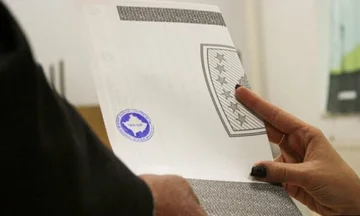
Voice of America: Mrs. President, you called yesterday a disaster boycotting the voting process and failing it in four municipalities in the north. Do you have a plan for beyond and what is it?
Vjosa Osmani: As mentioned today by the United States' permanent representative now remains in office, because this has been the choice of Serbs living in these four northern municipalities because, unfortunately, the constant pressure Serbia makes. Now these heads have a warrant.
Kosovo has offered everything it offers through its legislation. We've made extremely numerous preparations, we've adopted new administrative guidelines. We've shared a huge budget, so everything that's offered in democratic countries, we've offered it. We can't force citizens to vote. They have decided that, even though I'm saying it because of Serbia's illegal intervention. However, this is a reality for which Kosovo has done everything to change. But elections are democratic rights of citizens. If they don't participate, there's nothing we can do.
Of course we have to take as many additional initiatives for the integration of Serbs as possible, to protect them from the illegal structures that are threatening them, to enable them to prosper, realise their economic potential, feel as secure as everyone else in Kosovo is, but the right to vote is individual. The state can't force anyone to vote, it's free rights.
Voice of America: Does this boycott concern you, and what will its consequences be for Kosovo's future?
Vjosa Osmani: Of course it bothers us, because Kosovo has indeed consistently shown full willingness to offer its citizens not only constitutional protection but also new instruments if they want to change mayors.
But the main concern is the continued pressure done on citizens through illegal and criminal structures, which are financed, promoted and politically appointed on the part of Vucic. This shows on one side illegal interference in another state's elections on the part of Serbia, and the second is that Serbia remains the same and as the main goal is to prevent the integration of Serbs into Kosovo institutions, despite dialogue that has lasted for 12 years and despite their international obligation with the 2013 agreement, which they are demanding that Serbs integrate into Kosovo institutions and break down all illegal structures.
So it's a disturbing situation Serbia created and can only be changed with serious international pressure on Serbia.