a minute ago
Knaus: Kosovo submits association draft to Constitutional, ahead of May vote
Periskopi(2 years ago)
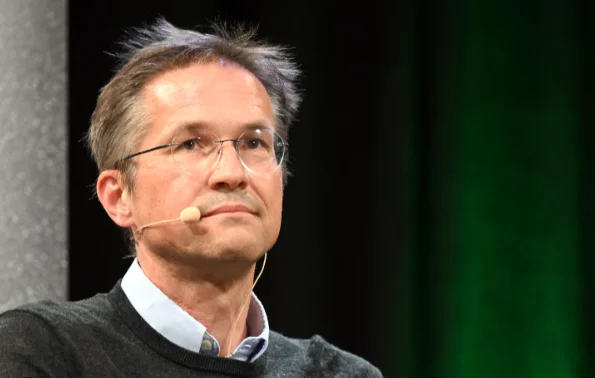
(2 years ago)Gerald Knaus, from the European Initiative for Stability, says the pro-Kosovo vote at the Council of Europe General Assembly is the most powerful possible “syal” the country's path to membership in this organisation. But, he says the governments of many states have not yet decided how they will vote in [...]
Gerald Knaus, from the European Initiative for Stability, says the pro-Kosovo vote at the Council of Europe General Assembly is the most powerful possible “syal” the country's path to membership in this organisation.
But, he says the governments of many states have not yet decided how they will vote in May when the final decision is expected.
Therefore, Kosovo must do some “positive charity” in the coming weeks, he says.
My council would be to send the draft status to the Serb majority municipalities at the Constitutional Court”, Knaus says, among other things.
The Parliamentary Assembly of the Council of Europe voted Tuesday evening for Kosovo's membership in the organisation. However, some MPs stressed that the country must take concrete steps towards establishing the Association of Serb-run municipalities before the final vote in May.
Knaus says establishing this association “without the participation of those for it is not possible”.
So, we need to be right. There are things the Government of Kosovo can do and there are things that cannot do”, he says, whose organisation has recently published one document for Kosovo's road to the Council of Europe.
Radio Free Europe: Mr. Knaus, the Parliamentary Assembly of the Council of Europe recommended that Kosovo be invited to become a member of this organisation. Was there any surprise for you regarding the debate but also the vote?
Gerald Knaus: If we look at it last month, and not just on the last day, it was a period of surprise. Support was broad, even by many key people at the Parliamentary Assembly coming from countries that do not recognise Kosovo, such as the rapporteur from Greece, the leader of the liberal group from Romania, the speaker of the assembly from Greece... So, even from countries that recognise Kosovo, even from those that do not recognise it, support was broad.
On committees, also on the political committee that met a few weeks ago in Paris, and on the legal committee that met in Strasbourg this week, support was great.
Radio Free Europe: How did the decision of some of Italy's deputies comment on the country that recognises Kosovo to abstain during the vote? Several Hungarian deputies also voted against...
Gerald Knaus: It was good that MPs did not vote in line with their countries' positions. Most of the time, it went to Kosovo.
But it is a fact that several delegations, such as Italy's, were divided. Some Italians voted in Kosovo's favour, some abstained.
In the case of Hungary, we saw an approach that has long begun. Hungary is behaving like a country that does not recognise Kosovo, voting against its progress on the road to international institutions.
No case is surprising, but it highlights the next major step in voting on the Committee of Ministers in May.
The failure of the Italians means that some countries Italy one of them and others that do not recognise Kosovo still consider it perhaps too early to make the final decision.
They don't have many arguments, but it will take a lot of lobbies from those who believe that Kosovo's membership in the Council of Europe would be a good thing for human rights in Kosovo, but also for stability in the Balkans.
Radio Free Europe: In view of this, could Italy's vote be at risk, for example, during the May vote?
Gerald Knaus: The governments of many countries have not yet decided what to do. Even in Germany, there is not yet a clear government attitude. So the next few weeks will be crucial because what we saw at the Parliamentary Assembly is the most powerful possible signal.
Governments have so far been able to say that they expect what the Assembly will do. Now the Assembly has spoken and governments must make the decision.
Politicians who on Tuesday effectively supported Kosovo with their speeches should now advise their governments to do the same.
Kosovo, too, must continue to act in support of its case. This [at the Parliamentary Assembly] was not the final decision, but it will make it easier to make such a powerful vote in the Parliamentary Assembly.
Radio Free Europe: Tuesday evening, we heard from several MPs, especially those from France, that Kosovo should take steps towards establishing the Association of Serb-run municipalities before the May vote. Do you think that association could jeopardise Kosovo's involvement in the Council of Ministers' agenda in May?
Gerald Knaus: It's not just France. Many governments refer to Association. Let us not forget that the Government of Kosovo has also said it is in favour of taking steps towards association. But the question is, What does that mean?
The Parliamentary Assembly has said that the establishment of association cannot be set as Kosovo's precondition for membership in the Council of Europe.
There is a very simple reason why this cannot be done. The Kosovo government cannot establish the Association of Serb majority municipalities without Serb participation. Currently, the four Serb majority municipalities in the north do not have Serbian leaders because they have resigned and, then, boycotted the elections. Now, they are boycotting efforts leading to new elections.
If you don't have Serbian mayors in Serb majority municipalities, who are responsible for talking to Government, you can't create this association.
Radio Free Europe: Are you saying the ball is now on the side of Serbs?
Gerald Knaus: There are some things Kosovo can do in the coming weeks. It would be helpful for the Government of Kosovo, in the near future, to show what it is willing to do, so that people can see that this is not only about membership in the Council of Europe but also about improving human rights for all in Kosovo.
So, we have to be right. There are things the Government of Kosovo can do and there are things they cannot do. The foundation of the Association without the participation of those for it is not possible. Serbia has made it clear that it would not have the Association better than Kosovo at the Council of Europe.
Radio Free Europe: But, for example, would it be considered a step forward in sending an Association draft to the Constitutional Court for assessment?
Gerald Knaus: I see no problem with sending the draft to the Constitutional Court, because it is not the same as adopting it. It is a step to verify whether the things under debate are really in accordance with the Constitution. But it is very important to make it clear that, even if the Constitutional Court finds that the draft is in accordance with the Constitution, Kosovo Serbs must again be part of the process. This requires Serbs to be in charge of municipalities and they are not.
Radio Free Europe: So, what steps would you suggest Kosovo not miss this chance?
Gerald Knaus: I think that many are surprised at the Kosovo government's decision to resolve the issue of the Decan Monastery lands. Remember, the Supreme Court has ruled on this case since 2012, and the Constitutional Court in 2016, and it has not been implemented by five governments... When it has suddenly been implemented, everyone has realized that this has been the right decision. But it has been a surprise to many who have not expected the Government to act.
My advice to the Government is to think of what positive surprises it can do now to show all that Kosovo's membership in the Council of Europe is, in fact, an advantage, not only for the citizens of Kosovo, but for all Europeans who believe in human rights.
There is a range of issues on which Kosovo has made progress, given its failure to discriminate, the establishment of Serb majority municipalities after independence, gender equality if compared with the number of women in parliaments of several other European Council countries... But, of course, there are also issues in which Kosovo can do better.
And my advice is that Kosovo will shift the debate into the future, to what Government intends to do, to show that this [membership in the Council of Europe] is a good thing for all, and to do some positive surprise in the coming weeks.
Because, after all, this is not a favour the Council of Europe is doing to Kosovo. It is in the interest of all Europeans to have a stronger human rights regime, covering all democracies in Europe.
Radio Free Europe: Can you tell me something concrete that Kosovo can do?
Gerald Knaus: My advice would be to send the draft either to the Constitutional Court for Association. I think that would make sense.
My advice would be to highlight that when it comes to co-operation with the bodies of the Council of Europe, such as the Commission for Prevention of Torture, which reports prison conditions across Europe, it will allow all reports of the Commission for preventing torture to be public. This is one thing all democracies do, but Kosovo can present this [as commitment].
There are other things, but I think they belong to the Government and civil society in Kosovo. This is the moment to be brave, intelligent and focused on lobby, especially your friends. From what we have seen in Strasbourg on Tuesday, Kosovo has many friends. This is the moment for Kosovo diplomacy to show its best side.
Radio Free Europe: If the May vote fails, what happens then?
Gerald Knaus: I don't want to speculate, because the odds are that Kosovo will succeed, not fail. If key players -- the foreign minister, deputy foreign minister, the prime minister -- MPs from all political groups continue to act as in recent weeks, Kosovo will succeed.